
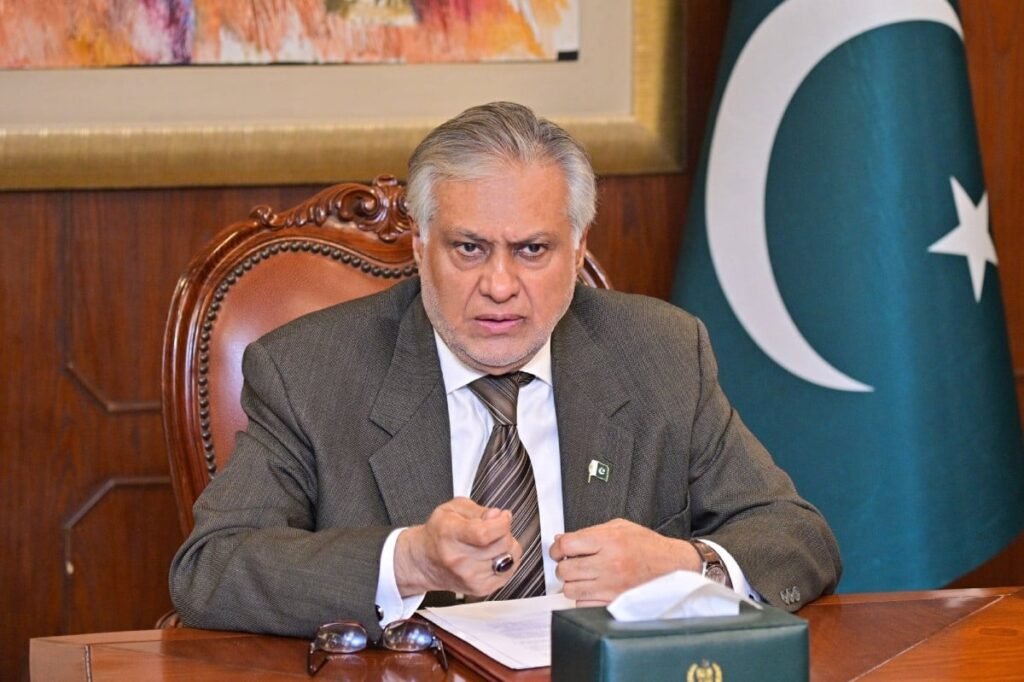
Addressing the opening ceremony of Margalla Dialogue 2026 in Islamabad, Dar said Pakistan would continue strengthening its regional partnerships while maintaining diplomatic engagement with international stakeholders amid growing geopolitical uncertainty.
The annual dialogue, organised by the Islamabad Policy Research Institute (IPRI), brought together foreign diplomats, policymakers, strategic experts and representatives from different countries to discuss emerging global challenges.
This year’s theme, “The Changing Global Order: Navigating Strategic Uncertainty,” focuses on geopolitical competition, regional conflicts and the changing international security environment.
Dar said the international system was undergoing a significant transformation, requiring greater cooperation among countries to address emerging political, economic and security challenges.
He observed that competition among major powers had intensified, while international institutions, including the United Nations, were facing growing political divisions.
The foreign minister said tensions in the Gulf and Red Sea demonstrated how regional conflicts could disrupt global trade, security and economic stability.
He also highlighted the growing influence of biotechnology and other advanced technologies, saying technological developments were transforming how governments respond to crises.
According to Dar, policymakers must recognise that instability in one sector can quickly spread to other areas, creating broader economic and security challenges.
Referring to Pakistan’s diplomatic initiatives, Dar said talks between the United States and Iran held in Islamabad reflected the country’s commitment to resolving international disputes through dialogue.
He said Pakistan remained committed to the principles of the United Nations Charter and supported peaceful negotiations as the preferred approach to settling conflicts.
Dar also referred to a resolution adopted by the UN Security Council on November 5 concerning diplomacy and dialogue during conflicts, describing it as consistent with Pakistan’s diplomatic priorities.
He said the Islamabad Memorandum of Understanding reflected efforts by Prime Minister Shehbaz Sharif and Field Marshal Syed Asim Munir, NI (M), HJ, to promote peaceful conflict resolution.
Discussing regional security, Dar reiterated that lasting peace in South Asia required a resolution of the Jammu and Kashmir dispute in accordance with relevant United Nations Security Council resolutions.
He said Pakistan opposed the weaponisation of water and would continue protecting its sovereignty, territorial integrity and citizens.
On Afghanistan, Dar said Islamabad expected Afghan territory not to be used for activities against other countries, particularly Pakistan.
The foreign minister stressed that Pakistan remained committed to maintaining open diplomatic communication with regional partners, even during periods of heightened tensions.
He also called for maritime routes and international waterways to remain open for uninterrupted and secure commercial activity.
Highlighting Pakistan’s foreign policy priorities, Dar described the strategic partnership with China as a central pillar of the country’s international relations.
He said Pakistan was also engaging European partners through the R4 framework and pursuing economic diplomacy to expand international cooperation and commercial opportunities.
Dar emphasised that the emerging global order must accommodate the development needs of the Global South, particularly countries facing economic pressures and geopolitical uncertainty.
Earlier, IPRI President retired Lieutenant General Majid Ehsan said Margalla Dialogue had developed into an important platform connecting policymakers and experts with diverse perspectives on international affairs.
He pointed to ongoing conflicts in Gaza, Afghanistan, Ukraine and Africa as examples of the challenges facing the international system.
The IPRI president said sustainable peace in South Asia required mutual respect and constructive engagement among regional countries.
Dar concluded that decisions taken by governments amid current geopolitical changes would play a decisive role in shaping the future international order.
The Makkah Joint Defence Agreement was signed by Pakistan, Saudi Arabia and Türkiye on August 7, 2026. It provides for collective defence, treating an armed attack against any one of the three countries as an attack against all three.