
LAHORE: Punjab’s Green Credit Programme has registered 164,746 citizens, while 14,647 people have received green credits for various environmental initiatives, according to figures reported by Express News.
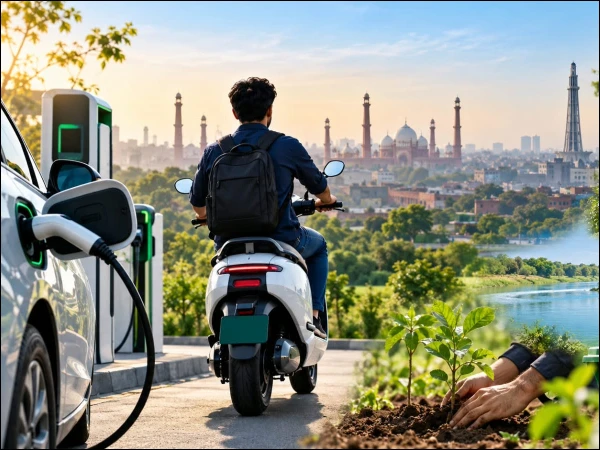
Electric vehicles account for 70 to 80 per cent of applications submitted under the programme, reflecting strong public interest in electric bikes and cars. By comparison, initiatives related to water conservation, wastewater recycling at service stations and plastic waste management have attracted relatively limited participation.
According to the available data, 46,365 registered participants are from Lahore and 114,913 from other districts of Punjab. The figures provided for these two categories total 161,278, which is 3,468 fewer than the overall registration count. The reported gender breakdown lists 144,036 men and 20,656 women, totalling 164,692—54 fewer than the overall figure.
The programme awards green credits for 38 environmental actions covering air pollution reduction, water conservation, land improvement, waste management, environmental awareness and biodiversity protection.
Dr Muhammad Wajid Ejaz, task team leader for the programme, said citizens had shown the greatest interest in acquiring electric bikes and cars. He noted that electric vehicles could help reduce emissions from the transport sector.
Green credits are also available for purchasing electric rickshaws, enabling traditional rickshaw operators to adopt cleaner transport while continuing their livelihoods. However, applications for this initiative have remained relatively low.
Water Conservation and Recycling Need Greater Participation
Dr Ejaz said greater public and business participation was needed in water conservation. Under the programme, citizens can receive Rs50,000 for installing a rainwater-harvesting system and an additional Rs50,000 for arrangements that make the collected water reusable.
Efforts are also underway to encourage service stations to treat and reuse wastewater, but progress in this area has been limited.
Plastic waste recycling has similarly seen low participation. Of an estimated 100 to 150 organisations operating in the sector, only three recyclers have registered with the programme so far.
Air Quality Measures Lead Green Credit Awards
The programme’s figures show that air-quality improvement initiatives have generated the highest number of green credits, followed by land improvement and waste management.
| Environmental category | Citizens receiving green credits |
|---|---|
| Air quality improvement | 7,908 |
| Land improvement | 2,867 |
| Waste management | 1,689 |
| Environmental awareness | 1,492 |
| Water conservation and efficient use | 279 |
| Biodiversity protection | 258 |
These category figures total 14,493, which is 154 fewer than the reported 14,647 beneficiaries overall.
Citizens Report Benefits From Environmental Actions
Hina Akram, a government employee and programme beneficiary, said she had received green credits on three occasions for conducting an environmental awareness campaign at a school, writing a thesis on environmental issues and sharing photographs of smoke-emitting vehicles. She said the credits were worth more than Rs50,000 in total.
Another beneficiary, Raheel Shaukat, said he sold his petrol-powered motorcycle and purchased an electric scooter, receiving Rs50,000 in green credits. He expects to receive another Rs50,000 after the scooter covers 6,000 kilometres.
The figures suggest that while the programme has attracted substantial interest in electric mobility, increasing participation in water conservation, wastewater reuse and plastic recycling remains a key challenge.