
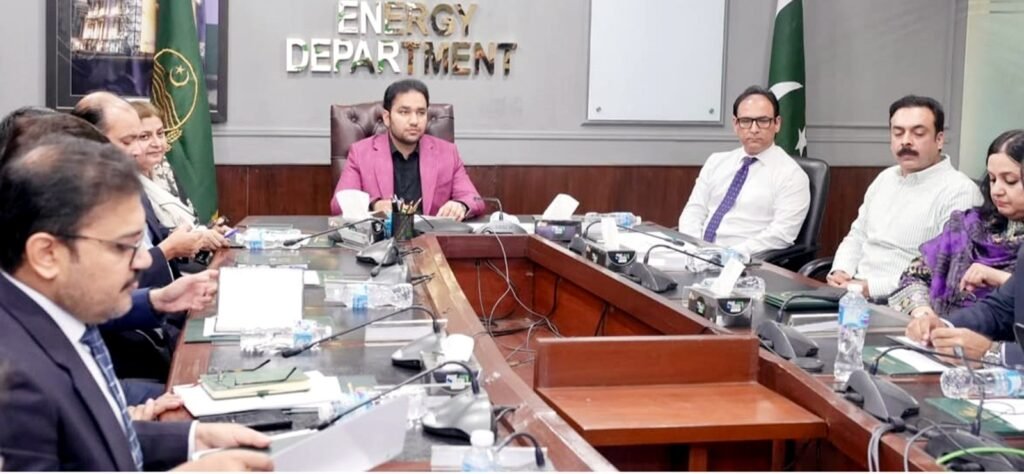
LAHORE, November 18, 2026: Punjab Energy Minister Malik Faisal Ayub Khokhar has directed officials to explore Chinese technology and investment opportunities for developing waste-to-energy projects in the province, aiming to convert municipal waste into electricity while addressing growing urban sanitation and environmental challenges.
The minister issued the directives while chairing a meeting to review the findings of a recent visit to China by a delegation from the Punjab Energy Department. Secretary Energy Muhammad Ajmal Bhatti presented a detailed briefing on advanced energy technologies, industrial manufacturing facilities, waste management systems and potential areas of bilateral cooperation.
The meeting also reviewed progress on turbine-related equipment for Quaid-e-Azam Thermal Power Limited (QATPL), with particular emphasis on manufacturing schedules, equipment delivery and measures to prevent project delays.
According to the briefing, the delegation visited several Chinese industrial facilities to assess manufacturing capabilities and monitor the production of critical equipment required for the power project.
During the visit, Secretary Energy Ajmal Bhatti met Harbin Electric International (HEI) Chairman Li Chao to seek senior management support for ensuring the timely completion and delivery of equipment.
The delegation also inspected HTC, an advanced automated manufacturing facility, and Sinomach Erzhong, which is responsible for turbine-shaft forging.
Officials informed the meeting that a special manufacturing slot had been allocated to QATPL despite global production bookings extending until 2031.
The Chinese side also agreed to prioritise production of the high-pressure rotor, accelerate manufacturing activities and examine alternative assembly arrangements.
Transportation options, including air freight, were discussed to minimise potential delays in equipment delivery.
Punjab Explores China’s Waste-to-Energy Model
A major focus of the meeting was China’s integrated waste management infrastructure and its potential application in Punjab.
The delegation held discussions with officials of the Shanghai Municipal Engineering Design Institute (SMEDI), which is also involved in the Faisalabad wastewater treatment project.
The institute’s technical expertise was identified as a potential area for further cooperation in modern waste management and waste-to-energy development.
Officials also briefed the minister on their visit to the Laogang Ecological and Environmental Protection Base near Shanghai, one of China’s major integrated waste management facilities.
The complex processes approximately 11,000 tonnes of municipal waste daily, accounting for nearly half of Shanghai’s total municipal waste, according to the briefing.
It includes waste-to-energy plants with a combined electricity generation capacity of 210 megawatts, alongside facilities for converting food waste into biogas and fertiliser.
The integrated complex also accommodates dedicated medical waste incineration units and construction waste treatment facilities, demonstrating how different waste streams can be managed within a coordinated system.
Minister Malik Faisal Ayub Khokhar said China’s progress in industrial development, energy production and integrated waste management offered valuable lessons for Punjab.
He emphasised that modern technologies and international best practices should be adapted to local requirements to improve the province’s energy infrastructure and environmental management.
The minister described waste-to-energy projects as an important opportunity to address multiple challenges, including electricity generation, municipal waste disposal, urban sanitation and environmental pollution.
He said transforming urban waste into a productive energy resource should become a priority for future development planning.
Khokhar directed officials to evaluate the technical and economic feasibility of adopting Chinese waste-to-energy models in Punjab and identify opportunities for cooperation with relevant Chinese institutions.
He also called for exploring investment partnerships and developing an integrated strategy that combines modern waste management systems with sustainable energy production.
The minister stressed that any proposed projects should reflect Punjab’s local conditions, waste generation patterns and long-term energy requirements.
Officials from various energy companies also attended the meeting.