
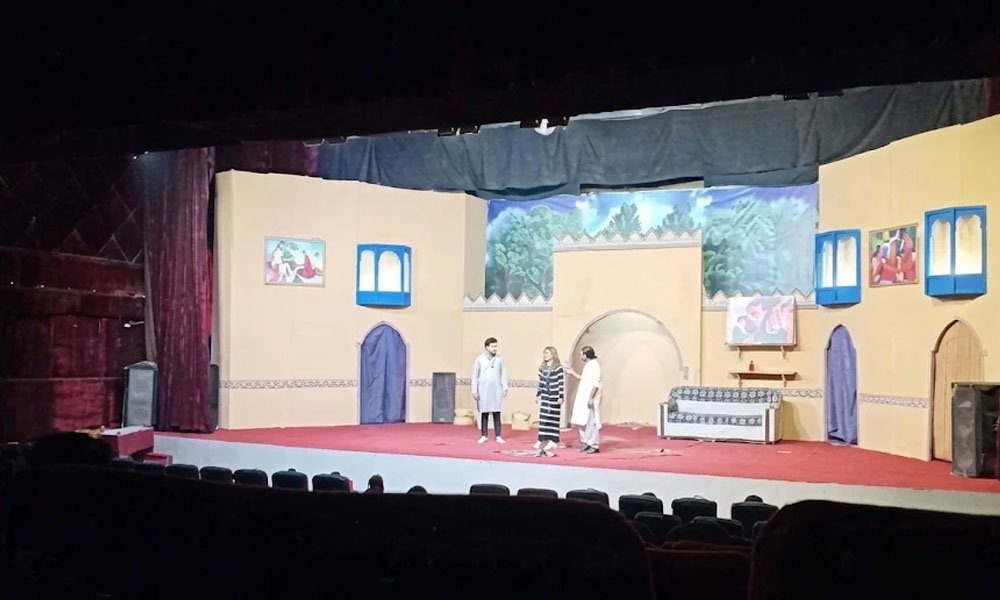
The Punjab Assembly has passed the Dramatic and Theatrical Performances Act 2026, introducing new regulations for theatres, making artist registration mandatory and abolishing registration fees.
The legislation also includes provisions allowing theatre licences to be cancelled if artists face harassment or are not paid the minimum wage.
Punjab Information and Culture Minister Uzma Bukhari presented the bill during a session of the provincial assembly, where it was subsequently approved.
Addressing the assembly, Bukhari said the new law completely prohibits obscene and inappropriate performances in theatres. She added that registration would be compulsory for every artist, and theatres could be sealed if they allowed unregistered performers to appear.
She further explained that theatre licences could be cancelled if management harassed artists or failed to pay them the minimum wage. However, the registration fee for artists has been abolished.
Government Aims to Restore Family-Friendly Theatre
Bukhari said the environment in some commercial theatres had moved away from societal and cultural values, restricting theatre entertainment to a particular segment of society.
She maintained that ordinary citizens and families also wanted access to clean and quality theatrical entertainment.
The minister clarified that the legislation was not intended to ban culture, drama or theatre. Instead, its purpose was to address obscenity, regulate performances and improve standards across the industry.
Responding to opposition criticism, she said the government had not suddenly decided to impose restrictions but was attempting to improve an existing environment that required reform.
Bukhari recalled that Punjab once had a strong theatrical tradition in which performances combined entertainment with meaningful social messages.
She also questioned why renowned performers such as Sohail Ahmed, Khalid Abbas Dar and Waseem Abbas had left theatre, referring to serious concerns about conditions within the industry.
The minister said the Punjab government had organised three theatrical productions at Alhamra, which she watched with her daughter. Members of the Prime Minister’s family had also attended the performances.
Artist Welfare and Theatre Monitoring
Bukhari said the chief minister wanted to make theatre more suitable for families. She added that the provincial government had also directed the establishment of a residential colony for members of the artist community.
She emphasised that the government did not intend to impose a blanket ban on theatre but wanted to introduce organised regulation, quality standards and effective monitoring.
Punjab Theatre: From Cultural Prominence to Reform Efforts
Punjab, particularly Lahore, has historically been an important centre of theatre and performing arts in Pakistan.
Institutions and venues including Alhamra Arts Council, Tamaseel Theatre and Mehfil Theatre have contributed to the development of stage performances over several decades.
Artists such as Sohail Ahmed, Umar Sharif, Amanullah, Khalid Abbas Dar and Waseem Abbas helped popularise Pakistani theatre through comedy, social satire and performances addressing political, family and societal issues.
However, sections of commercial theatre have faced criticism over performance standards, inappropriate dialogue, suggestive gestures and working conditions.
Artists have also raised concerns about unpaid compensation, harassment, workplace safety and professional rights.
The newly approved Dramatic and Theatrical Performances Act 2026 is being presented by the provincial government as an effort to address these concerns through mandatory registration, stronger licensing requirements and improved oversight.
The government says the legislation aims to protect artists, improve theatre standards and restore public confidence in stage performances as a source of family-friendly entertainment.