
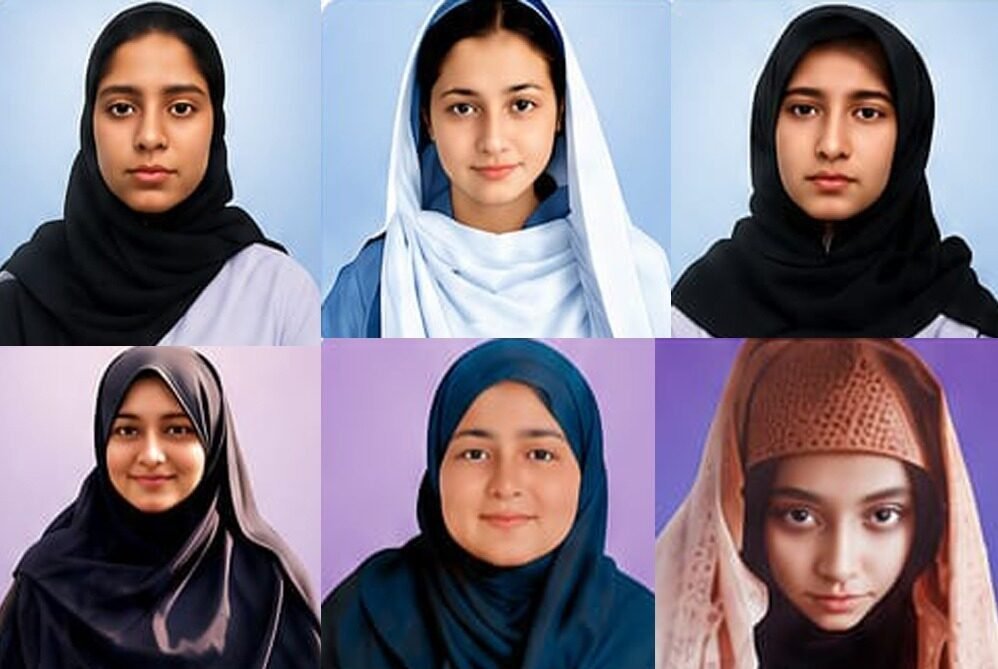
SWAT, August 5: Private schools once again dominated the 2026 Secondary School Certificate (SSC) Annual Examinations conducted by the Board of Intermediate and Secondary Education Saidu Sharif Swat (BISESS), with female students securing all top positions while government schools failed to produce a single position holder.
The results, covering Classes 9 and 10 across Swat, Buner, and Shangla, also highlighted a significant gap in performance between private and public-sector institutions, with thousands of students failing the annual examinations.
Private school students lead matric results
According to BISESS, Sohana Ahmed of Tipu Model School Kabal topped the Science Group with 1,161 marks.
Roshni of Iqra Academy Saidu Sharif secured second position with 1,158 marks, while Zalanda Sardar, also from Tipu Model School Kabal, claimed third position with 1,156 marks.
In the Arts Group, private candidates from Shangla secured all three top positions. Javeria Shah stood first with 1,047 marks, followed by Yusra Bibi with 1,039 marks and Nayab Rahmat with 1,036 marks.
Thousands appear in SSC examinations
A total of 46,484 candidates appeared in the Class 10 examinations, including 34,421 students in the Science Group and 4,335 in the Arts Group.
The Science Group recorded an overall pass rate of around 80%, while the Arts Group achieved approximately 52%.
For Class 9, 50,045 students appeared in the examinations, with 24,808 candidates passing, resulting in an overall pass percentage of about 50%.
The Science Group posted a pass rate of roughly 52%, while the Arts Group recorded only 25%.
Over 35,000 students fail
The examination statistics showed that 35,082 students failed across both classes.
- Class 9: 25,237 students failed.
- Class 10: 9,845 students failed.
The results also showed that no student from a government school secured a top position, continuing a trend that has raised concerns about the performance of public-sector educational institutions.
Experts call for education reforms
Parents and education experts expressed concern over the continued underperformance of government schools despite substantial public investment in education.
They urged the provincial government and education authorities to improve teaching quality, strengthen teacher accountability, upgrade school infrastructure, and implement reforms aimed at improving learning outcomes and narrowing the performance gap between public and private schools.
Also Read : Sindh Reverses School Policy, Brings Back Saturday Holiday