
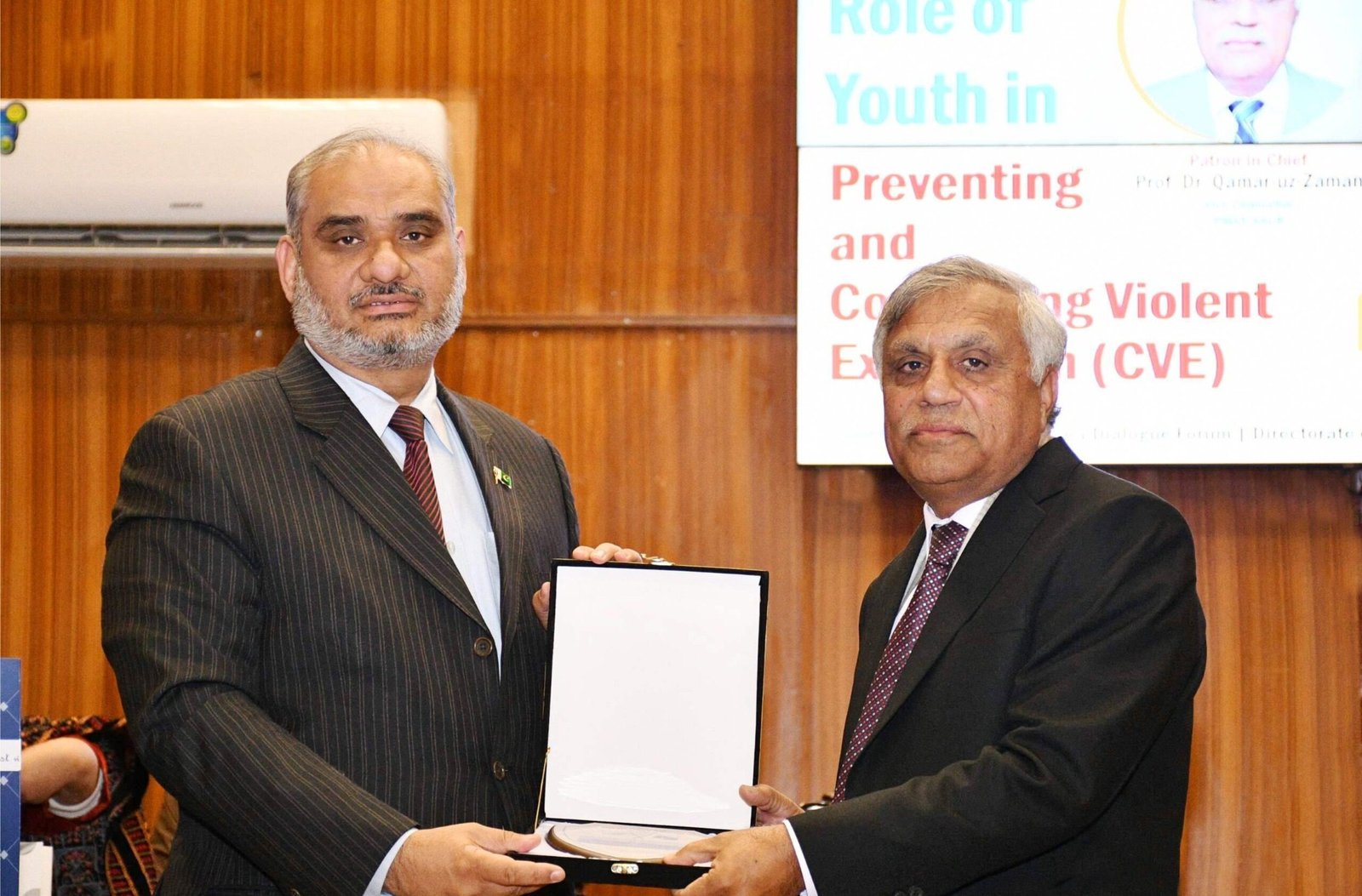
Pir Mehr Ali Shah Arid Agriculture University Rawalpindi (PMAS-AAUR) on Monday organized a policy-oriented seminar focusing on the role of youth in preventing and countering violent extremism (CVE), bringing together academics, psychologists, and policy experts to discuss resilience, inclusion, and positive youth engagement.
The seminar, held under the Policy Dialogue Forum, attracted a large audience comprising students, faculty members, deans, and directors. Vice Chancellor PMAS-AAUR Qamar-uz-Zaman, who also serves as Patron-in-Chief of the forum, welcomed the participants and highlighted the importance of constructive dialogue in shaping socially responsible and peace-oriented youth.
The event was attended by Ahmad Khawar Shahzad, DCO of the Punjab Centre of Excellence on CVE, as chief guest. Addressing the gathering, he praised the discipline, enthusiasm, and constructive participation of PMAS-AAUR students. He also highlighted the university’s academic and research initiatives, including centers focused on precision agriculture, water-efficient technologies, and industrial biotechnology, describing them as symbols of Pakistan’s academic and technological progress.
Dr. Shahzad urged students to adopt an entrepreneurial mindset, emphasizing that innovation, economic opportunity, and critical thinking are essential in building a peaceful and prosperous society. He stressed that youth engagement plays a vital role in preventing the spread of extremist narratives.
Also Read: VC PMAS-AAUR visits Center for Modern Agriculture at University Research Farm
In his address, Prof. Qamar-uz-Zaman reaffirmed that students of PMAS-AAUR are ambassadors of peace and harmony. He noted that the university maintains an inclusive academic environment where faculty and administration regularly engage in strategic discussions to assess ongoing initiatives and plan future development. The vice chancellor expressed confidence that the university’s graduates would continue to project Pakistan’s positive and peaceful image at national and international levels.
The seminar also featured presentations by Robina and Nimrah Ishfaq, who discussed the psychological and social challenges faced by youth in the digital age. They outlined strategies to strengthen mental resilience and counter radicalization, particularly in online spaces.
The session was coordinated by Ghulam Hussain Babar, who emphasized the importance of inclusiveness, optimism, and resilience among young people. He encouraged students to take pride in Pakistan’s history and to reject negativity and pessimism.
The seminar concluded with an interactive question-and-answer session, reflecting strong student interest in contributing to peacebuilding, social harmony, and national development.
 Today's E-Paper