
ISLAMABAD, Oct 12 — Prime Minister Shehbaz Sharif has directed authorities to complete sales tax-linked production monitoring across all major manufacturing sectors by the end of 2026, as the government moves to tighten tax enforcement and reduce the gap between potential and actual revenue collection.
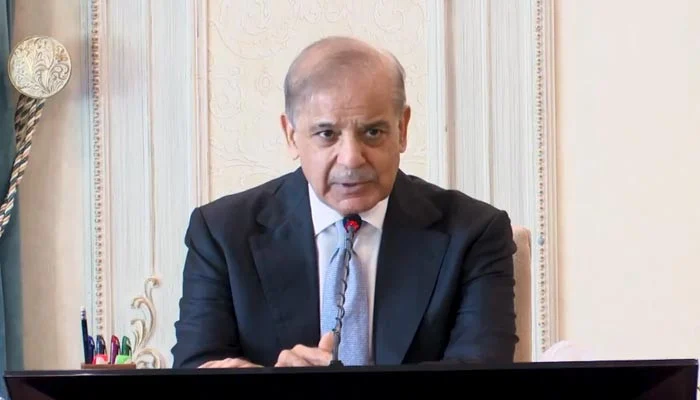
Chairing a review meeting on Federal Board of Revenue reforms in Islamabad, the prime minister said the government would take all necessary steps to realise Pakistan’s full tax potential and prevent businesses from collecting taxes from consumers without depositing them with the state.
He said faceless production monitoring through camera-based systems was being strengthened and ordered authorities to remove obstacles delaying installation of automated monitoring equipment.
“Businesses that collect tax from consumers and keep it for themselves deserve no concession,” the prime minister said.
At the same time, he praised companies that had voluntarily installed monitoring systems and said compliant businesses should be recognised for supporting tax reforms.
Monitoring System to Cover Major Manufacturing Sectors
The meeting was briefed on the rollout of production monitoring systems across key industrial sectors.
Officials said monitoring systems had already been fully installed in the sugar, cement, tobacco, tiles and fertiliser industries.
Installation is also underway in the textile, packaged water, packaged juice and packaged milk sectors, with procurement of the required equipment already completed.
For the steel, poultry and tyre sectors, equipment procurement is expected to be completed by October 15.
Procurement for tea, home electronics, leather, paper and board, and edible oil and ghee sectors is scheduled to be completed by October 30.
According to the briefing, the production monitoring system is expected to become fully operational across all identified manufacturing sectors by December 31, 2026.
PM Praises Voluntary Compliance by Textile Companies
The meeting was informed that while some textile companies had resisted installation of the monitoring system, several major firms had voluntarily complied with government requirements.
The companies named included Nishat Mills, Al Karam Textile, Al Karam Cotton Mills, J.K. Spinning Mills, Soorty Enterprises, Interloop Limited, Faisal Spinning Mills, Ibrahim Fibres Limited, Sapphire Textiles Limited and Nishat Chunian.
Prime Minister Shehbaz Sharif appreciated their cooperation and said businesses voluntarily adopting the system were contributing positively to the government’s tax reform agenda.
Audit of Production Monitoring to Expand
The prime minister also praised an audit report on the production monitoring system in the cement sector.
He directed the Ministry of Information Technology to conduct similar audits in other industries to assess the effectiveness of the monitoring system and ensure that the technology was functioning as intended.
The move is part of a broader effort to improve transparency in production reporting and strengthen sales tax collection from sectors with significant revenue potential.
FBR Reports Rs1.3 Trillion in Additional Tax Collection
The prime minister was also presented with a report analysing the gap between Pakistan’s estimated tax potential and actual tax collection.
Officials told the meeting that government measures over the past three years had resulted in an additional Rs1.3 trillion in tax collection.
According to the briefing, this represented a 40% increase in tax collection and was primarily attributed to stronger enforcement measures.
Prime Minister Shehbaz praised the FBR Transformation Team for preparing what officials described as a comprehensive assessment of the country’s tax potential.
He said collecting taxes in line with the economy’s actual capacity was essential to serving the public and improving the state’s financial position.
The prime minister also presented shields to members of the team in recognition of their work on the tax potential assessment.
Government Pushes Wider FBR Reform Drive
The latest directives form part of the government’s broader programme to reform the Federal Board of Revenue and increase documentation across the economy.
The production monitoring system is intended to help authorities compare actual industrial output with declared production and sales figures, improving tax assessment and reducing opportunities for under-reporting.
The government is increasingly relying on technology-based monitoring, digital systems and automated processes as part of its effort to raise revenue without relying solely on higher tax rates.
Federal ministers Azam Nazeer Tarar, Dr Musadik Malik, Ahad Khan Cheema and Shaza Fatima Khawaja attended the meeting.
Minister of State Bilal Azhar Kayani, Adviser to the Prime Minister Haroon Akhtar and senior officials from relevant departments were also present.