
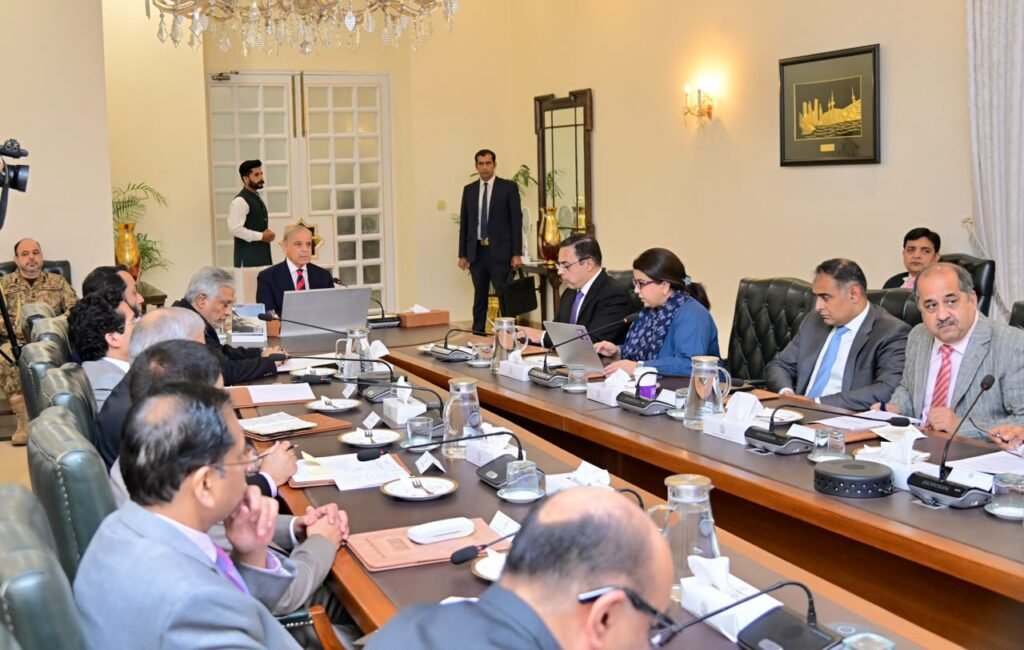
ISLAMABAD, September 16: Prime Minister Shehbaz Sharif has ordered the establishment of dedicated facilitation desks to help eligible motorists register for and access the government’s fuel subsidy programme as the relief scheme expands across Pakistan.
The desks will bring together local administration officials, volunteers and petrol pump staff to guide citizens through registration and other requirements of the PM Special Relief Scheme, according to a statement issued by the Prime Minister’s Office.
The directive came during a meeting chaired by Shehbaz to review implementation of the programme, which has been introduced to cushion low- and middle-income households from higher petroleum costs amid the situation in the Gulf region.
The scheme provides targeted fuel relief to eligible owners of motorcycles, rickshaws and cars with engine capacities of up to 800cc.
Shehbaz directed officials to ensure that citizens seeking the subsidy receive clear guidance at filling stations and face minimum difficulty in completing the required procedures.
He also asked relevant authorities to remain actively engaged in public awareness efforts and promptly address questions about eligibility, registration and access to the relief.
Fuel Relief Scheme Expanded Across Pakistan
Officials told the meeting that the programme had been extended nationwide following its pilot launch in Islamabad.
The rollout now covers all provinces as well as Azad Jammu and Kashmir and Gilgit-Baltistan, according to the briefing.
Authorities said the registration process had deliberately been kept simple, requiring applicants to provide only four pieces of information.
These are a CNIC number, vehicle number plate, province of vehicle registration and vehicle registration date.
The meeting was informed that successful registrations were steadily increasing and provincial governments were cooperating with the federal government to implement the programme across the country.
Nationwide generation and redemption of fuel tokens is scheduled to begin from the night between September 16 and 17, according to previously announced government details.
How Much Petrol Relief Can Eligible Motorists Receive?
Under the programme, eligible motorcycles and other qualifying two- and three-wheelers can receive the subsidy on up to 20 litres of petrol each month.
Owners of eligible cars with engines of up to 800cc can receive relief on up to 30 litres per month.
The government has set the relief at Rs100 per eligible litre, taking the maximum monthly benefit to Rs2,000 for qualifying two- and three-wheelers and Rs3,000 for qualifying small cars.
Rather than reducing the retail petrol price for all consumers, the programme is designed to direct assistance towards motorists who meet the eligibility criteria.
Four Details Needed to Register
Citizens seeking to register for the fuel subsidy need to provide:
- CNIC number
- Vehicle number plate
- Province of vehicle registration
- Vehicle registration date
After successful registration and verification, eligible motorists will be able to generate fuel tokens and use them under the prescribed mechanism to obtain their subsidised petrol allocation.
The government has also made information about registration, eligibility and the scheme available through its official online portal.
PM Fuel Relief Scheme official portal
The prime minister directed the authorities to ensure that facilitation arrangements remain accessible to the public as implementation gathers pace across the country.
The review meeting was attended by Deputy Prime Minister and Foreign Minister Ishaq Dar, federal ministers Ahad Khan Cheema, Attaullah Tarar, Shaza Fatima Khawaja and Ali Pervaiz Malik, Minister of State for Finance Bilal Azhar Kayani, Special Assistant Tariq Bajwa and senior officials of relevant departments.
The fuel subsidy programme is part of the government’s targeted relief measures for households facing increased transport costs, particularly people who depend on motorcycles, rickshaws and small cars for daily commuting and livelihoods.