

Pakistan’s leadership has emerged from a moment of exceptional regional tension with renewed credibility, having played a pivotal role in easing a crisis that many feared could spiral into a wider conflict. Prime Minister Shehbaz Sharif, Foreign Minister Ishaq Dar, and Chief of Army Staff Field Marshal Asim Munir, supported by an experienced diplomatic corps, navigated a complex and rapidly evolving situation to help bring key global actors back to dialogue.
The circumstances were far from ordinary. Strong rhetoric and escalating hostilities had created an atmosphere where miscalculation could have led to devastating consequences. Iran had made it clear it would not bow to pressure, while the United States signaled a readiness to act decisively. In such a volatile environment, space for diplomacy appeared limited. Yet, Pakistan chose engagement over escalation, working persistently behind the scenes to encourage restraint and communication.
What makes this effort particularly noteworthy is the delicate balance Pakistan maintained throughout the process. The country managed to remain engaged with multiple stakeholders, including Iran, Saudi Arabia, and the United States, without alienating any side. This required not only strategic clarity but also a deep understanding of regional sensitivities and long-standing relationships. At a time when positions were hardening, Pakistan’s approach reflected patience, discretion, and a commitment to de-escalation.
Equally significant was the ability of Pakistan’s civilian and military leadership to act in coordination. Diplomatic messaging, security considerations, and regional outreach appeared aligned toward a single objective: preventing further escalation and opening a pathway for dialogue. This coherence strengthened Pakistan’s position as a credible interlocutor, capable of engaging with diverse actors while advocating for stability.
The outcome, while still fragile, underscores the importance of timely and sustained diplomatic engagement. Convincing rival powers to step back, even temporarily, is no small achievement in today’s geopolitical climate. It also highlights Pakistan’s capacity to contribute meaningfully to regional peace, drawing on its strategic location, diplomatic channels, and standing in the Muslim world.
However, the task ahead is far from complete. De-escalation is only the first step; building a durable framework for peace will require continued effort, trust-building, and consistent engagement. Pakistan now finds itself in a position where it can facilitate broader conversations on regional stability, encouraging dialogue not only between immediate parties but also among other stakeholders whose interests intersect in the region.
There is also a broader lesson in this episode. Regional challenges cannot be addressed through force alone, particularly when they involve deeply rooted political and historical complexities. Diplomacy, though often slow and uncertain, remains the most viable path to sustainable outcomes. Pakistan’s recent role serves as a reminder that even in moments of heightened tension, constructive engagement can create opportunities for resolution.
Going forward, Pakistan’s leadership may consider leveraging this momentum to promote longer-term cooperation and understanding across the region. The credibility gained through recent efforts should be used to advocate for mechanisms that reduce the likelihood of future crises. In doing so, Pakistan can help shape a more stable regional environment, one where dialogue takes precedence over confrontation and shared interests guide collective action.

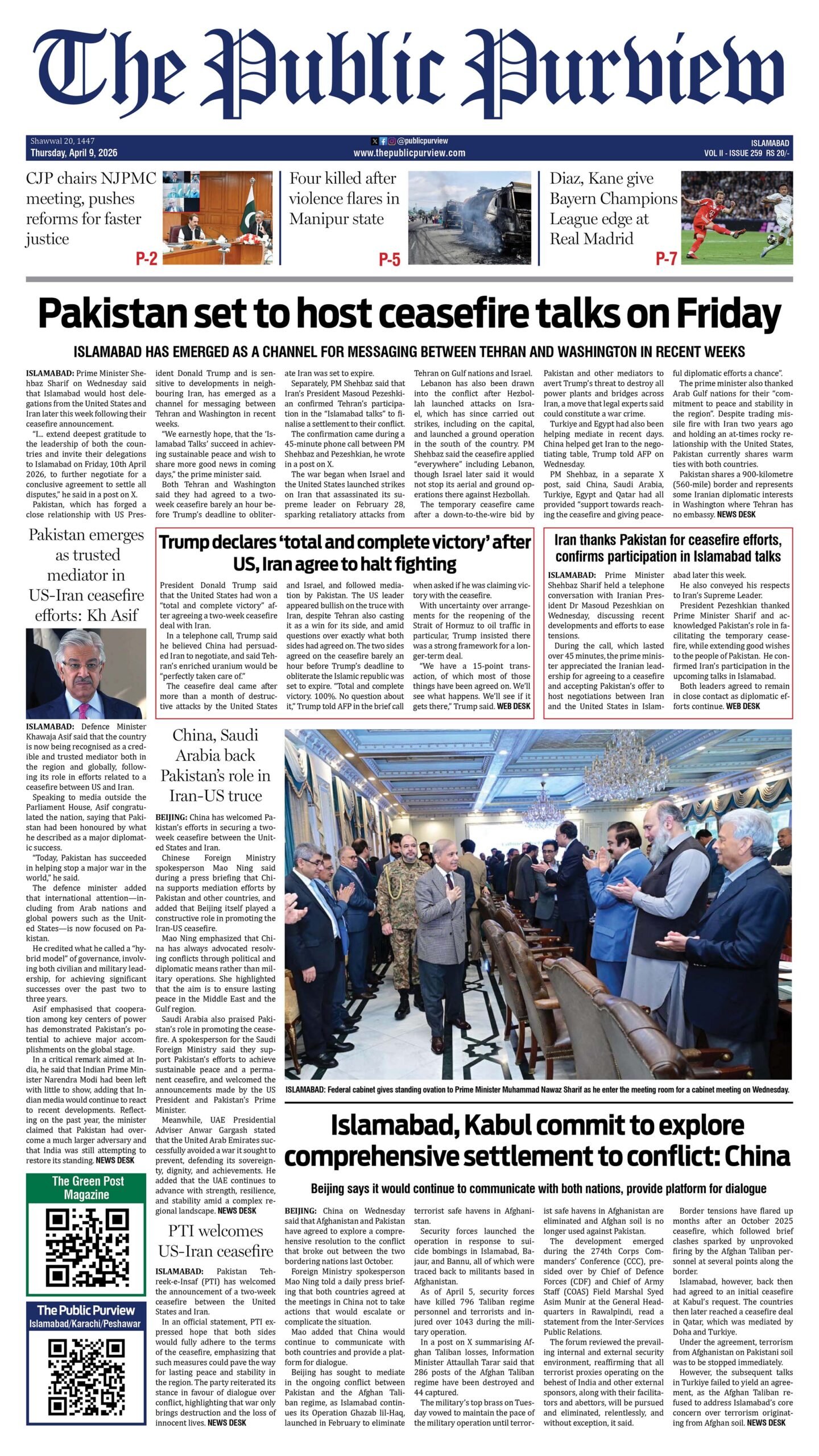 Today's E-Paper