
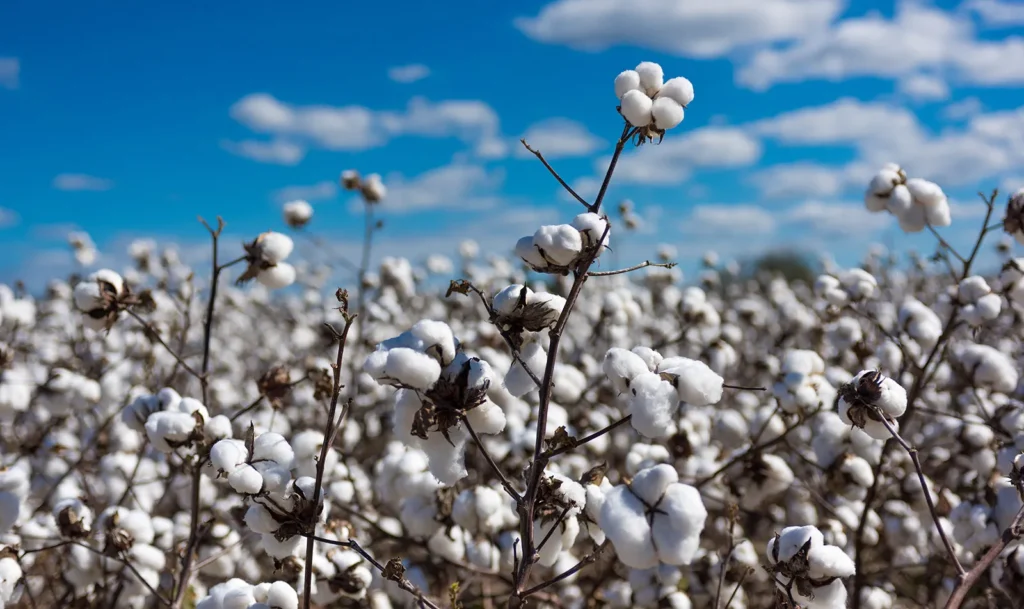
KARACHI, November 18, 2026: Pakistan has recorded a modest increase in cotton production, but adverse weather conditions and environmental pollution associated with sugarcane cultivation have severely affected crop quality, raising concerns across the cotton and textile sectors.
According to a report by Express News, deteriorating cotton quality has raised expectations of increased demand for cotton from Balochistan and higher cotton imports, while the gap between minimum and maximum cotton prices has widened considerably.
Cotton Ginners Forum Chairman Ehsanul Haq, citing Pakistan Cotton Ginners Association (PCGA) data, said cotton arrivals at ginning factories nationwide reached the equivalent of 5.131 million bales as of November 15, recording a year-on-year increase of 6%.
Cotton Production in Punjab and Sindh
Cotton arrivals at Punjab’s ginning factories reached 2.252 million bales, reflecting an increase of 4%, while Sindh recorded arrivals of 2.879 million bales, up 7%.
| Province | Cotton Arrivals | Annual Growth | Active Ginning Factories |
|---|---|---|---|
| Punjab | 2,252,000 bales | 4% | 203 |
| Sindh | 2,879,000 bales | 7% | 207 |
| Total | 5,131,000 bales | 6% | 410 |
Textile Mills Purchase Over 4.4 Million Bales
During the reporting period, textile mills purchased 4.442 million cotton bales from ginning factories, while exporters purchased 94,400 bales.
Approximately 591,000 bales remained available for sale at ginning factories across the country.
Leading Cotton-Producing Districts
Sindh’s Sanghar district recorded the highest cotton arrivals nationwide, followed by Bahawalnagar and Bahawalpur in Punjab.
| District | Cotton Arrivals |
|---|---|
| Sanghar | 1,122,000 bales |
| Bahawalnagar | 603,000 bales |
| Bahawalpur | 435,000 bales |
| Sukkur | 336,000 bales |
| Dera Ghazi Khan | 305,000 bales |
| Naushahro Feroze | 268,000 bales |
| Khairpur | 250,000 bales |
Despite the increase in overall cotton arrivals, deteriorating crop quality remains a major concern for the industry, with the possibility of increased demand for imported cotton to meet domestic textile requirements.