
ISLAMABAD: A faculty member of the International Islamic University Islamabad (IIUI) has been part of the team that won the WaPOR Hackathon 2026, an international competition focused on the use of satellite data in agricultural water management.
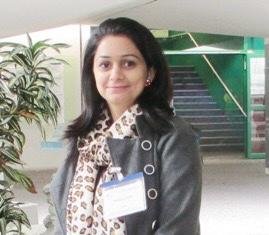
Dr. Bushra Ghaffar, Assistant Professor of Environmental Science at IIUI, was a member of Team CaneWise, which secured first place among 47 teams from countries around the world. Six teams advanced to the final round, with the winner announced during a live session on August 27.
The competition was organised by the IHE Delft Institute for Water Education in the Netherlands in collaboration with the Food and Agriculture Organization of the United Nations and the International Water Management Institute, with support from the Netherlands Ministry of Foreign Affairs.
Held under the theme “From Tools to Decisions”, the contest challenged participants to demonstrate how freely available satellite data could be translated into practical decisions by institutions working on the ground.
The winning project, CaneWise, addresses a common challenge across South Asia’s sugarcane-growing regions. Sugar mills are required each season to survey their cane supply areas and forecast crushing volumes, but a limited number of field officers often have to cover thousands of smallholder plots.
As a result, inspections typically follow fixed rotations rather than responding to changing field conditions, while water stress may only be confirmed after crop yields have already been affected.
CaneWise uses FAO’s WaPOR satellite data on evapotranspiration and biomass, updated every 10 days, to rank village clusters according to the severity of water stress and whether that stress can still be reversed.
This allows field officers to focus on locations where timely intervention can still influence the outcome of the season. The award citation described CaneWise as the solution judged most effective in converting satellite data into decisions that reach end users.
“The aim is to get more crop from the same water rather than to draw more water,” Dr. Ghaffar said. “In canal systems under increasing stress, that distinction matters. The satellite establishes priority; the field officer establishes fact.”
Water scarcity remains one of Pakistan’s most serious long-term challenges, while sugarcane is among the country’s most water-intensive crops. The approach demonstrated through CaneWise is designed to be transferable to canal command areas across the Indus Basin.
Other members of Team CaneWise included Dr. Fawzia Tarannum, Founder and CEO of EarthWise Nexa LLP; Niyati Mehrotra, Co-founder and Director of EarthWise Nexa LLP; and Dr. Sherly M. A., Founder and Director of Mazkon HydroAnalytics.