
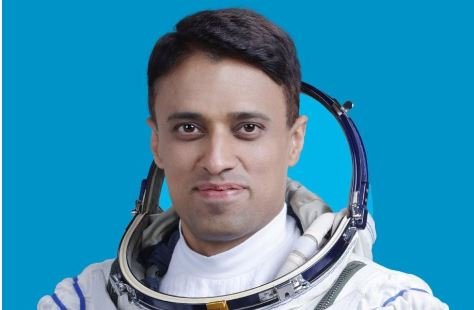
RAWALPINDI, November 24, 2026: Pakistan’s first human spaceflight mission has entered its final stages, with astronaut Muhammad Zeeshan Ali set to travel to China’s Tiangong Space Station in a historic mission marking the country’s entry into human space exploration.
The Space and Upper Atmosphere Research Commission (SUPARCO) announced in a statement that the mission is being led by the China Manned Space Agency (CMSA) in partnership with Pakistan’s national space agency.
Muhammad Zeeshan Ali will serve as a payload expert, with primary responsibility for executing Pakistan’s scientific research programme aboard the space station.
The astronaut will conduct scientific experiments in microgravity developed by Pakistani researchers across several disciplines, including materials science, fluid physics, life sciences and biotechnology.
The research has potential applications in climate resilience, food security, industrial innovation and future space missions.
Pakistan’s Scientific Experiments in Space
The astronaut will undertake an experiment focused on establishing green micro-factories to support life sustainability in space. The research involves cultivating microalgae as a potential source of nutrients and oxygen for future long-duration space missions.
Three additional experiments will be deployed on the external experimental modules of the Chinese Space Station, where they will remain exposed to the space environment for one year.
These experiments include:
Quinoa seed resilience: Examining the effects of microgravity and cosmic radiation on quinoa seed longevity to support the development of more resilient and radiation-tolerant crop varieties.
Self-healing composite materials: Studying the healing efficiency of microcapsule-based composite materials in space environments, with potential applications in reducing maintenance requirements for aircraft, spacecraft and infrastructure.
Advanced spacecraft protection: Evaluating the durability of hybrid composite materials under the vacuum, radiation and temperature conditions of outer space to improve spacecraft protection.
Pakistan-China Space Cooperation
The scientific programme is being undertaken with Chinese support in collaboration with the Centre for Space Utilization, Shanghai Institute of Technical Physics, Dalian Maritime University and Shanghai Jiao Tong University.
SUPARCO described the mission as a defining milestone in Pakistan’s space history and its longstanding friendship with China.
Upon successful completion, the mission would place Pakistan among the nations that have participated in human spaceflight, opening new opportunities for scientific research and international space cooperation.