
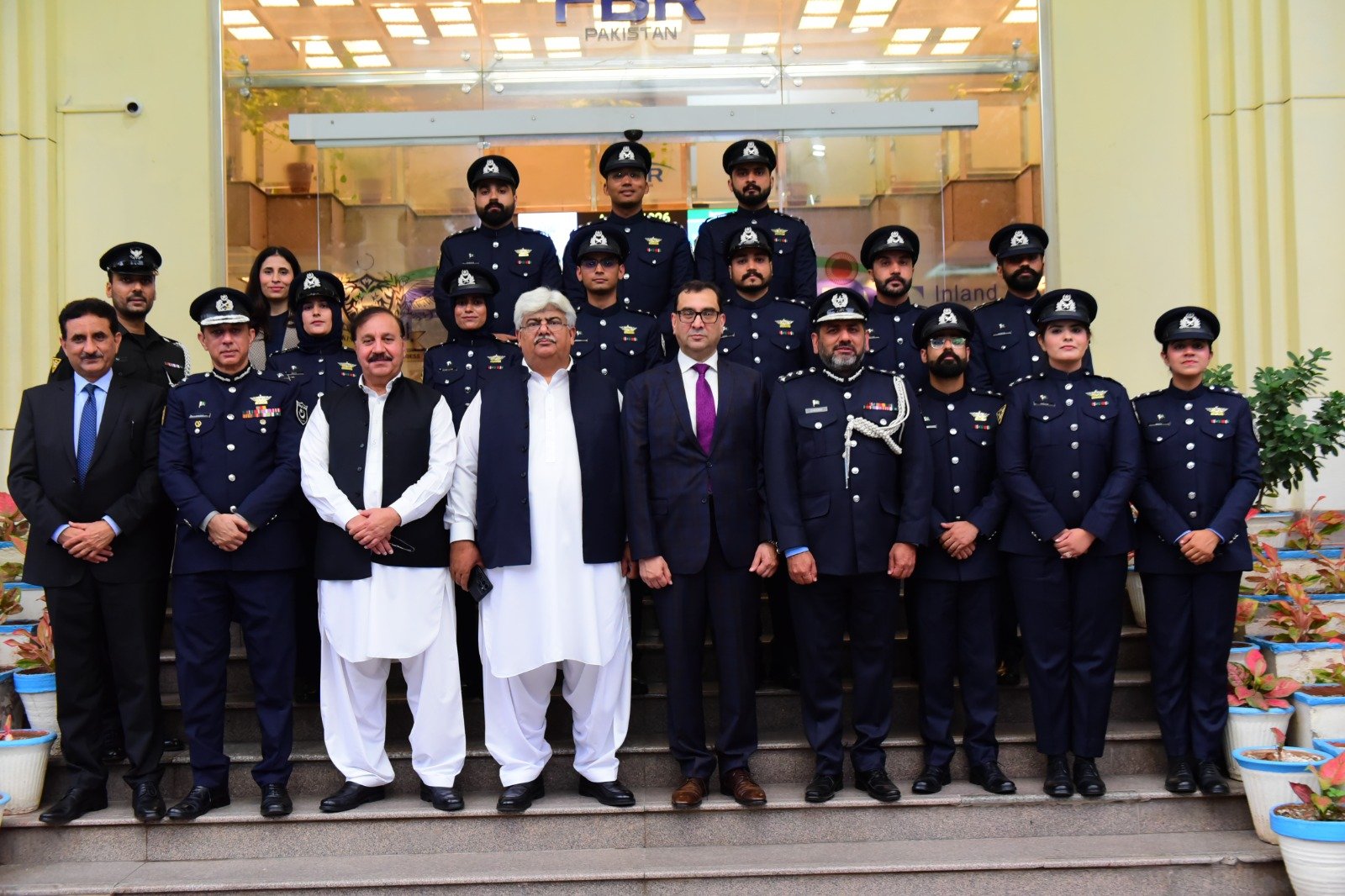
ISLAMABAD: Pakistan Customs is set to become increasingly data-driven, risk-based and faceless, with greater use of technology to speed up legitimate trade while tightening controls against smuggling and revenue leakage, FBR Chairman Rashid Mahmood Langrial said on Wednesday.
He was addressing the passing-out ceremony of 12 Assistant Collectors under training from the 52nd Common Training Programme of Pakistan Customs Service at the Federal Board of Revenue headquarters in Islamabad.
Langrial told the graduating officers that the completion of their specialised training marked the beginning of a career focused on protecting Pakistan’s economic frontiers.
He said the next generation of Customs officers would have to help narrow the gap between Pakistan’s trade potential and actual trade performance by making clearance easier for compliant businesses while making evasion and illicit trade more difficult.
The FBR chairman also stressed the importance of using data more effectively in customs administration, particularly in tackling smuggling and preventing revenue losses.
The graduating officers completed academic and practical training at the Customs Academy of Pakistan, LUMS and the National Police Academy, along with field attachments at ports, airports, dry ports and land border stations.
Their specialised training covered customs law, international trade, World Customs Organization frameworks, tariff classification, valuation, trade facilitation, Pakistan Single Window and customs enforcement.
Customs Role Expanding Beyond Revenue Collection
Member Customs (Operations) Syed Shakeel Shah said Pakistan Customs was undergoing a shift towards a more automated and technology-driven operating model.
He said customs officers were increasingly expected not only to collect revenue but also to facilitate legitimate commerce and protect the country’s economic borders.
Shah urged the newly trained officers to maintain professional integrity while supporting trade facilitation and safeguarding public revenue.
Member Administration and HR Muhammad Iqbal said the specialised training programme had been designed to strengthen analytical and problem-solving skills required for modern customs administration.
He called on the officers to apply the knowledge and professional values acquired during training throughout their careers.
Earlier, Director General Customs Academy of Pakistan Mumtaz Ali Khoso briefed participants on the training programme completed by the probationary officers.
Certificates were distributed among the successful officers, while high performers in academics, drill and overall discipline were also recognised.
The ceremony was attended by FBR members, senior officers of Pakistan Customs Service and families of the graduating officers.
Also Read: FBR, ICAP hold seminar in Peshawar on Tax Year 2026 returns