
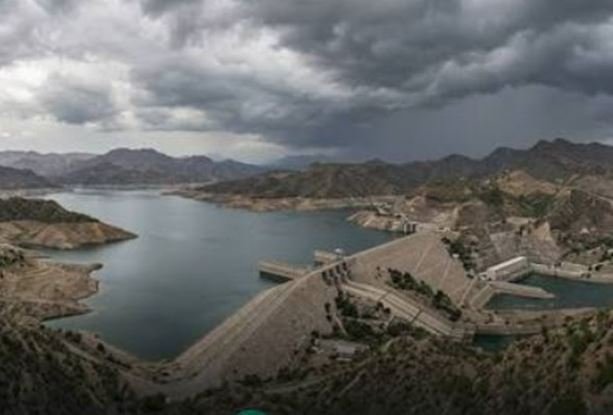
ISLAMABAD, September 15: Pakistan is receiving a growing share of its annual rainfall during increasingly concentrated monsoon spells, putting water management systems, cities and agriculture under greater pressure while exposing the country’s limited capacity to store excess water for dry periods, an environmental economist has warned.
Dr Muhammad Faisal Ali, an environmental economist at the Pakistan Institute of Development Economics (PIDE), said the share of rainfall Pakistan receives during the monsoon has increased from around 50-55 percent in the past to nearly 63-65 percent.
Speaking to Wealth Pakistan, he said the bigger concern was not simply how much rain Pakistan receives, but the increasingly short periods in which large volumes of water fall.
Rainfall spread over longer periods can be absorbed more effectively by soil and drainage systems. Intense downpours over shorter periods, however, increase the risk of flash floods and urban flooding and can cause erosion, crop losses, infrastructure damage, landslides and debris flows.
Pakistan’s monsoon systems broadly arrive through two routes — from the Bay of Bengal towards Kashmir, northern Punjab and Khyber Pakhtunkhwa, and from the Arabian Sea towards Sindh, southern Punjab and Balochistan, according to Dr Faisal.
He said Pakistan received around 22-23 percent above-normal rainfall last year, further highlighting the growing challenge of managing intense precipitation.
Flood Frequency Adds to Pressure
Citing data from the Emergency Events Database, Dr Faisal said Pakistan experienced 30 flood events between 1980 and 2004. The number subsequently rose to 35 and then 39 during the following two 10-year periods, indicating an increase in the frequency and intensity of flooding.
He said variations such as wet, dry, weak, delayed or early monsoons were not new, but increasingly concentrated rainfall was making their consequences more damaging.
Urbanisation and administrative weaknesses were also magnifying the risks.
Pakistan’s population is growing at around 2.5 percent, he said, while cities and infrastructure are expanding without corresponding improvements in drainage capacity.
Construction on floodplains, encroachments on natural waterways and inadequate drainage systems further increase the exposure of communities to flooding.
Dr Faisal called for stronger scientific flood-risk assessments to identify vulnerable locations and determine interventions suited to individual areas rather than relying on a uniform approach nationwide.
Cities Need Climate-Resilient Planning
Nature-based solutions could play a greater role in managing intense rainfall, he said, pointing to water-sinking parks, permeable surfaces and other measures that allow rainwater to enter the ground and recharge groundwater reserves.
Keeping natural river and water routes clear, improving drainage and incorporating ponds and wetlands into urban planning could also reduce flood damage.
He said land use, zoning, solid-waste disposal, encroachments and drainage needed to become central considerations in urban planning as rainfall patterns evolve.
Early-warning systems should also be strengthened, particularly at the last stage of communication, to ensure vulnerable communities receive warnings in time and understand what action to take.
Future infrastructure, he added, should be designed around climate and flood risks so roads, buildings and other public assets can withstand shocks rather than repeatedly suffering damage.
Agriculture Faces Heavy Flood Losses
Agriculture requires particular attention because intense rainfall and flooding can inflict major losses on crops and rural livelihoods.
Dr Faisal said the agriculture sector suffered losses of around Rs434 billion last year, underscoring the need for resilient crop varieties capable of surviving floods and successive intense monsoon spells.
Interventions should also be tailored to local conditions, he said, because districts exposed to heavy rainfall require different responses from areas experiencing lower rainfall or prolonged dry conditions.
Pakistan Faces Flood and Drought Challenge
The growing concentration of rainfall presents another problem: Pakistan can experience destructive floods while still facing water shortages months later.
Dr Faisal described 2025 as an unusual year in which the country experienced glacial lake outburst floods, flash floods, urban flooding and river flooding.
Despite the abundance of floodwater, an Indus River System Authority notification later indicated an 8 percent water shortage for the following Kharif season, he said.
The contrast highlights Pakistan’s long-standing challenge of capturing water when it is abundant and retaining enough for periods when supplies decline.
Under the government’s Uraan Pakistan framework, plans include doubling water-storage capacity from around 30 days to 60 days and adding 10 million acre-feet of storage capacity.
Dr Faisal cautioned, however, that expanding storage on that scale would require major infrastructure, significant financing and time.
He said Pakistan therefore needed to plan for excessive rainfall and drought simultaneously rather than treating them as separate water-management problems.
The monsoon itself should not be viewed simply as a threat, he added, as it remains a natural and critical part of Pakistan’s water cycle.
“We need to learn how to live with this,” Dr Faisal said, calling for greater scientific understanding of changing monsoon behaviour and corresponding changes in infrastructure, agriculture, urban planning and water management.
He also stressed the importance of distinguishing climate change from monsoon dynamics. Climate change involves long-term shifts in temperature, precipitation, drought and heatwaves, while the monsoon is a recurring annual weather system.
Climate change can influence how the monsoon behaves, he said, but the two phenomena should not be treated as interchangeable.