
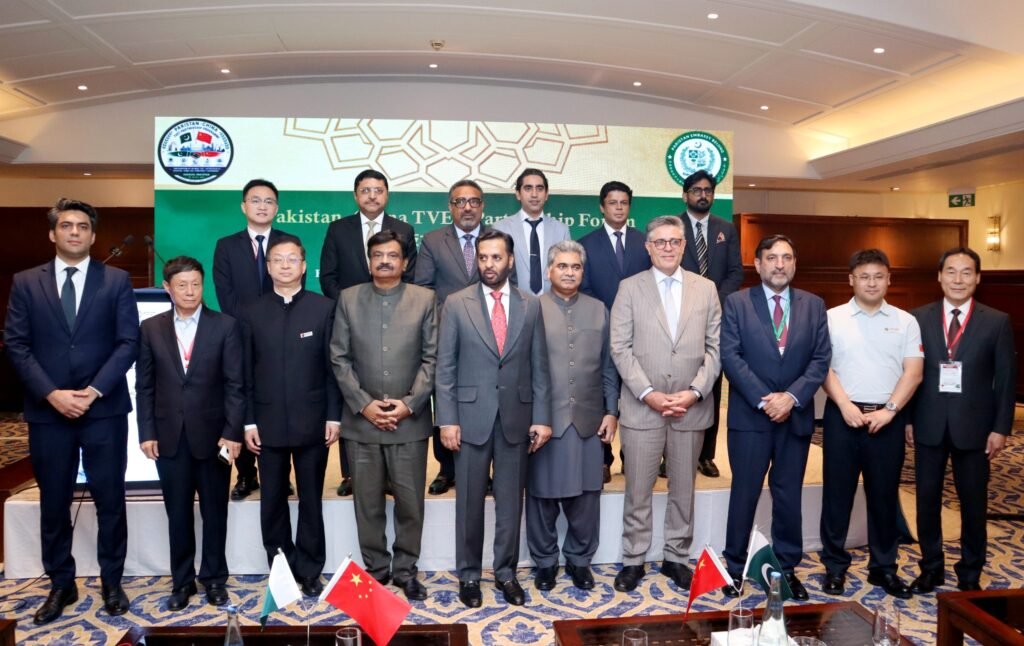
ISLAMABAD: Pakistan and China have agreed to deepen cooperation in technical and vocational education to develop a skilled workforce for the pharmaceutical, healthcare and biotechnology sectors.
The understanding emerged at the Pakistan–China TVET Partnership Forum organised by the National Vocational and Technical Training Commission in collaboration with the Embassy of Pakistan in Beijing. The event was held alongside the Pakistan–China business-to-business investment conference on pharmaceuticals, healthcare and biotechnology in Islamabad.
The forum brought together government officials, Chinese and Pakistani technical training institutions, healthcare organisations, pharmaceutical companies, universities, industry associations and development partners.
Pakistan to host major China healthcare investment conference on July 17-18
Federal Minister for National Health Services Syed Mustafa Kamal said Pakistan needed a stronger pool of trained professionals to meet the growing demands of its healthcare and pharmaceutical industries.
He said greater cooperation with China in investment, technology transfer and institutional development could help improve healthcare services, strengthen local pharmaceutical production and support long-term economic growth.
Focus on industry-led technical training
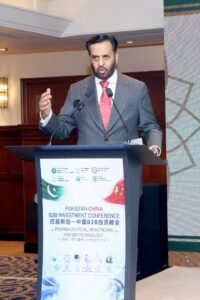
NAVTTC Chairman Engr. Qamar ul Islam Raja said Pakistan–China cooperation was increasingly focused on innovation, technology, skills and human capital.
He said technical and vocational education should be aligned with industry requirements so graduates could meet domestic workforce needs and compete in international markets.
Raja added that NAVTTC was working to build an industry-led and globally competitive training system through international partnerships, investment and cooperation with the private sector.
He also called for discussions at the forum to be translated into long-term agreements between institutions in both countries.
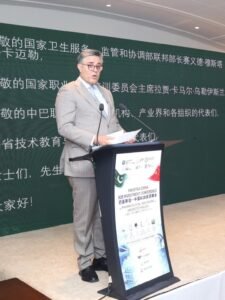
Pakistan’s Ambassador to China Khalil Hashmi said vocational education would be central to developing the workforce required for industrial expansion in pharmaceuticals, healthcare and biotechnology.
He said stronger links between training institutions and industry could improve productivity, encourage technology transfer and enhance Pakistan’s competitiveness.
Joint training and certification discussed
NAVTTC Executive Director Muhammad Aamir Jan said Pakistani and Chinese organisations could cooperate in curriculum design, digital training, teacher development, workforce planning and industrial investment.
He said joint initiatives could help produce internationally trained workers while promoting local manufacturing, innovation and closer collaboration between educational institutions and industry.
The forum included presentations by training institutions from both countries, followed by matchmaking sessions aimed at identifying potential partnerships.
Areas discussed included faculty exchanges, teacher training, joint certification programmes, specialised training centres, curriculum development and workforce preparation for the healthcare and pharmaceutical sectors.
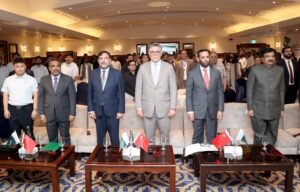
Officials said the initiative was intended to strengthen technical education, improve industry-academia links and prepare workers for new investment and technology-driven jobs.
The forum was attended by representatives of provincial technical education authorities, healthcare bodies, pharmaceutical organisations, universities and private-sector institutions from Pakistan and China.