

In the history of the subcontinent, the year 1971 drew a line that not only split a country into two parts but also created a miles-long gulf between hearts. But today, five and a half decades later, the winds blowing from the corridors of power in Dhaka and Islamabad are telling a somewhat different story. The bitterness peeking through the windows of history is now being left behind, and both Muslim countries are stepping toward a destination that had been dreamed of for years.
Tarique Rahman is the eldest son of former Bangladeshi Prime Minister Begum Khaleda Zia and Ziaur Rahman, who served as the President and Army Chief of Bangladesh. He is currently the acting chairman of the Bangladesh Nationalist Party (BNP). The man who was ousted from politics years ago and showered with legal cases has today emerged as the ‘potential Prime Minister.’
Tarique Rahman set to lead Bangladesh as BNP wins first election after Gen Z-led uprising
The blue and green flags waving at Dhaka’s ‘Paltan Maidan,’ the ear-splitting slogans, and that surging sea of people seem to be breathing again after the executions of Jamaat-e-Islami leaders, jailings of thousands of political activists, enforced disappearances, exile, and years of suffocation during Sheikh Hasina Wajed’s era (2009-2024).
The echoes of this victory are also being heard in the corridors of Islamabad. The enthusiastic congratulatory telephone conversation from Prime Minister Shehbaz Sharif to Tarique Rahman—who won with a two-thirds majority for the Bangladesh Nationalist Party (BNP)—and the formal invitation to visit Pakistan is not merely a formality; it is a symbol of the “Reset” button that has been pressed to revive brotherly relations between the two countries.
Analysts say that the “wall” built during Hasina Wajed’s era has been cracked by Tarique Rahman’s victory. There are now strong possibilities for the restoration of direct flights between Dhaka and Islamabad, the exchange of trade delegations, and cricket diplomacy.
The war of 1971 was not just a geographical change, but a tragedy of the breaking of a unity. For decades after the Fall of Dhaka, relations remained victims of a “Cold War.” Border tensions, rhetoric against each other at international forums, and allegations regarding human rights gave rise to suspicions even at the public level. During specific political periods in Bangladesh (especially the Awami League era), relations with Pakistan were always viewed through the lens of 1971.
In South Asian politics, August 2024 emerged as a ‘Watershed’ moment that altered the geopolitical map of the region. The end of Sheikh Hasina Wajed’s 15-year rule was not just a change of government, but a declaration of independence from the ‘captive mindset’ in Bangladesh’s foreign policy that had kept Dhaka under the influence of a specific regional power. Today, in February 2026, as we review Pak-Bangla relations, we see a new energy moving from the closed rooms of diplomacy to the waves of the sea.
Time is the greatest healer, and no enmity is permanent in politics. Especially the interim leadership in Bangladesh, in the form of Nobel Peace Prize laureate Dr. Yunus, has worked to melt the ice frozen for years. Dr. Yunus’s reforms and the heavy majority of the BNP have shattered India’s “strategic hegemony.” Both countries have realized that “mutual interests” are more important than emotional slogans. In recent years, there has been quiet but significant progress in the defense field as well.
Bangladesh looking toward Pakistan for its defense needs is a major Strategic Turning Point. Conversations regarding the sale of JF-17 Thunder aircraft and the resumption of training programs between the two countries’ forces show that defense interests are also becoming aligned. This cooperation is vital for maintaining the balance of power in the region. The biggest practical development in Pak-Bangla relations is the start of a direct shipping service between Karachi and Chittagong.
High-quality yarn and raw cotton from Pakistan are reaching Bangladeshi mills directly. Kinnows, rice, and other fruits from agricultural centers are now gracing the markets of Dhaka. On the other hand, there has been a record increase in the arrival of tea, jute, and seafood from Bangladesh to Pakistan. This exchange is extremely important for ensuring food security in both countries.
Diplomacy has not remained limited to files; when Bangladeshi youth wave Pakistani flags in the fields of Dhaka or warmly welcome Pakistani cricketers, it is proof that approximately 65 to 70 percent of Bangladesh’s total population—the youth—have cast off the burden of the past ‘Mukti Bahini’ and are looking toward a bright and realistic future.
They know that the elegies of the past cannot fix the economy nor provide a solution to geopolitical isolation. Today’s youth, standing on the streets of Dhaka, are demanding a relationship of equality and brotherhood with Pakistan. In this era of media, public contact has torn down the walls that Sheikh Hasina Wajed had erected.
Today’s Bangladeshi wants to emerge from the emotional burden of 1971 and see a bright economic future. The same is the case with Pakistan’s new generation. Whether it be cricket grounds or social media platforms, an undeclared sympathy and connection are being reborn between the people of both countries. Educational scholarships and the easing of visa policies are further strengthening this bond. Both countries are now supporting each other’s stances at regional forums (such as SAARC and D-8).
Quiet but significant progress has also been seen at the defense level. Pakistan and Bangladesh together can pull SAARC out of its ‘hostage’ state, which will also provide an alternative platform to Nepal, Bhutan, and Sri Lanka.
History cannot be changed; there are still a few thorns in the path of this ‘new relationship.’ Due to India’s repeated scratching of the old wounds of the Mukti Bahini, a demand for a formal apology for 1971 still exists in some circles of Dhaka, but it is not wise to gamble on the future by becoming a prisoner of history. The union of Pakistan and Bangladesh is not only a necessity for these two countries but is indispensable for the balance of power and stability in all of South Asia.
If this journey continues at this pace, the day is not far when these two important Muslim countries of the subcontinent will together change the destiny of the region. Certainly, this path is not so easy; other major players in South Asia consider the closeness of these two countries to be against their interests and may try to sabotage it. The biggest obstacle in the path of increasing proximity between Pakistan and Bangladesh has always been the conspiracies of New Delhi, aimed at keeping the Muslim countries of the region at each other’s throats.
Through “RAW,” India has nurtured an anti-Pakistan narrative in Bangladeshi politics, media, and educational curricula for decades. Increasing pressure on borders from India and resistance from some internal elements still exists. But, Pakistan and Bangladesh now have nothing to lose and a whole future to gain. Someone saw Dhaka sinking; we have seen Dhaka rising.


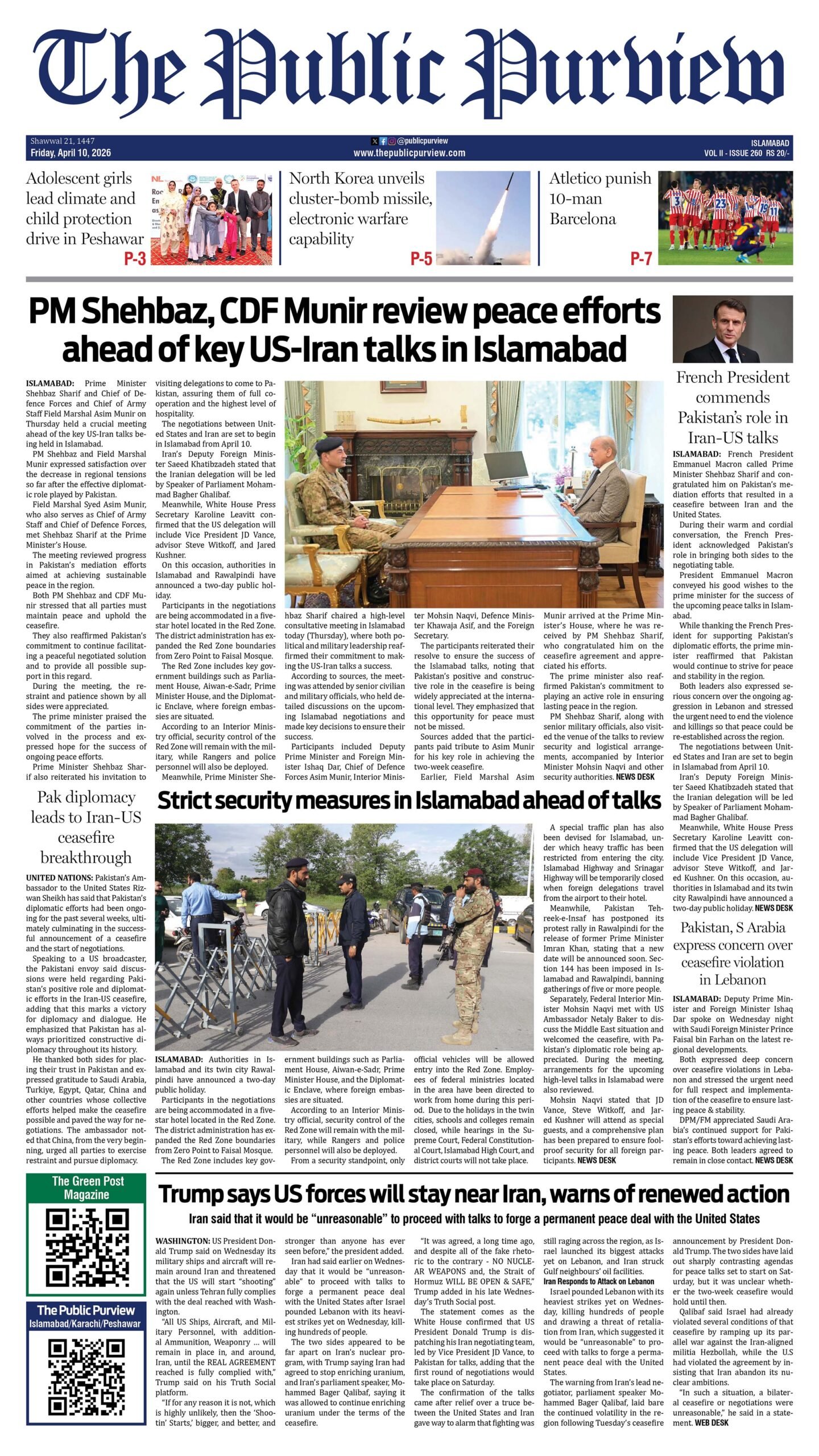 Today's E-Paper