
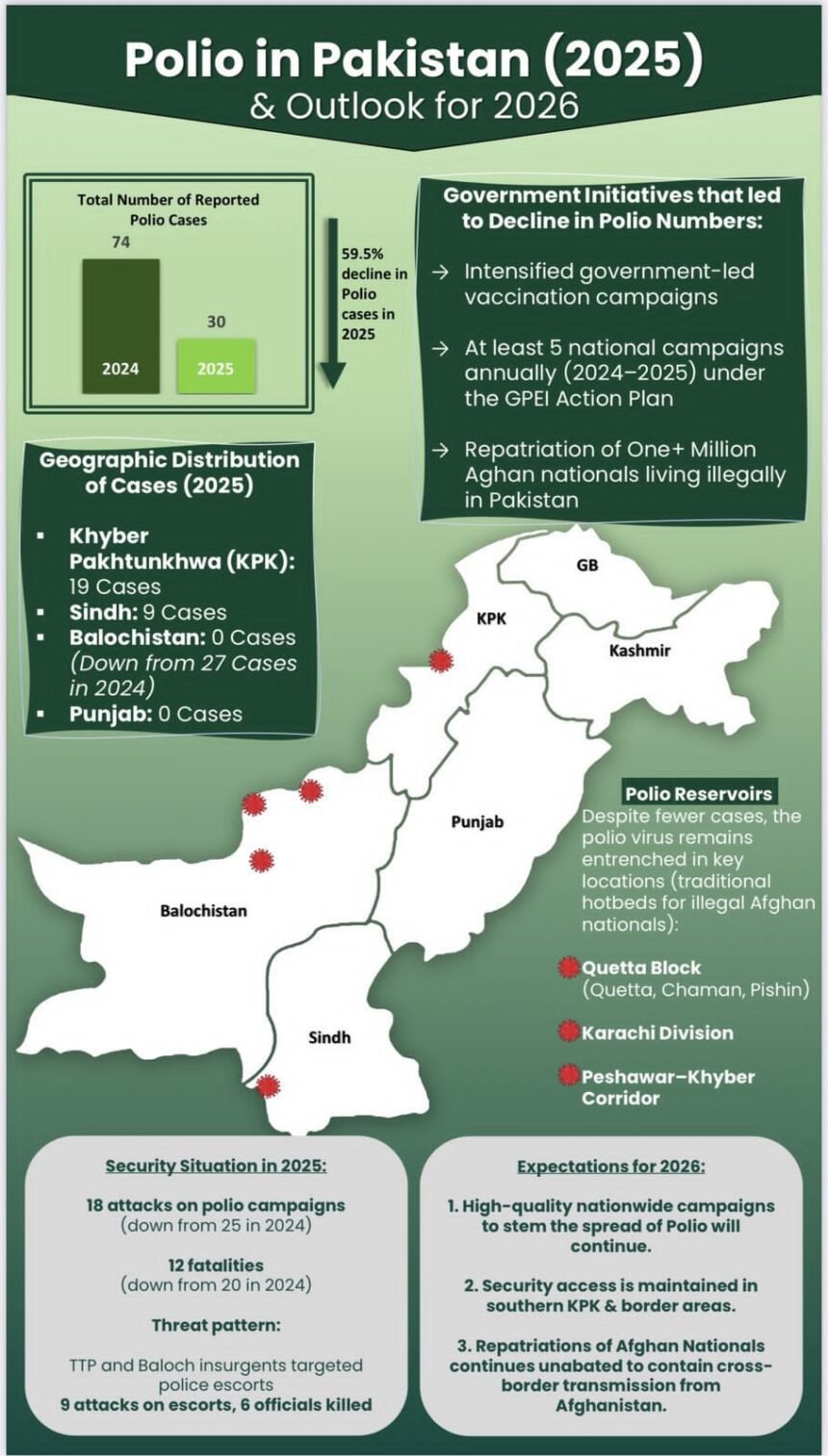
Islamabad, January 2026 — Pakistan’s efforts to regulate previously unorganised cross-border movement with Afghanistan have played a significant role in reducing polio transmission, health officials said, citing surveillance and vaccination data from 2025.
According to official figures, polio cases in Pakistan declined by 59.5 per cent in 2025, with transmission now confined to a smaller number of high-risk areas compared to previous years. Health authorities attribute this improvement partly to tighter border management, which has strengthened disease monitoring and limited opportunities for the wild poliovirus to spread across regions.
The Pakistan–Afghanistan border has long been considered a major challenge for polio eradication due to frequent and largely undocumented population movement. Afghanistan continues to report circulation of the wild poliovirus, and repeated cross-border travel has historically led to re-importation of the virus into Pakistan. Children from mobile and undocumented families were often missed during routine immunisation and supplementary vaccination campaigns.
Officials say recent measures, including better regulation of border crossings and the repatriation of undocumented Afghan immigrants, have reduced these risks. Vaccination coverage at transit points has improved, while mobile populations are now easier to identify, monitor and follow up, helping close long-standing immunisation gaps.
Enhanced border controls have also strengthened surveillance systems, with authorities reporting improvements in environmental sampling and faster follow-up of suspected cases. This has allowed for quicker detection and targeted responses in vulnerable districts.
Polio, a highly infectious and incurable disease that primarily affects children under five, can cause irreversible paralysis. Health experts stress that while vaccination remains the cornerstone of eradication, Pakistan’s progress in 2025 demonstrates that regulated cross-border movement is a critical public health intervention, particularly in the final phase of eliminating the virus.
Officials emphasised that sustained immunisation campaigns, continued vigilance and close regional cooperation will be essential to maintain momentum and achieve lasting polio eradication.




 Today's E-Paper