

By Muhammad Mohsin Iqbal
Positive thinking and optimism are among the noblest ways to approach life, for they inspire resilience and hope. Yet optimism, when detached from ground realities, can become a dangerous illusion. Nations, like individuals, suffer when emotions replace judgment and wishful thinking substitutes for strategy. In this context, certain memories frequently return to my mind—memories shaped not merely by personal observation but by Pakistan’s long and often painful engagement with global power politics.
When the renowned American intellectual and analyst Noam Chomsky visited Pakistan, he was asked a question that has troubled this country since its earliest years; how should Pakistan understand its relationship with the United States? Chomsky responded with disarming honesty. America, he said, has always pursued its own interests, irrespective of who sits in the White House. Where its interests lie, it cooperates generously; where they do not, it withdraws without hesitation.
To support his argument, he recalled several historical examples and, with a touch of sarcasm, remarked that the much-promised “Enterprise” fleet sent to “help” Pakistan had yet to arrive. Smiling, he added that Pakistanis are an emotional nation; say a few affectionate words to them and they become elated, a vulnerability that has led to repeated betrayals.
I was present on that occasion and was struck by the frankness with which an American described American policy. It was unsettling because it rang true. We are, indeed, a deeply emotional people. If a foreign leader laughs with our rulers or speaks to them in an unusually warm tone, we are quick to imagine a relationship of kinship, as though he were a close relative rather than the head of a powerful state guided by hard interests. Sentiment often clouds our judgment, and we mistake courtesy for commitment.
History, faith, and experience all counsel caution. The Qur’an clearly warns that Jews and Christians will not be friends in the sense of guardianship or unconditional loyalty. Yet the Holy Prophet (peace be upon him) entered into diplomatic and necessary agreements with them on the basis of equality and mutual obligation. He safeguarded the interests of the Muslim community, dealt with others fairly, but did not harbour illusions about their intentions. This balance between realism and principle offers a timeless lesson for statecraft: cooperation without naïveté, engagement without surrender.
Recent history provides painful confirmation. When the United States abruptly withdrew from Afghanistan, it did so with little regard for the consequences borne by neighbouring states, particularly Pakistan. Vast quantities of advanced military equipment—arms, night-vision devices, sophisticated communication tools, and heavy weaponry—were left behind. Instead of stabilising the region, these weapons seeped into the black market, empowering militant groups and criminal networks. Pakistan, already struggling with internal security challenges, has paid a heavy price. Cross-border terrorism intensified, arms flowed freely into volatile areas, and hard-won gains against extremism were undermined. Once again, America exited when its interests shifted, leaving others to manage the fallout.
This behaviour echoed an earlier episode, candidly acknowledged years later by former US Secretary of State Hillary Clinton. She admitted that after the Soviet Union withdrew its forces from Afghanistan, the United States simply walked away, abandoning the region and Pakistan alike. Having used Pakistan as a frontline ally, Washington disengaged without assisting in reconstruction or stabilisation. The resulting vacuum plunged Afghanistan into chaos, nurtured extremism, and eventually produced consequences that haunted the entire world. Clinton conceded that this abandonment was a grave mistake—an admission that confirmed what Pakistan had long experienced: partnerships are often transactional, not enduring.
Contemporary American politics further illustrates this pattern. The current US President is known for rapid shifts in tone and policy. Statements made during the day are frequently contradicted by actions taken at night. Policies toward China, Iran, and other countries oscillate according to immediate calculations. Not long ago, he appeared visibly displeased with the Indian Prime Minister; yet when strategic interests aligned, displeasure melted into public warmth. In international affairs, affection is rarely personal; it is dictated by advantage.
The events of May 2025 stand as a sobering reminder. At that critical juncture, divine help was with us and our military leadership remained vigilant. By the grace of Almighty Allah, Pakistan emerged successful. Had circumstances been otherwise, it is unlikely that today’s diplomatic posture toward Pakistan would be what it is. International respect follows strength and preparedness, not expectations or appeals.
The lesson is unmistakable. Pakistan must place Pakistan first. Relations between states inevitably fluctuate, shaped by interests rather than emotions. There is nothing immoral in this; it is the essence of global politics. What matters is that Pakistan safeguard its dignity, sovereignty, and integrity while engaging others on equal terms.
Above all, Pakistan should avoid the urge to put all its eggs in one basket. Overdependence on any single power has repeatedly constrained our options and weakened our negotiating position. A diversified foreign policy, rooted in realism and national consensus, is not a luxury but a necessity. Nations are ultimately remembered not for their hopes or sentiments, but for the decisions they make—and those decisions determine the path of their future.

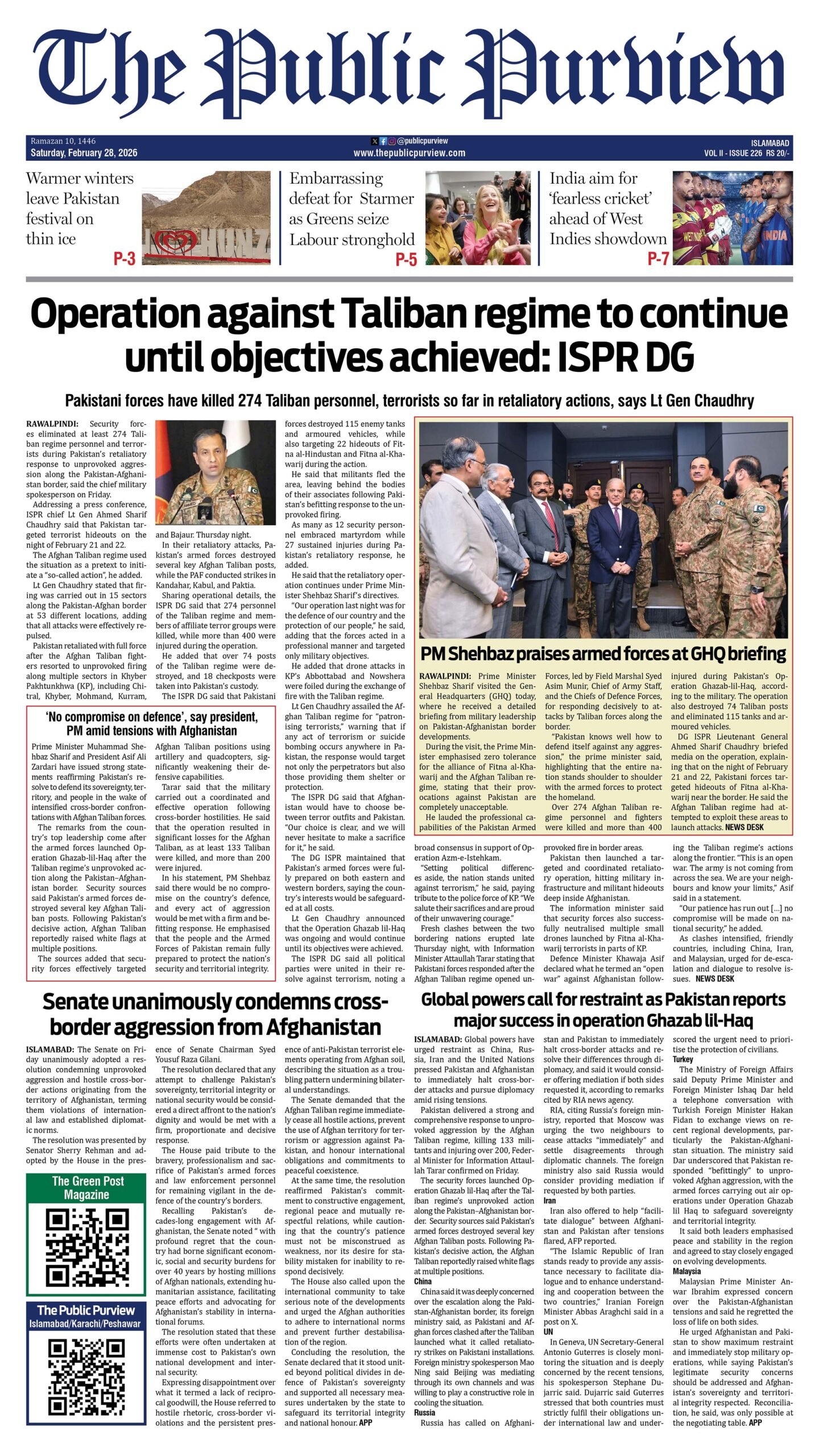 Today's E-Paper