
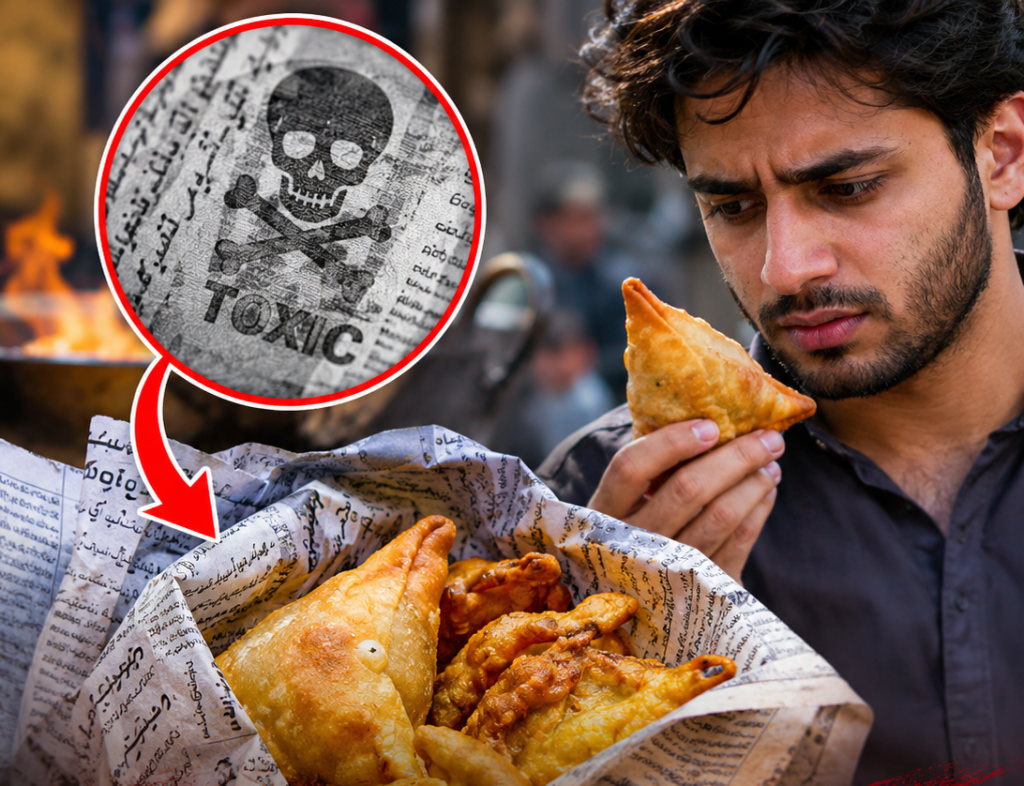
Buying freshly fried samosas, pakoras, jalebis and other snacks from street vendors and bringing them home wrapped in newspaper is a common practice in Pakistan. However, health experts warn that this everyday habit may pose potential health risks because newspaper is not designed or approved for direct contact with food.
According to a report by ARY News, chemicals present in printing ink may transfer to food when hot or oily items are placed directly on printed paper. These substances can then enter the body through consumption.
Dr Komal Mushtaq explained that newspaper ink is manufactured for printing purposes and should not be considered safe for packaging food. When hot or fried items come into contact with printed paper, heat and oil may increase the possibility of chemical substances transferring from the ink to the food.
She warned that printing inks may contain substances such as lead, solvents and other chemicals that could be harmful if they enter the food supply.
Exposure to certain harmful substances, including lead, can affect human health and may contribute to blood-related and neurological problems. Children and pregnant women may be particularly vulnerable to the effects of lead exposure.
Dr Mushtaq also cautioned that exposure to harmful chemicals may affect the liver and brain. However, the actual risk depends on the substances involved and the level and duration of exposure.
Another concern is the cleanliness of newspapers. During printing, transportation, storage and distribution, newspapers pass through factories, shops and numerous hands. As a result, dust, dirt and potentially harmful microorganisms may accumulate on their surfaces.
Placing food directly on such paper can create another possible route for contamination, particularly when the food is hot, oily or ready to eat.
Dr Mushtaq advised consumers to avoid wrapping samosas, pakoras and other hot food items in newspapers or ordinary printed paper. Instead, people should use food-grade butter paper, approved aluminium foil or other packaging materials specifically designed for food contact.
For food storage, she recommended safer options such as stainless-steel and glass containers. Consumers should also avoid using unsuitable plastic materials for hot food.
Health experts say changing this seemingly harmless packaging habit can help reduce avoidable exposure to potential contaminants. Vendors and consumers alike should prioritise food-grade packaging to improve everyday food safety.