
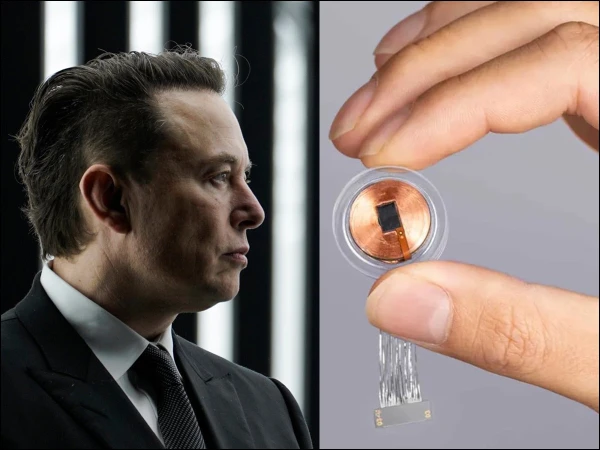
Elon Musk’s brain technology company Neuralink has received approval from the US Food and Drug Administration (FDA) to launch a pivotal clinical trial of its brain implant technology for patients with amyotrophic lateral sclerosis (ALS).
The study, named the Link Pivotal Study, will evaluate the safety and effectiveness of Neuralink’s brain-computer interface (BCI) in people experiencing severe paralysis due to ALS.
According to the company, the trial aims to determine whether participants can use digital devices, including computers, through their thoughts alone, potentially improving their independence and everyday lives.
Neuralink’s N1 implant is designed to be placed inside the skull, with tiny electrode threads extending into the brain region responsible for planning body movements. The system interprets brain activity associated with intended movements and translates those signals into commands for digital devices.
The new study will also assess the implant’s long-term safety and reliability across multiple medical centres.
Neuralink said more than 30 people have received its brain implants through earlier studies in the United States, Canada and the United Kingdom. Participants have reportedly used the technology to communicate with family members, pursue higher education and play video games.
The company has opened enrolment for the new trial but has not disclosed the expected number of participants, study duration or participating medical centres.
Importantly, FDA approval allows Neuralink to conduct the clinical trial and does not constitute approval for commercial sale of the device.
Neuralink’s Other Brain Technology Research
Neuralink is also conducting several studies exploring additional applications of its brain-computer interface technology.
Its PRIME study in the United States is evaluating the safety of the N1 implant and R1 surgical robot, including the ability of people with paralysis to control external devices.
The company is also conducting the CONVOY study, which explores whether participants can control assistive devices, including robotic arms, through brain implants.
Another project, known as VOICE, is being conducted with UT Southwestern Medical Center in Dallas to investigate communication options for people with severe speech impairments.
In Canada, the CAN-PRIME study is underway at Toronto Western Hospital, while the GB-PRIME study is being conducted in the United Kingdom under the leadership of University College London Hospitals.
Neuralink is also developing its Blindsight device for people with visual impairments. The technology received the FDA’s Breakthrough Device Designation in September 2024.