
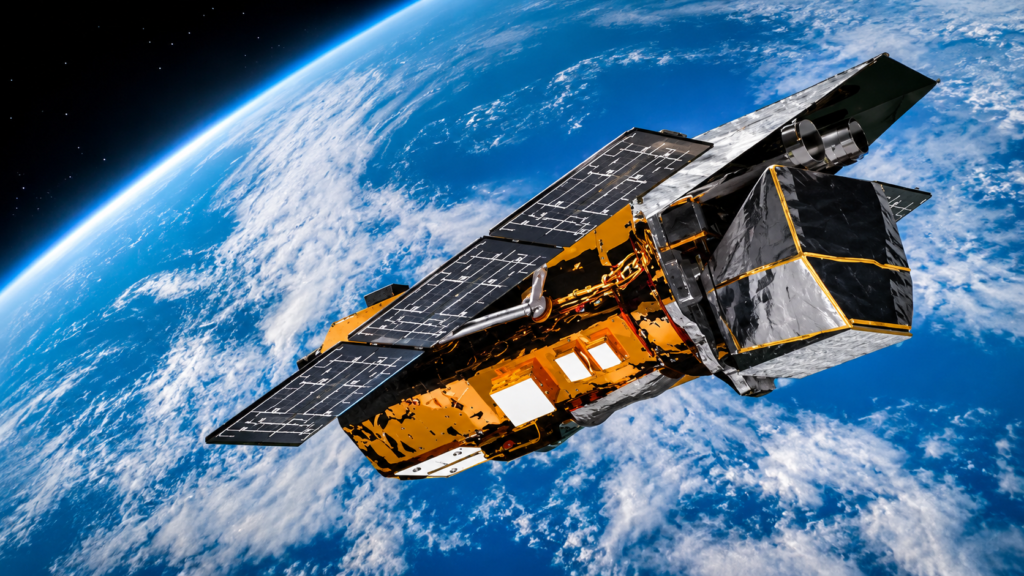
WASHINGTON, November 6, 2026: NASA’s Swift space telescope has re-entered Earth’s atmosphere and largely burned up over Indonesia, bringing an end to a 22-year mission that transformed scientists’ understanding of some of the universe’s most powerful cosmic explosions.
The spacecraft re-entered the atmosphere on November 4 at approximately 7:39 a.m. US Eastern Time, according to NASA and the US Space Force.
The 1,452-kilogram satellite was travelling at roughly 22 times the speed of sound when it encountered Earth’s atmosphere, generating intense heat that destroyed most of its structure.
Although some small fragments may have survived re-entry, NASA reported no injuries or damage associated with the incident.
Swift telescope’s final moments over Indonesia
According to Reuters, the spacecraft re-entered the atmosphere over Indonesia, although its exact location relative to Medan, the capital of North Sumatra province, was not immediately established.
Before re-entry, the US Space Force had assessed the risk posed by falling debris as relatively low, estimating the probability of injury to a person on Earth at approximately one in 2,100.
Aerospace engineer Dan Sladen, associated with British industrial company Accu Components, said before the event that only a few small, heavily burned fragments were expected to reach the ground.
He explained that atmospheric re-entry is a normal occurrence for satellites of this size, although the growing number of spacecraft in orbit has increased the importance of designing satellites for safe disposal.
A mission that transformed gamma-ray astronomy
Launched in 2004, the approximately $500 million Swift observatory was designed primarily to investigate gamma-ray bursts, among the most energetic explosions known in the universe.
The spacecraft carried three scientific instruments capable of observing cosmic events across different wavelengths, allowing astronomers to study rapidly changing phenomena in greater detail.
Over more than two decades, Swift observed gamma-ray bursts, hundreds of supernovae, stars being disrupted by black holes, X-ray emissions from stellar objects, asteroids and comets.
NASA said observations from the telescope contributed to approximately 7,000 scientific research papers, making it an important resource for astronomers studying high-energy astrophysics.
Originally designed for a two-year mission, Swift continued operating for nearly 22 years, far exceeding its planned lifespan.
Failed rescue mission preceded final re-entry
Unlike some spacecraft, Swift did not have an onboard propulsion system capable of raising its orbit, leaving it vulnerable to gradual orbital decay.
In July 2026, NASA launched an effort to extend the telescope’s operational life through a rescue mission involving Arizona-based aerospace startup Katalyst.
The mission used a spacecraft called Link, which was intended to dock with Swift and move it into a higher, more stable orbit.
However, the rescue attempt encountered technical problems when the Link spacecraft began tumbling shortly after reaching space.
By mid-August, mission operators had abandoned the recovery effort.
Swift ended its scientific operations on October 20 but remained in orbit until its atmospheric re-entry on November 4.
Its destruction marked the conclusion of one of NASA’s longest-running space observatory missions, leaving behind an extensive scientific record of cosmic explosions and other high-energy events.