
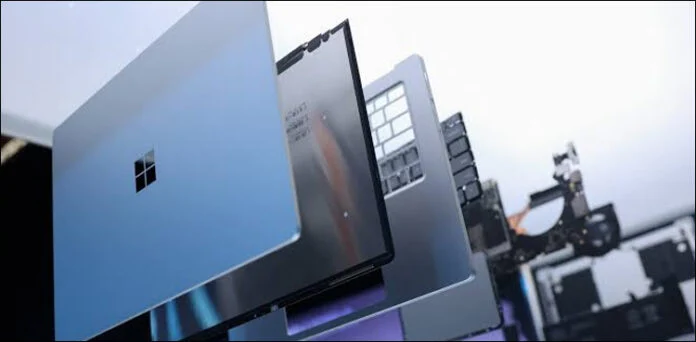
SAN FRANCISCO: Microsoft has unveiled a new generation of AI-focused Windows PCs, including the high-powered Surface Laptop Ultra, alongside fresh security technology designed to stop AI agents from accessing data or performing tasks without permission.
The company also introduced AI models that can run directly on personal computers rather than relying entirely on cloud infrastructure, marking a broader push to move more artificial intelligence workloads onto local devices.
Surface Laptop Ultra Targets Local AI Workloads
Microsoft presented the Surface Laptop Ultra at an event in San Francisco. The device is powered by Nvidia RTX Spark chips and is designed to handle demanding AI tasks on Windows machines.
The company is positioning Windows as a platform for AI agents capable of writing code, assisting with complex business tasks and performing other advanced functions directly on desktops and laptops.
For Microsoft, the strategy could shift some workloads currently processed in Azure cloud data centres onto customers’ own devices, particularly where cost, privacy or local processing are important.
New Security System Built for AI Agents
Microsoft also announced Microsoft Execution Containers, or MXC, a new security framework intended to restrict what AI agents can access and do on a Windows device.
The system is designed to help organisations set limits on AI agents and allow Windows to enforce those rules locally.
Microsoft said Anthropic, OpenAI and Nvidia would use the technology, while Meta’s Muse assistant and the open-source OpenClaw agent system would also work with elements of the new security framework.
Microsoft CEO Satya Nadella said the company wanted to make the desktop a secure environment for AI agents to operate.
More AI Models Move From Cloud to PC
Microsoft also showcased AI models that can run locally on powerful Windows computers.
These include Nvidia’s open-source Nemotron model, while a version of DeepSeek’s V4 can run on systems with at least 60GB of memory, according to Microsoft.
The company is taking a similar approach with Copilot, allowing some tasks to be handled locally while the most demanding workloads continue to use cloud computing.
This hybrid model could be particularly useful where privacy, latency or cloud costs are a concern.
High Prices Could Limit Adoption
Cost remains one of the biggest barriers to wider adoption of high-end AI PCs.
Microsoft’s Surface Laptop Ultra will start at $2,599, while a model with a 20-core processor, 128GB of memory and 1TB of storage will cost $5,899.
By comparison, Apple’s MacBook Pro with 128GB of memory and 2TB of storage is priced at around $6,700, although the two devices are not directly comparable.
Rising memory-chip costs have also pushed up prices across the wider AI hardware market, making local AI computing increasingly expensive for mainstream users.
Microsoft’s latest push shows how competition between Windows and Apple is expanding beyond conventional hardware performance into a new race over AI computing, privacy and the future role of intelligent agents on personal devices.