
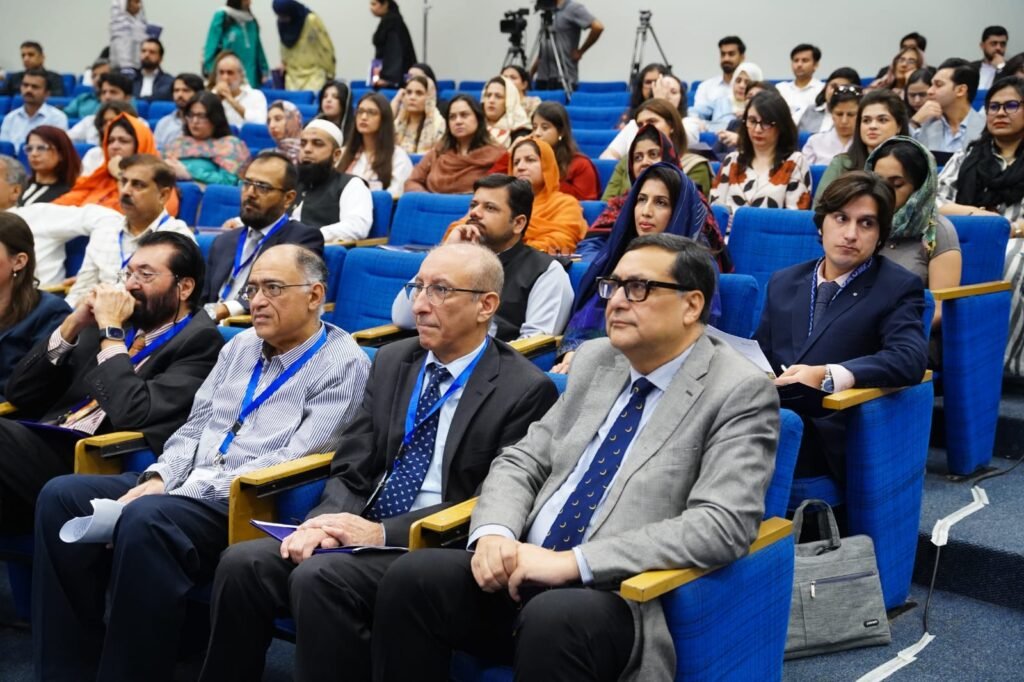
ISLAMABAD, November 1, 2026: Education researchers, policymakers and development partners have called for stronger links between research and policymaking to address Pakistan’s education challenges, as the DARE-RC International Education Summit 2026 (EDCON26) concluded at Lahore University of Management Sciences (LUMS).
The two-day summit, held on October 31 and November 1, brought together education leaders to examine findings from 44 research studies and scoping papers and identify priorities for improving teaching, governance, inclusion and education outcomes across Pakistan.
Organised by the Data and Research in Education Research Consortium (DARE-RC) in collaboration with the Syed Ahsan Ali and Syed Maratib Ali School of Education at LUMS, the conference focused on translating research findings into practical education reforms.
Held under the theme From Evidence to Action, EDCON26 explored how reliable data and research can help governments allocate limited resources more effectively and develop policies that respond to the needs of students and teachers.
Maria Wyard, Head of Human Capital, Inclusion and Governance at the British High Commission, highlighted the importance of evidence-based decision-making at a time of growing financial pressures.
“With resources under pressure in Pakistan and globally, we must make better use of the evidence we already have and fill critical knowledge gaps,” she said.
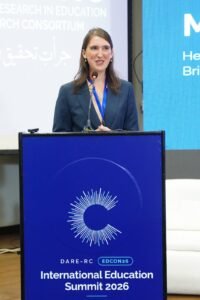
Wyard said the United Kingdom’s investment in DARE was intended to strengthen Pakistan’s education research base, improve access to quality data and support policymaking informed by evidence rather than assumptions.
Federal Secretary of Education Nadeem Mahbub, LUMS Vice Chancellor Dr Ali Cheema and WWF International President Dr Adil Najam, a former LUMS vice chancellor, also addressed the opening proceedings.
Discussions on the role of research in education reform featured Zindagi Trust CEO Shehzad Roy, WISE CEO Dr Asyia Kazmi, Malala Fund Pakistan Chief Executive Nishat Riaz, The Citizens Foundation COO Riaz Kamlani and Sustainable Development Policy Institute Executive Director Abid Suleri.
The first day examined DARE-RC research covering data and artificial intelligence, teacher development, the education workforce, inclusion and climate resilience.
The second day shifted attention to policy implementation, with discussions on governance, accountability, language policy and expanding education initiatives supported by research.
Three policy labs brought researchers and government representatives together to identify future reform priorities and explore how research findings could inform decisions at federal and provincial levels.
Government participants included Punjab Parliamentary Secretary for School Education Nausheen Adnan, Punjab Education Foundation Managing Director Shahid Farid, Balochistan Special Secretary for School Education Rizwan Qadeer, Sindh education official Aftab Alam and PMIU-PERSPR Programme Director Omer Iftikhar Sherazi.
The closing session examined government decision-making processes, with contributions from Punjab Environment Protection and Climate Change Secretary Silwat Saeed, Khyber Pakhtunkhwa Elementary and Secondary Education Foundation Managing Director Qaisar Alam and Balochistan School Education Secretary Lal Jan Jaffar.
The summit also marked the conclusion of the DARE-RC programme, which has produced a substantial body of education research while strengthening collaboration among academics, policymakers and practitioners.
DARE-RC Research Director Dr Monazza Aslam said combining findings from individual studies could provide a clearer understanding of which education interventions succeed, who benefits from them and the conditions required for effective implementation.
She emphasised that Pakistan’s education challenges were increasingly interconnected, making it essential to draw on collective research findings rather than examine individual studies in isolation.
According to Dr Aslam, the programme’s research offers insights into developing education systems that are more equitable, effective and resilient, particularly for marginalised communities.
Although DARE-RC is concluding its work, the EDCON conference series will continue under the Syed Ahsan Ali and Syed Maratib Ali School of Education at LUMS.
The university will carry forward the initiative as a platform for connecting academic research with education policy, maintaining the collaboration established through DARE-RC and supporting future reforms in Pakistan’s education sector.