
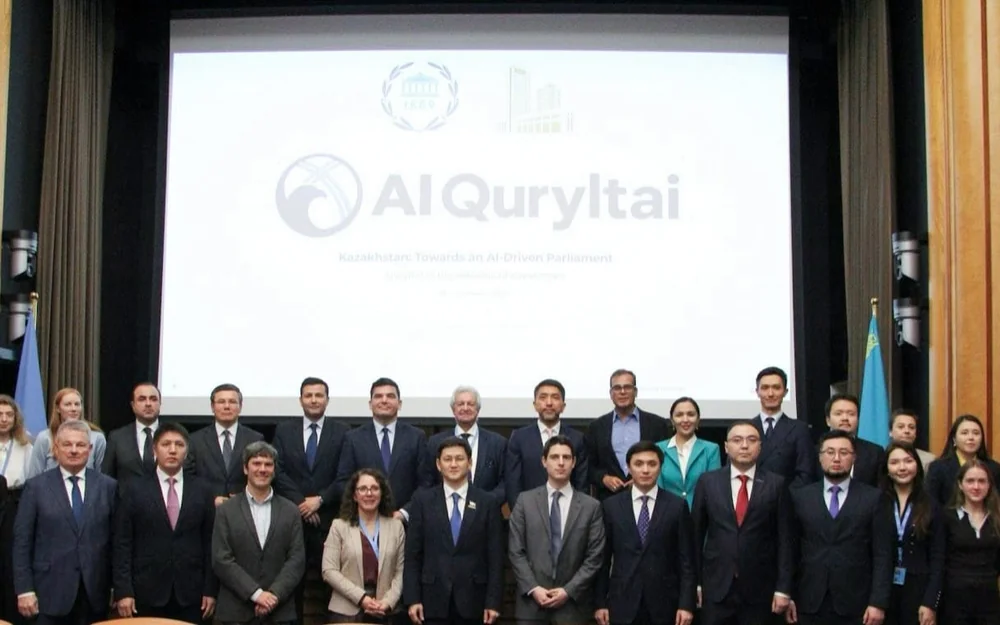
ISLAMABAD: Kazakhstan has taken a significant step towards integrating artificial intelligence into parliamentary proceedings, using its specialised AI-Quryltai platform to draft the country’s first AI-assisted bill aimed at protecting children in the digital and information environment.
Kazakhstan’s Parliament, the Kuryltai, developed the platform to strengthen legislative research, improve legal analysis and enhance the quality of lawmaking through artificial intelligence.
The proposed legislation, titled “On the Digital and Information Safety of Children,” represents the first legislative initiative developed with the assistance of the platform.
The system conducted a comprehensive assessment of online safety risks facing children, drawing on big data, citizens’ appeals, parental concerns, expert recommendations and international regulatory practices.
A specialised legal AI model, supported by a database of more than 800,000 regulatory legal acts, was also used to draft legislative provisions, identify potential inconsistencies and improve the scope of proposed amendments.

More Than 120 Amendments Proposed
Deputy Speaker of the Kuryltai and co-author of the bill Dinara Zakiyeva said the platform helped lawmakers develop measures to protect children against emerging digital threats.
The proposed legislation includes mandatory parental control mechanisms across digital platforms, verification and labelling of applications and games, and restrictions on digital products found to pose safety risks.
According to Zakiyeva, more than 120 legislative amendments have been drafted as part of the initiative.
Kuryltai deputy and Head of the AI Lab Yekaterina Smyshlyayeva said the platform represents a transition from conventional parliamentary digitalisation towards an intelligent legislative environment.
She explained that interconnected AI agents and specialised modules would assist lawmakers and parliamentary staff throughout different stages of legislative work.
How AI-Quryltai Supports Lawmaking
The AI-Quryltai ecosystem comprises five interconnected areas covering the entire legislative lifecycle:
Intelligent analytics: Examining public concerns, statistics, research and judicial precedents.
Legal analysis: Identifying conflicting provisions, reviewing terminology and assisting in legislative drafting.
Intelligent review: Detecting potential corruption risks, conflicts of interest and legal inconsistencies.
Regulatory impact assessment: Evaluating the potential economic, social and institutional consequences of proposed legislation.
Legislative monitoring: Assessing the effectiveness of existing laws through court decisions, public feedback and statistical analysis.
Smyshlyayeva emphasised that artificial intelligence would remain a supporting tool rather than a replacement for human decision-making.
She said responsibility for determining public policy, evaluating legislative proposals and making legal decisions would remain with elected representatives and qualified specialists.
Kazakhstan’s AI Parliament Initiative Draws International Attention
AI-Quryltai is currently undergoing development and pilot testing. Kazakhstan has established a dedicated laboratory bringing together lawmakers, technology developers and experts to evaluate AI-powered legislative tools.
The laboratory’s portfolio includes approximately 10 projects, including three legislative initiatives.
The platform was also presented at the World e-Parliament Conference 2026 in Brussels, organised by the Inter-Parliamentary Union (IPU) and the European Parliament, bringing together representatives and experts from more than 100 countries.
IPU President Milton Dick described Kazakhstan’s transition from an electronic parliament towards an AI-enabled parliament as impressive.
He stressed that artificial intelligence should serve citizens’ interests and support democratic institutions while ensuring that elected representatives remain accountable for their decisions.
Kazakhstan’s initiative highlights the growing role of artificial intelligence in public administration and legislative modernisation, while maintaining human oversight, democratic accountability and professional responsibility.