
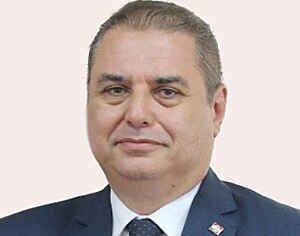
GENEVA — International Organization for Standardization President Dr Khaled Soufi has outlined a global standards agenda centred on innovation, sustainability and stronger multilateral cooperation, saying international standards are becoming increasingly important in a period of rapid technological change and global uncertainty.
Dr Soufi, who began his term as ISO president in January 2026, said standards provide consistency amid change, credibility in times of uncertainty and common ground in an increasingly fragmented world.
In his inaugural message, the former chairman of the Egyptian Organization for Standardization said international standards help innovation flourish by providing frameworks that ensure products, services and systems meet measurable quality requirements.
He said this role also makes standards powerful enablers of international trade by creating a common language that builds trust and supports interoperability across markets.
Dr Soufi said his vision was for ISO to remain a central pillar of multilateral cooperation while strengthening the role of standards in sustainable development and digital innovation.
He stressed that ISO must continue developing high-quality standards that reflect the latest technological advances, respond to market needs and provide practical solutions to global challenges.
Emerging technologies and environmental sustainability, he said, would remain two major areas of focus.
Dr Soufi highlighted joint work by ISO and the International Electrotechnical Commission on artificial intelligence and quantum technologies, describing it as part of wider efforts to shape standards for the digital age.
He also pointed to work in areas including bio-digital convergence, the metaverse and brain-computer interfaces.
On climate and sustainability, the ISO president said internationally agreed standards covering energy management, greenhouse gas emissions, climate adaptation and mitigation could help turn climate commitments into measurable action.
He added that ISO’s work on biodiversity and the circular economy was helping organisations contribute to the sustainable management and renewal of natural resources.
Dr Soufi said international standards would remain essential in supporting responsible innovation, sustainable development and greater cooperation across economies and industries.