
TEHRAN: Iran has insisted that its recently signed memorandum of understanding with the United States contains no ambiguity, as military tensions across the Gulf continue to intensify and the Strait of Hormuz remains at the centre of the regional crisis.
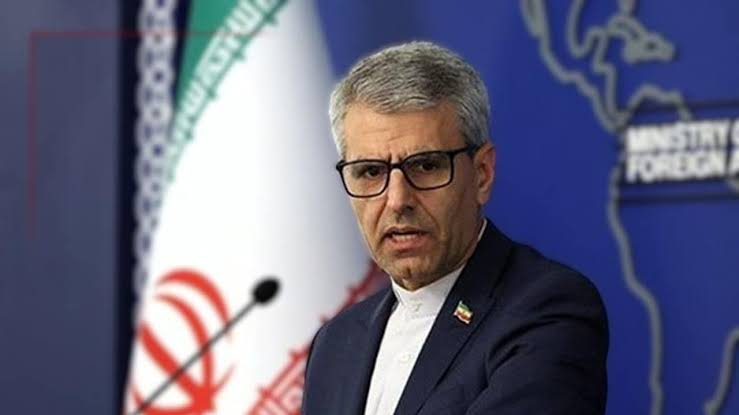
Iranian Foreign Ministry spokesperson Esmaeil Baghaei said the memorandum was concise, consisting of 14 provisions, and clearly defined the responsibilities of both parties. He reiterated that future arrangements concerning the Strait of Hormuz would be pursued through consultations with Oman and dialogue with other regional countries.
“We made it clear from the outset that responsibility for determining the future management of the Strait of Hormuz rests with Iran,” Baghaei said, according to Iranian media.
His remarks come amid renewed military exchanges between Iran and the United States, with both sides accusing each other of violating understandings reached after weeks of heightened confrontation.
Meanwhile, the conflict widened after the US military confirmed the death of an American service member following an Iranian drone attack in northern Iraq. The incident came as Iran continued strikes targeting US military positions and facilities across parts of the Middle East, according to American and regional officials.
Kuwaiti authorities said Iranian attacks damaged facilities belonging to the Ministry of Electricity, Water and Renewable Energy, while several Gulf states, including Saudi Arabia, the United Arab Emirates, Qatar and Bahrain, condemned attacks targeting regional infrastructure and security.
Jordan also summoned Iran’s chargé d’affaires to lodge a formal protest over continued attacks and what it described as provocative statements by Iranian officials.
Separately, Iran’s Islamic Revolutionary Guard Corps (IRGC) accused Washington of launching further military operations to offset what it called American battlefield setbacks.
Brigadier General Yadollah Javani, the IRGC’s deputy commander for political affairs, claimed Iranian forces had inflicted significant damage on US military facilities in Jordan, Kuwait, Oman and other locations across the region. He also asserted that Iran maintains full control over the Strait of Hormuz and would continue defending what Tehran describes as its sovereign authority over the strategic waterway.
The IRGC’s battlefield claims have not been independently verified.
The Strait of Hormuz remains one of the world’s most strategically important maritime chokepoints, carrying nearly one-fifth of global oil and liquefied natural gas shipments. Any disruption to shipping through the waterway has immediate implications for global energy markets and international trade.
The United States has repeatedly stressed that international shipping must remain free from interference, while Iran maintains that it has the right to oversee security arrangements affecting navigation through the strait.
With diplomatic negotiations showing little sign of progress and military operations continuing across multiple fronts, regional tensions remain elevated, raising fresh concerns over energy security, commercial shipping and wider stability in the Middle East.
Also Read: Iran Says Strait of Hormuz Shipping Decisions Must Be Made With Oman