
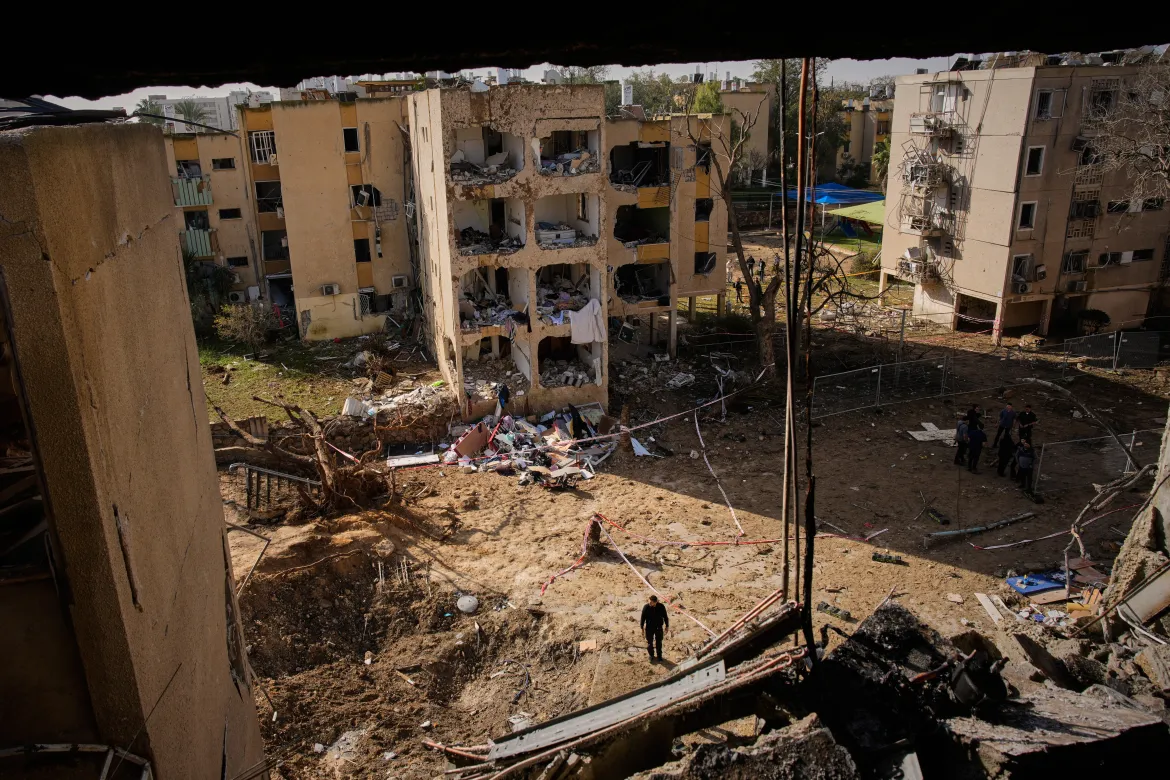
Iran launched multiple waves of missiles at Israel on Tuesday, setting off air raid sirens in cities including Tel Aviv and causing damage to residential buildings, according to Israeli authorities. The Iran-Israel conflict intensified as Tehran denied claims by US President Donald Trump that negotiations were underway to ease hostilities.
Emergency services in Tel Aviv said rescue teams were searching for civilians in damaged buildings. Officials said the extent of casualties was not immediately clear and investigations were ongoing into whether the damage was caused by direct strikes or intercepted debris.
Strikes continue on both sides
Israel’s military said it carried out large-scale airstrikes in central Tehran a day earlier, targeting facilities linked to the Islamic Revolutionary Guard Corps (IRGC) and Iran’s Intelligence Ministry. It added that more than 50 sites, including missile storage and launch locations, were hit overnight.
Iran’s Revolutionary Guards said further attacks were being launched against US-linked targets in the region, while dismissing US statements as “psychological operations.”
Iran denies negotiation claims
Trump said the United States had held “productive” discussions with Iranian officials and announced a five-day delay in planned strikes on Iran’s energy infrastructure.
Iran’s parliament speaker Mohammad Baqer Qalibaf rejected those claims, stating that no negotiations had taken place and describing the reports as “fake news,” according to Iranian media.
Officials familiar with diplomatic efforts said indirect communication was ongoing through intermediaries including Egypt, Pakistan, and Gulf states. Pakistani officials indicated that Islamabad could host talks, though no formal confirmation has been issued.
Pakistan in focus as potential host for US-Iran talks, sources say
Energy routes and markets under pressure
The conflict has disrupted activity in the Strait of Hormuz, a key global shipping route for oil and liquefied natural gas. Iran has restricted passage through the strait since late February, raising concerns over energy supplies.
Oil prices showed renewed volatility, rising after earlier declines, as markets reacted to continued uncertainty surrounding the conflict.





 Today's E-Paper