
Pakistan’s drug regulator and industry leaders are pushing 2-D barcoding as a key step to ensure medicine safety, curb counterfeit drugs, and align the pharmaceutical sector with global standards.
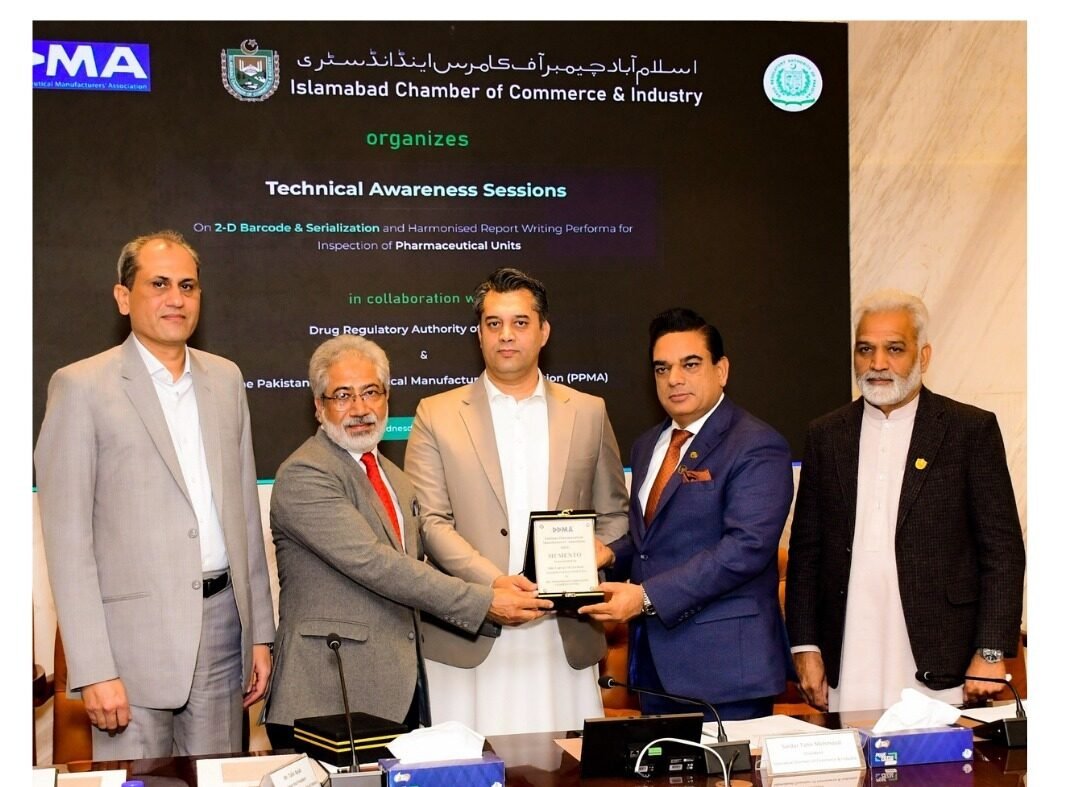
Islamabad: The Islamabad Chamber of Commerce and Industry (ICCI) on Tuesday hosted a capacity-building and technical awareness session organized by the Drug Regulatory Authority of Pakistan (DRAP), focusing on 2-D barcoding, serialization, and the harmonized inspection performa for pharmaceutical units, underscoring the growing emphasis on traceability and patient safety in the country’s medicines supply chain.
The session, held at the ICCI premises, brought together regulators, technical experts, and representatives of the pharmaceutical industry to discuss regulatory reforms aimed at improving transparency, quality assurance, and compliance with international best practices.
Addressing the gathering as chief guest, ICCI President Sardar Tahir Mehmood said the pharmaceutical sector remains one of Pakistan’s most sensitive and strategic industries, directly linked to public health, patient safety, national credibility, and export growth. He stressed that reforms related to traceability and quality control should be viewed as national priorities rather than merely technical requirements.
Also Read: ICCI President Urges Islamabad Graduates to Develop Market-Driven Skills
The ICCI president appreciated DRAP for adopting a consultative and facilitative approach and for engaging the industry ahead of implementing revised regulations. He said the introduction of 2-D barcoding and serialization represents a major step toward aligning Pakistan’s pharmaceutical regulatory framework with World Health Organization (WHO) guidelines and international standards.
According to him, the system will help prevent counterfeit medicines, strengthen supply-chain integrity, improve product recall mechanisms, enhance confidence in locally manufactured drugs, and support access to regulated international markets. He urged pharmaceutical manufacturers to see serialization as an investment in credibility, competitiveness, and export readiness, while calling on regulators to ensure clarity and phased implementation during the transition period.
Earlier, the Director of the Quality Assurance and Laboratory Testing Division at DRAP briefed participants on the harmonized report-writing performa for inspectors of pharmaceutical units, explaining how standardized inspections can improve regulatory consistency and transparency.
Ms Tehreem Sara, Additional Director at DRAP, delivered a detailed presentation on the 2-D barcode and serialization rules, outlining compliance requirements, implementation timelines, and monitoring mechanisms designed to strengthen oversight of the pharmaceutical supply chain.
Nawaz Ahmed, Secretary General of the Pakistan Pharmaceutical Manufacturers’ Association (PPMA), also addressed the session, sharing industry perspectives and highlighting the need for continued engagement between regulators and manufacturers to ensure smooth and practical implementation of the new system.
Faisal Muzammal, Chairman of the PPMA Committee and Chairman of the ICCI Standing Committee on Pharmaceuticals, emphasized the importance of sustained regulator–industry collaboration to achieve shared objectives of medicine safety, regulatory credibility, and international competitiveness.
The session concluded with a vote of thanks by ICCI Vice President Mohammad Irfan Chaudhry, who reaffirmed the commitment of both regulators and industry stakeholders to work jointly for ensuring safe, quality medicines, strengthening regulatory trust, and positioning Pakistan’s pharmaceutical sector on a globally competitive footing.





 Today's E-Paper