
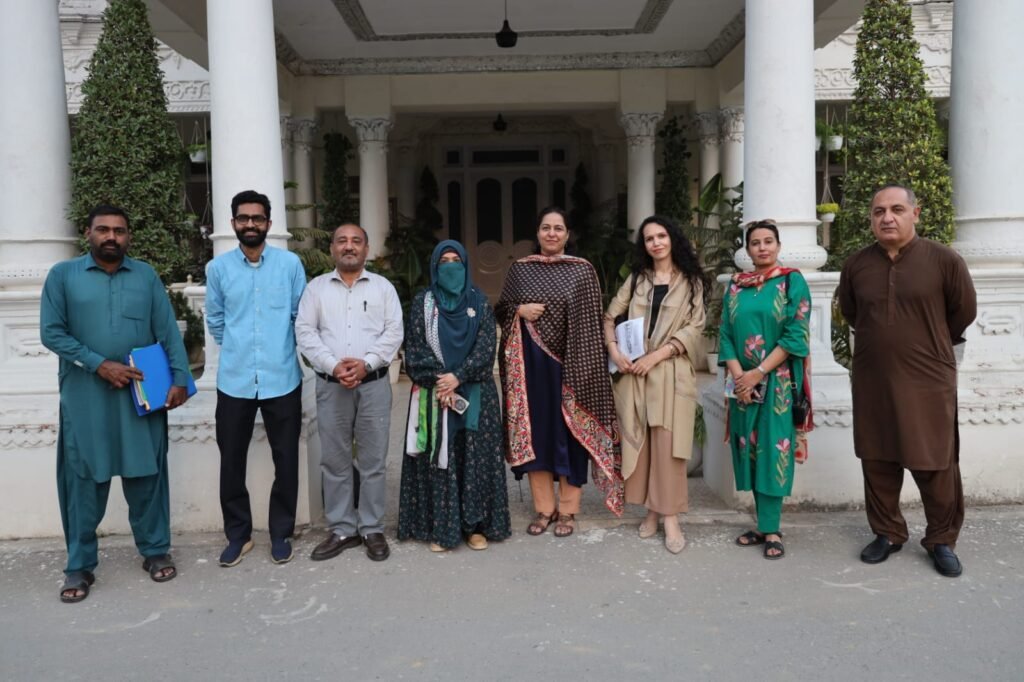
RAWALPINDI: The Aga Khan Cultural Service Pakistan (AKCS-P) technical team has conducted a two-day visit to Fatima Jinnah Women University (FJWU) in Rawalpindi to assess its historic buildings and explore measures for their restoration and preservation.
The initiative aims to protect the university’s architectural and cultural heritage and preserve its historical significance for future generations.
Vice Chancellor Briefs Team on Historical Significance
A meeting chaired by FJWU Vice Chancellor Professor Dr Bushra Mirza, recipient of the Tamgha-e-Imtiaz, provided an opportunity to discuss the university’s historic buildings, their background, and their cultural and historical importance.
The meeting was attended by Professor Dr Tahir Mukhtar, Director of Planning and Development (P&D); Dr Hisham Akhtar, Director of the Office of Research, Innovation and Commercialization (ORIC); Dr Surayya Chaudhry, Head of the Department of Fine Arts; Associate Professor Raheela Mushtaq; and Engineer Samira Khalid, Additional Director of P&D.
The AKCS-P delegation included Wajahat Ali, Director of Conservation and Design; Shukarullah Baig, Head of Conservation; and architects Umar, Hanan and Susan.
Technical Assessment of Historic Architecture
On October 31, 2026, the AKCS-P specialists conducted a detailed campus inspection alongside Engineer Samira Khalid, examining the historic buildings and their architectural features.
The team appreciated the buildings’ distinctive architectural craftsmanship, construction techniques and aesthetic design. Discussions also focused on approaches to conserving the structures while retaining their original character.
Preserving Heritage for Future Generations
The initiative, under the leadership of Vice Chancellor Professor Dr Bushra Mirza, reflects the university’s commitment to protecting its historic and cultural assets.
The technical assessment is an important step towards exploring appropriate conservation measures to safeguard the university’s architectural legacy and maintain its historical identity for generations to come.