
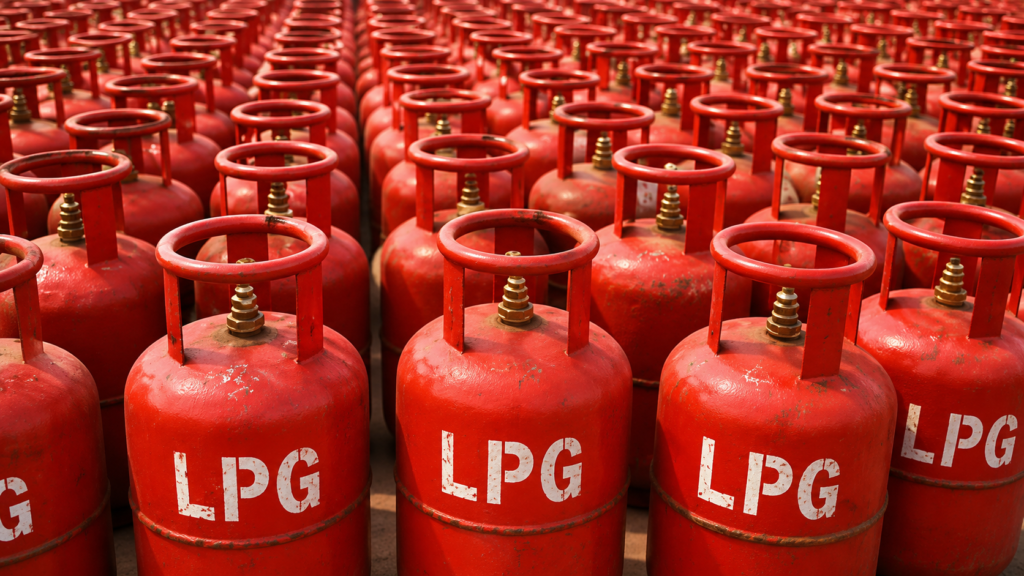
ISLAMABAD, November 6, 2026: The federal government has announced plans to introduce a new liquefied petroleum gas (LPG) policy that will link domestic prices to import parity rates, aiming to eliminate artificial shortages, curb black marketing and promote competition in the market.
Federal Minister for Petroleum Ali Pervaiz Malik said the proposed policy would replace the existing quota system with a competitive supply mechanism to improve LPG availability and ensure sales at regulated rates, particularly during winter.
The announcement comes amid concerns over LPG shortages and excessive profiteering as demand increases with the onset of colder weather.
The minister said disruptions along Pakistan’s western border had already affected LPG supplies before the winter season, creating pressure on domestic availability.
Under the proposed arrangement, four major state-owned companies will import LPG through government-to-government (G2G) and business-to-business (B2B) agreements.
Pakistan State Oil (PSO), Pakistan LNG Limited (PLL), Sui Southern Gas Company (SSGC) and Pak-Arab Refinery Limited (PARCO) are expected to play key roles in securing additional supplies.
The minister said private-sector importers would also have greater freedom to arrange LPG imports and compete on prices, with the objective of improving supply and reducing market manipulation.
Officials said the four public-sector companies had already received LPG supply offers from Saudi Arabia and Oman.
The government also plans to prioritise maritime imports over land routes to reduce dependence on border crossings and minimise supply disruptions.
LPG prices could rise despite proposed reforms
Although the government aims to improve competition and eliminate artificial shortages, energy experts have warned that linking LPG prices to international import parity rates could increase costs for domestic consumers.
According to industry estimates cited in the report, LPG prices could rise by more than Rs200 per kilogram from the current rate of approximately Rs295 per kilogram if the proposed pricing formula is implemented.
Such an increase could push LPG prices above Rs495 per kilogram, although the final impact would depend on international prices and the policy’s implementation.
The government is also considering a targeted arrangement to provide LPG at Rs300 to Rs350 per kilogram to vulnerable households identified through eligibility criteria associated with the Benazir Income Support Programme (BISP).
The proposed support mechanism is intended to protect lower-income consumers from excessive price increases.
Officials said Pakistan relies heavily on imported LPG, with approximately 70% of domestic requirements met through imports.
Daily consumption was reported at around 7,000 tonnes, making reliable international supply arrangements important for maintaining market stability.
The proposed policy seeks to balance improved supply and market competition with consumer affordability, although its effectiveness will depend on implementation and international LPG price movements.