
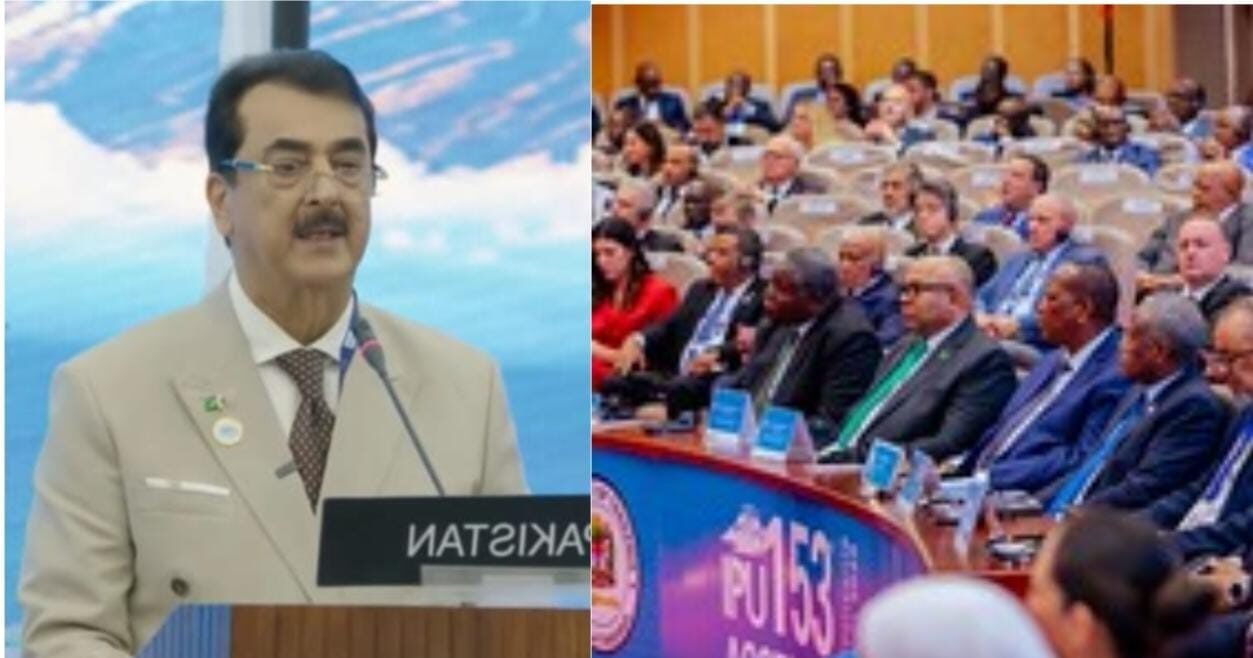
ARUSHA: Chairman Senate Syed Yousaf Raza Gilani on Tuesday called for stronger inclusive governance, international cooperation and peaceful resolution of disputes, saying sustainable development and human empowerment cannot be separated from peace and security.
Addressing the 153rd Assembly of the Inter-Parliamentary Union in Arusha, Tanzania, Gilani said inclusion, trust and equal opportunity should guide not only governance within countries but also relations among states.
Speaking on the theme “Enhancing good governance and empowering communities through inclusivity, trust and opportunities for all,” he said parliaments had a key role to play in building confidence, reducing divisions and strengthening cooperation at a time of conflict, terrorism, humanitarian crises and growing geopolitical tensions.
Gilani reaffirmed Pakistan’s commitment to multilateralism, dialogue and the peaceful settlement of disputes, stressing that parliamentary diplomacy could help create space for understanding where political differences had hardened.
Referring to recent tensions in the Middle East, he said Pakistan had consistently supported de-escalation, dialogue and ceasefire efforts and remained committed to international initiatives aimed at long-term regional stability.
He called for an immediate and lasting ceasefire in Gaza, unhindered humanitarian assistance and a just resolution of the Palestine issue in line with relevant United Nations resolutions and international law.
The Senate chairman also reiterated Pakistan’s position on Jammu and Kashmir, calling for the right to self-determination of the Kashmiri people in accordance with relevant UN Security Council resolutions.
He said unresolved disputes could not be ignored indefinitely and argued that lasting peace required sustained international attention, dialogue and efforts to address the underlying causes of conflict.
Gilani also referred to the Mecca Joint Defence Agreement between Pakistan, Saudi Arabia and Türkiye, describing it as an example of collective responsibility and regional cooperation for peace and stability.
He said there could be no sustainable development without peace and no meaningful empowerment without security.
Recalling Pakistan’s experience in confronting terrorism, Gilani said the country had made major sacrifices and continued to contribute to regional and international peace and security efforts.
Turning to Pakistan’s parliamentary system, he said the Senate represented the principle of inclusive federalism by giving equal representation to all federating units.
He added that Parliament had played an important role in bringing marginalised communities into the national mainstream and strengthening their political and constitutional participation.
Gilani also recalled the Inter-Parliamentary Speakers’ Conference held in Islamabad, attended by parliamentary leaders from more than 40 countries.
He said the principles set out in the Islamabad Communiqué — “Dialogue over discord. Inclusion over division. Development over deprivation.” — remained relevant to the international community in addressing shared global challenges.
Concluding his address, the Senate chairman said the strength of democracy should ultimately be judged by its ability to protect human dignity, promote peace and create opportunity.
He urged parliamentarians to deepen dialogue, strengthen parliamentary diplomacy and work collectively towards a more inclusive, peaceful and equitable international order.
Gilani said the presence of parliamentary delegations from across the IPU community in Arusha itself demonstrated the continuing importance of dialogue among nations.
“At a time when the international community faces profound challenges, our collective presence here is a reminder that differences need not divide us,” he said, adding that parliaments could help build bridges through mutual respect and cooperation.