
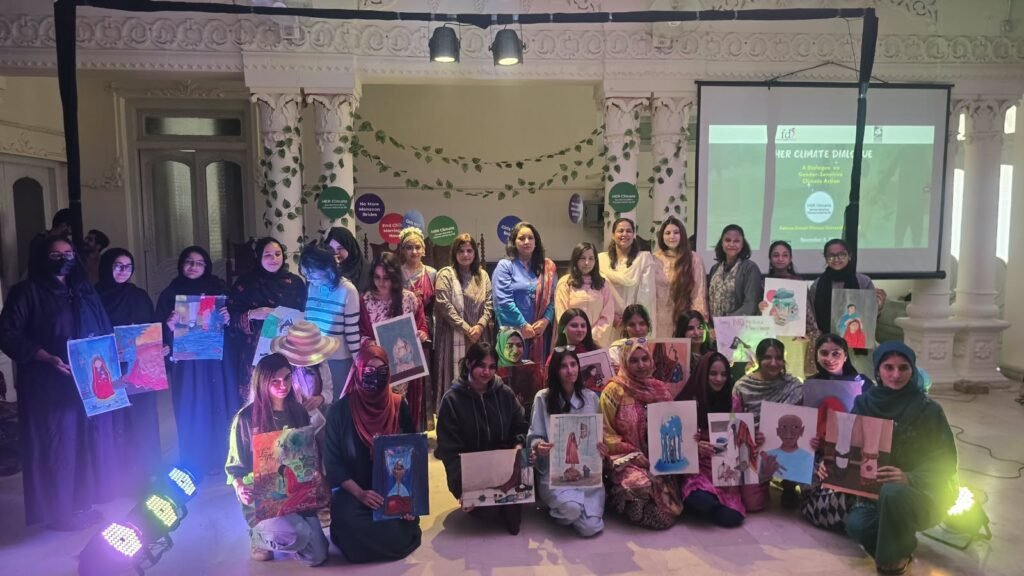
Fatima Jinnah Women University (FJWU), in collaboration with the Forum for Dignity Initiatives (FDI), organised Her Climate Dialogue to examine the growing impact of climate change on human rights, gender inequality and the rising issue of child marriages following natural disasters, commonly referred to as “Monsoon Brides”.
The high-level event brought together academics, human rights activists, climate experts and child protection specialists to discuss the challenges faced by women and girls in climate-vulnerable communities, particularly in the aftermath of natural disasters.
The event was attended by FJWU Pro Vice Chancellor Professor Dr Azra Yasmin, FDI Chief Executive Uzma Yaqoob, and Chairperson of the Department of International Relations at FJWU, Dr Saima Ashraf Kiyani.
The panel discussion was moderated by human rights activist Maya Zaman. The panellists included Arshad Mahmood, a child protection expert; Dr Rashid Ahmed from the United Nations Population Fund (UNFPA); Amberin Ajaib, Executive Director of Bedari; Anam Rathore, a climate finance expert; Dr Samrana Afzal, Assistant Professor of International Relations; Dr Surayya Chaudhry, Chairperson of Fine Arts; and Dr Zainab Amanullah, founder of Sahaili Forum.
Climate Disasters and the Growing Challenge of Monsoon Brides
A key focus of the dialogue was the connection between environmental disasters, gender-based inequalities and the increasing vulnerability of young girls.
Participants examined how climate-related disasters can intensify existing social and economic inequalities, leaving women and girls exposed to additional risks, including early and child marriages.
The discussion highlighted the need to address these challenges through stronger gender-sensitive climate policies, improved protection mechanisms and greater institutional attention to the rights of vulnerable communities.
Art Exhibition and Themed Dance Performance Highlight Women’s Struggles
Alongside the dialogue, the Department of Fine Arts at FJWU and FDI jointly organised a special art exhibition and a theme-based dance performance.
Through their artistic presentations, students portrayed the hardships and suffering experienced by women and girls affected by climate-related disasters. The activities provided a creative platform to highlight the human impact of environmental crises and raise awareness among students.
Focus on Gender-Inclusive Climate Policies
The programme, held under the leadership of FJWU Vice Chancellor Professor Dr Bushra Mirza (Tamgha-e-Imtiaz), aimed to promote gender-responsive climate policies, encourage protective measures for vulnerable communities and strengthen students’ understanding of international affairs.
The initiative also sought to connect climate change discussions with human rights concerns, emphasising the importance of ensuring that women and girls are included in climate policy decisions and disaster response planning.