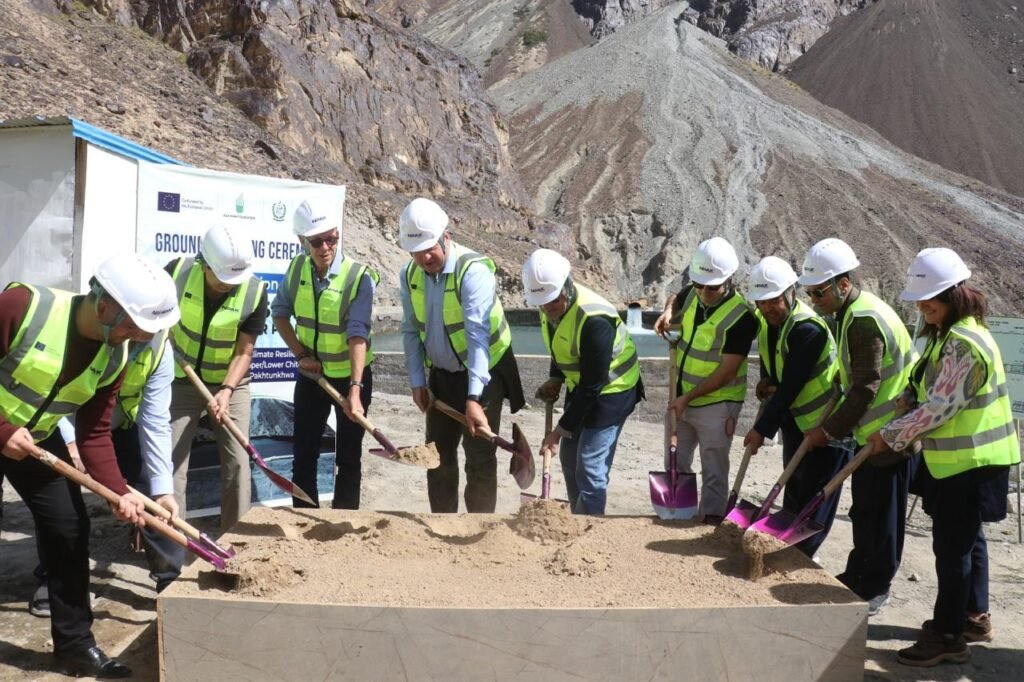
HUNZA, Sept 25 (ABC): The European Union (EU), Aga Khan Foundation (AKF) and NPAK Energy on Friday marked the completion of the first phase of an electricity loss reduction programme in Hunza and broke ground for the rehabilitation of the 3 MW Misgar Hydropower Plant.
The initiatives are being implemented under the Energy Plus Project, funded by the EU and AKF in partnership with the Government of Gilgit-Baltistan. The project aims to support a climate resilient and low carbon economy in northern Pakistan.
Under the first phase of the loss reduction programme, NPAK Energy upgraded transmission, distribution and metering infrastructure across Hunza. The work included a new substation and transformer, 10 transformer substations, 55 upgraded transformers, 25.3 kilometres of transmission lines, 86.5 kilometres of distribution lines and 460 kilometres of service lines. Approximately 9,000 energy meters were also installed.
According to the project partners, system losses have declined from 47% to approximately 15%, while voltage at consumer premises has improved from around 90–130 volts to 200–220 volts. Electricity supply has increased, and system tripping has been substantially reduced.
An Energy Meter Laboratory has been established to test electromechanical, digital, PLC and smart meters. It will also help address cases involving defective, disputed or potentially tampered meters. NPAK Energy said it would introduce a new billing system shortly to improve billing accuracy, transparency and customer service.
EU Ambassador to Pakistan Raimundas Karoblis said reliable and sustainable energy was important for communities and local economies. He said the network improvements would help electricity reach consumers more efficiently, while investment in renewable energy would increase generation.
Gilgit-Baltistan Water and Power Department Secretary Iftikhar Alam appreciated the work of the Aga Khan Development Network, particularly NPAK Energy, and said the government would extend support for the project’s implementation. He said reliable electricity was vital for the region’s economic and social development.
The groundbreaking ceremony for the rehabilitation of the Misgar Hydropower Plant was also held during the visit. The 3 MW plant, the largest in Hunza, is currently operating at an approximately 30% capacity factor as key civil infrastructure has deteriorated over time.
The rehabilitation will focus on the plant’s two water conveyance channels and forebay structures, along with other necessary civil, engineering and technical work. The project partners said restoring the plant’s performance would increase renewable electricity generation in Hunza and improve supply reliability.
NPAK Energy Acting CEO Naveed Khan said the reduction in losses, improved voltage and greater network reliability showed the results of targeted infrastructure investment. He said rehabilitating the Misgar plant would help increase the use of Hunza’s renewable energy potential.
Irshad Khan Abbasi, Programme Advisor for Rural Development at AKF Pakistan, said reliable and affordable electricity was essential for services, livelihoods and new opportunities.
The EU, AKF, NPAK Energy and the Government of Gilgit-Baltistan reaffirmed their commitment to working with local communities and development partners to improve energy services in the region.
First phase of Hunza electricity loss reduction programme completes