
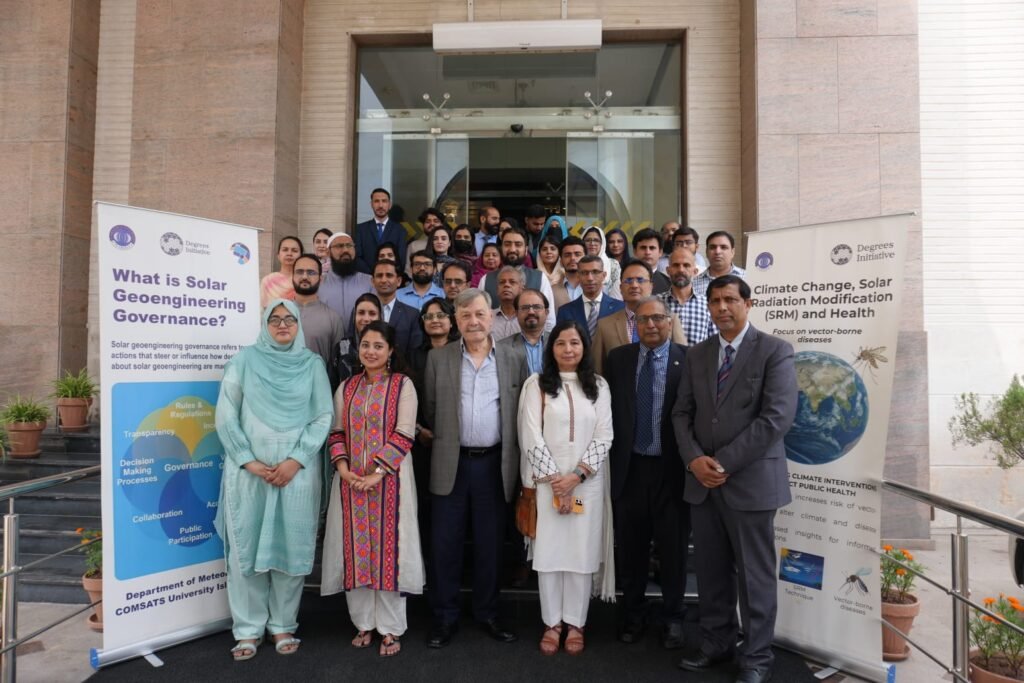
ISLAMABAD, August 12, 2026: COMSATS University Islamabad (CUI) brought together policymakers, scientists, public health experts and international partners on Wednesday to discuss emerging research on Solar Radiation Modification (SRM) and its potential implications for climate, health and policymaking in Pakistan.
The one-day workshop, titled “Dissemination of SRM Research Findings and Sensitisation of Policymakers in Pakistan,” was organized by CUI’s Department of Meteorology with support from The Degrees Initiative.
The event focused on Pakistan-based research examining how SRM could affect climate patterns, drought conditions, malaria transmission and other vector-borne diseases.
CUI Highlights Need for Pakistan-Led Climate Research
Addressing participants, CUI Rector Prof. Dr. Raheel Qamar said the growing climate crisis is forcing countries to assess new technological options alongside their possible environmental and social consequences.
He stressed that countries in the Global South should generate their own scientific evidence and play an active role in international discussions on emerging climate technologies.
Qamar also praised the Department of Meteorology for securing international research funding and building collaborations with institutions outside Pakistan.
He reaffirmed the university’s support for research that connects scientific work with national and global policy challenges.
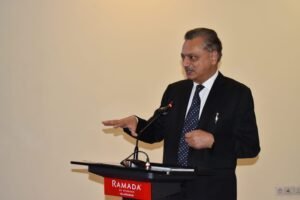
Workshop Explores Climate, Health and Governance Risks
Researchers presented findings on the possible effects of SRM on climate responses and drought, as well as its potential relationship with malaria and other vector-borne diseases.
The programme also covered SRM governance, climate-health linkages, and the uncertainties that continue to surround the technology.
An SRM Malaria Dashboard and an interactive climate intervention game were also featured as part of efforts to make complex research more accessible to policymakers and stakeholders.
Policymakers, Scientists Join Discussion
Participants included Mowmita Basak Mow of The Degrees Initiative, Ambassador Shafqat Kakakhel, Chairperson of SDPI, Zakya Rubab from the Ministry of Climate Change and Environmental Coordination, Dr. Zaheer Ahmed Babar, Director General of the Pakistan Meteorological Department, and Prof. Dr. Azra Yasmin, Pro-Vice Chancellor of Fatima Jinnah Women University.
Representatives from major national institutions and universities also attended.
The workshop provided a platform for researchers and policymakers to examine what is currently known about SRM, where major knowledge gaps remain and what areas require further study.
Pakistan Seeks Stronger Voice in Global SRM Debate
CUI said the event was aimed at strengthening interaction among universities, government institutions, researchers and international partners while creating a basis for continued research and policy engagement.
The university said the workshop also reflected its wider effort to support research on emerging national and global challenges and to give Pakistani researchers a stronger voice in international discussions on climate intervention technologies.
Also Read: HEC Chairman Praises COMSATS University Digital Governance System