
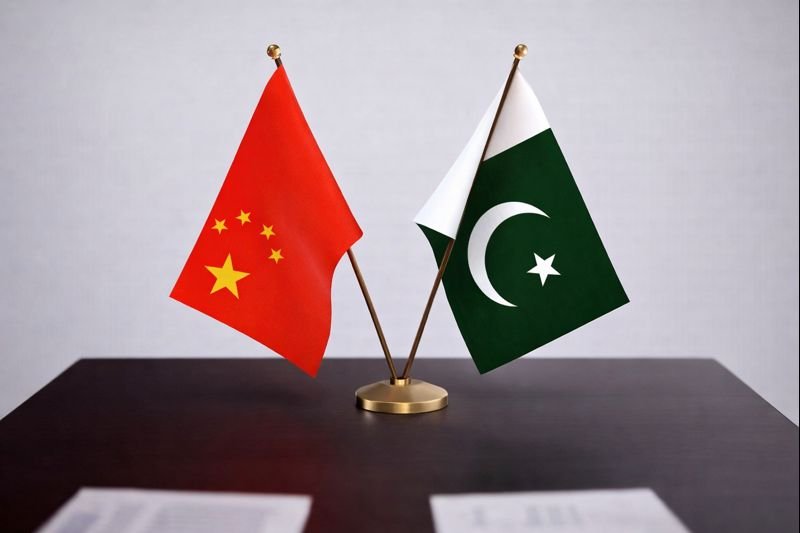
PESHAWAR, September 29, 2026: China and Pakistan are expanding scientific collaboration into biomedical engineering, healthcare technology, intelligent sensors and food safety, with Wuhan Textile University and Pakistani institutions pursuing joint research, academic exchanges and technical training programmes.
The latest discussions took place on September 24, when Khan Muhammad Wazir, Technical Affairs Counsellor at the Embassy of Pakistan in China, met Wuhan Textile University President Fu Xin to discuss establishing a joint centre for biomedical engineering and health. The proposed facility would strengthen research collaboration and technical expertise between institutions in the two countries.
The meeting also covered potential research projects and regular training opportunities for technical personnel, building on an academic relationship that began more than a decade ago.
China, Pakistan discuss joint biomedical engineering centre
The proposed China-Pakistan joint centre for biomedical engineering and health is among the latest initiatives being considered by Wuhan Textile University and its Pakistani partners.
During the September 24 meeting, officials reviewed preparations for the centre and explored opportunities for collaborative research and professional training.
The discussions reflected a broader shift in bilateral academic cooperation from traditional textile engineering towards healthcare-related technologies and applied scientific research.
Wuhan Textile University has been extending its expertise in fibre materials to biomedical applications, including medical materials, wearable intelligent sensors and rapid food-testing technologies.
These research areas offer opportunities for collaboration with Pakistani universities, scientific organisations and industries working in healthcare, food safety and environmental monitoring.
The proposed centre remains under discussion, with the two sides examining arrangements for future institutional cooperation.
Academic partnership began with textile engineering in 2013
The university’s academic relationship with Pakistan dates back to 2013, when it enrolled its first group of international master’s students, including Pakistani scholars specialising in dyeing and finishing engineering.
The initial student exchanges subsequently developed into research partnerships and professional links.
Several Pakistani graduates returned home to work in universities and textile companies, contributing to academic teaching and industrial applications of the expertise acquired during their studies.
Over time, the collaboration expanded beyond textile processing to include biomedical materials, biosensing, environmental health and food-safety research.
Pakistani researchers trained at Wuhan Textile University have also pursued academic careers in related scientific fields, with some continuing to participate in collaborative research involving institutions from both countries.
Scientific exchanges gain momentum in 2026
A series of institutional visits during 2026 has supported efforts to broaden the partnership.
In January, Pakistan Science Foundation Chairman Prof Muhammad Akmal led a delegation to Wuhan for discussions on bilateral cooperation in science and technology.
The engagement was followed by a visit to Pakistan in July by a Wuhan Textile University delegation headed by Zhang Zhaowei, Dean of the university’s School of Biomedical Engineering and Health.
The Chinese delegation held meetings with representatives of Pakistan’s Ministry of Science and Technology, Higher Education Commission, Pakistan Academy of Sciences and national food-safety authorities.
It also visited universities and research institutions to identify potential areas for joint scientific work.
During the visit, memoranda of understanding were signed covering collaborative research, faculty and student exchanges, scholarship opportunities and academic forums.
The delegation participated in more than 10 meetings involving government departments, universities, research organisations and industry representatives.
Discussions addressed research applications, technical cooperation and the development of skilled personnel in emerging scientific fields.
Technology transfer and industry collaboration discussed
Alongside academic cooperation, the two countries are exploring stronger connections between scientific research and industrial applications.
During the September visit to Wuhan, the Pakistani delegation toured companies operating in biotechnology, medical materials and food-safety testing.
The visits provided an opportunity to discuss technology transfer and possible collaboration between research institutions and businesses.
Areas of interest included biomedical materials, wearable sensing devices and technologies used for rapid food testing and environmental monitoring.
The discussions also examined how technical training and research partnerships could support the practical application of scientific developments.
Wuhan Textile University’s work in advanced fibre materials provides a foundation for research involving medical products and sensor technologies, extending the university’s traditional specialisation into healthcare and related sectors.
Research training remains a key part of bilateral ties
Developing scientific expertise through education and professional exchanges continues to be an important component of the partnership.
Pakistani students and researchers who have studied at Wuhan Textile University have subsequently worked in academic and research positions involving food safety, biosensing and environmental health.
Some have maintained research links with Chinese institutions, contributing to collaborative projects and academic exchanges.
The proposed biomedical engineering centre, together with existing university partnerships, could provide a further institutional framework for joint research and technical training.
The latest engagements come as China and Pakistan mark 75 years of diplomatic relations in 2026, with scientific research, education and technological collaboration forming part of their continuing bilateral exchanges.