
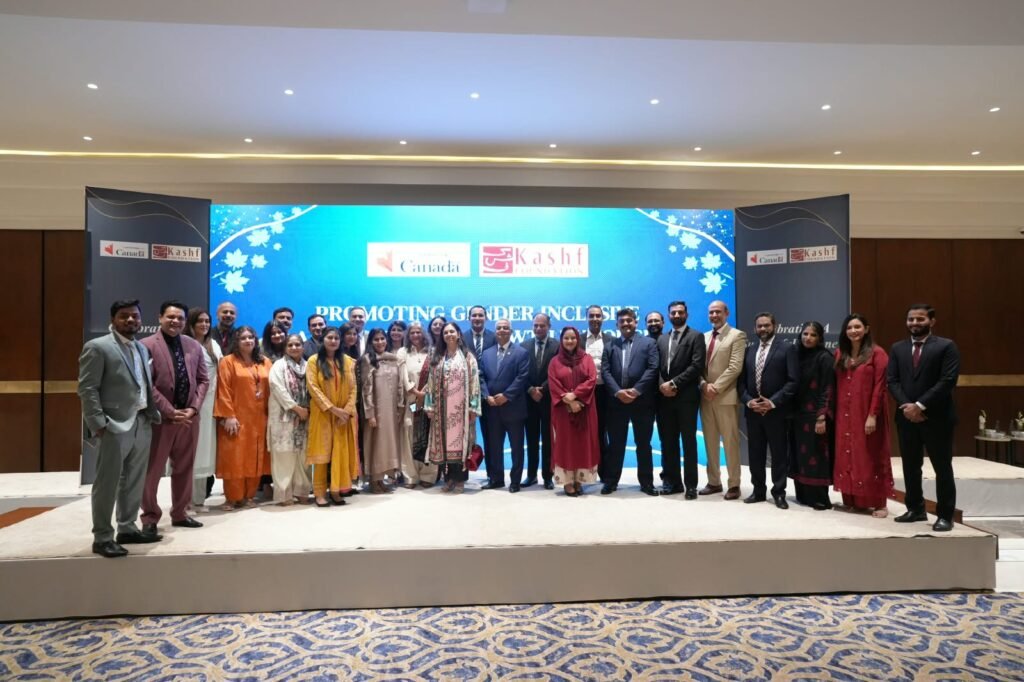
Islamabad, 14 October 2026 – The High Commission of Canada and Kashf Foundation have concluded a 10-year partnership aimed at strengthening women’s economic and social inclusion in Pakistan, reaching more than 1.6 million people across 63 districts in all four provinces.
Supported by Global Affairs Canada, the partnership combined access to finance with business training, financial literacy, health education and community support to help women from low-income communities improve their economic participation.
The most recent phase of the programme focused on addressing barriers faced by women micro-entrepreneurs and provided support to more than 1.4 million women.
The assistance ranged from basic financial literacy to structured financial education and business development training.
The project also included maternal and reproductive health education for women, men and other family members, while public awareness campaigns used theatre and television dramas to address issues including family planning, girls’ education and cybercrime.
According to Kashf Foundation, these campaigns reached more than 120 million viewers across Pakistan.
Canadian High Commissioner to Pakistan Tarik Ali Khan said women’s economic empowerment and social inclusion were critical to broader prosperity.
“Economic empowerment and the social inclusion of women are essential for prosperity. Canada has been a proud supporter of Kashf Foundation’s efforts to create social awareness and economic opportunities for women across Pakistan,” he said.
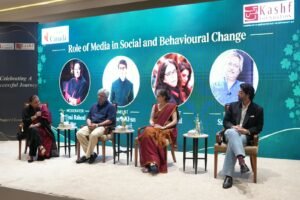
Women’s Incomes Rise 17%, Savings Increase 34%
A third-party impact assessment covering 2,596 households across 14 districts examined changes in financial inclusion, business performance and household decision-making.
The assessment found that women who received a micro-loan along with financial management training increased their incomes by 17% and their savings by 34%.
Participants who received loans and took part in business acceleration training earned 26% more than those who did not receive the training.
More than one-third of trained participants reported being able to decide independently where and how to save, while 33% said they were managing their businesses independently.
The survey also found that 94.5% of clients reported greater inclusion of women in household decision-making, while 83.4% said their families supported their businesses.
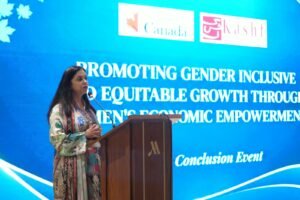
Social Campaigns Challenge Gender Norms
The programme also used social theatre to address gender norms.
According to the impact assessment, 88% of male viewers reported a change in their attitudes towards gender roles after watching the performances.
Roshaneh Zafar, Founder and Managing Director of Kashf Foundation, said the decade-long programme had demonstrated the wider economic and social impact of supporting women.
“Ten years ago, with the support of Global Affairs Canada, we set out to prove that when women move forward, families prosper, communities strengthen and economies grow,” Zafar said.
“We’ve demonstrated impact. Now it’s time for policymakers and businesses to scale up these lessons for greater impact.”
The findings suggest that women’s economic empowerment is more sustainable when access to finance is combined with skills development, household support and efforts to challenge restrictive social norms.
The partnership said its experience could provide lessons for policymakers and businesses seeking to increase women’s participation in Pakistan’s economy.