
By Amjad Yousafzai
ISLAMABAD: Agricultural economists and food security specialists have called for timely, evidence-based decisions on wheat imports, warning that delays during periods of tight supply could disrupt markets, encourage hoarding and increase flour prices.
Experts said wheat imports have historically been used by Pakistan to cover temporary supply gaps, rebuild strategic reserves and maintain market stability. They argued that imports should be treated as a food security tool when domestic production and available stocks are insufficient, rather than as an exceptional policy failure.
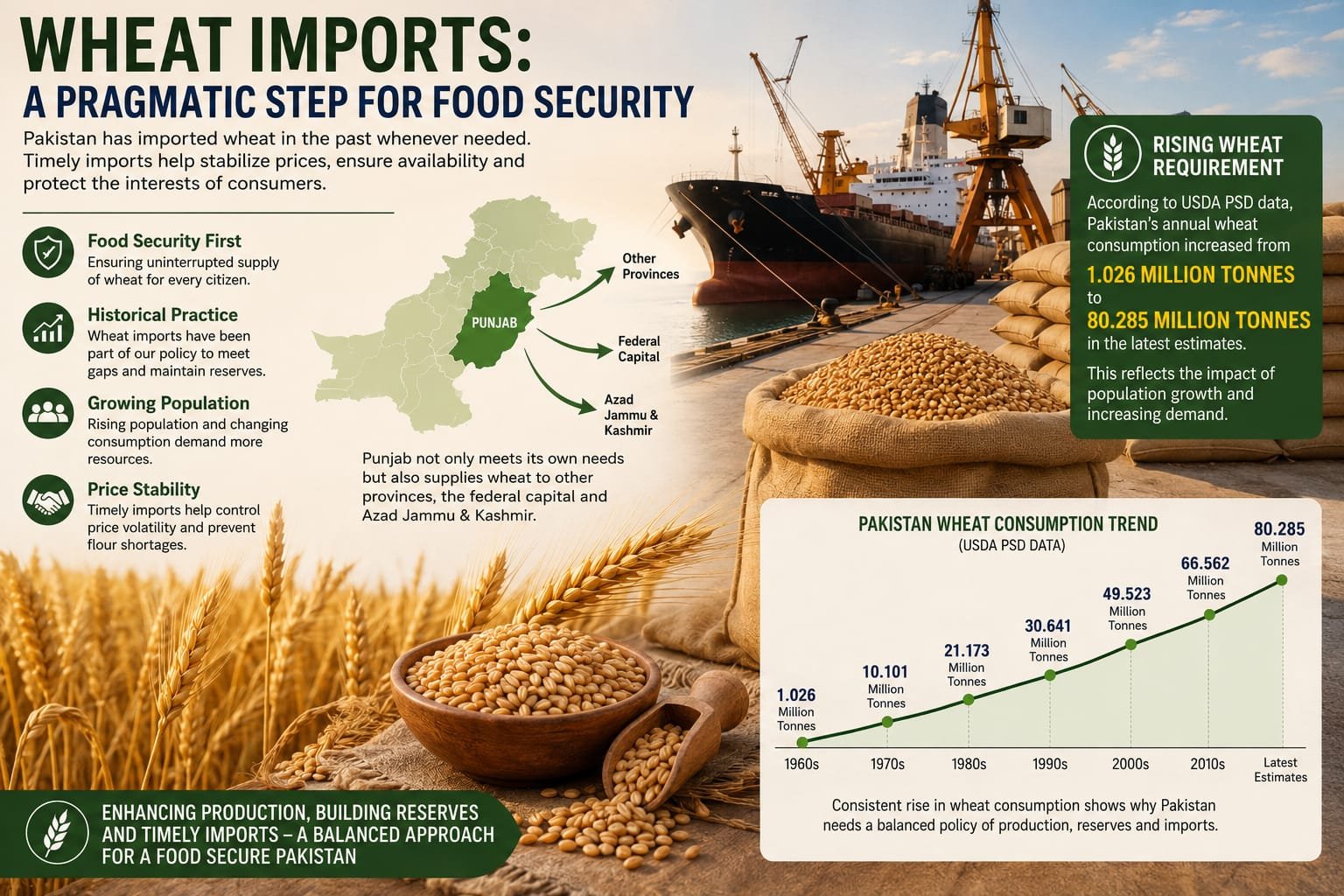
The debate comes as Pakistan reviews its wheat supply, procurement and reserve strategy. A 2026 assessment by the US Department of Agriculture forecast Pakistan’s wheat consumption at about 31.3 million tonnes for the 2026-27 marketing year and projected imports of around 1.4 million tonnes.
These figures differ substantially from the much larger numbers sometimes presented as Pakistan’s annual wheat requirement. USDA data indicates that current national wheat consumption is slightly above 30 million tonnes, not more than 80 million tonnes.
Punjab’s Central Role in National Wheat Supply
Experts said Punjab carries much of the responsibility for Pakistan’s wheat supply because it is the country’s largest producing province.
In addition to serving its own population and commercial flour market, Punjab supplies wheat to other provinces, Islamabad and Azad Jammu and Kashmir. This places additional pressure on provincial stocks during years of weaker harvests, climate-related disruptions or higher demand.
Economists said wheat demand has increased over time due to population growth, urbanisation and the expanding needs of flour mills, bakeries and the wider food-processing industry.
However, they stressed that estimates should clearly distinguish between domestic consumption, production, government stocks, private stocks and total supply. Combining these categories can produce misleading assessments of the country’s actual annual requirement.
Imports Seen as Buffer Against Supply Shocks
Food security specialists said imports can help bridge the period between the depletion of existing stocks and the arrival of the next domestic crop.
They warned that delaying an import decision when supplies are tightening may lead to speculative buying, stockpiling and sudden increases in wheat and flour prices. Low-income households are usually affected most by such volatility because food accounts for a larger share of their spending.
At the same time, experts said imports should be based on verified stock data and realistic production estimates to avoid harming local farmers through poorly timed or excessive purchases.
In February 2026, the Ministry of National Food Security said provinces had sufficient wheat stocks to meet consumption needs until the arrival of the new crop. The ministry also said the government was preparing a longer-term wheat policy focused on supply monitoring, traceability and price stability.
Under the interim wheat policy, provincial implementation units were established to coordinate stock management and procurement. The government said the policy was intended to protect farmers, maintain consumer affordability and improve coordination between federal and provincial authorities.
Domestic Production Remains Long-Term Priority
Agriculture experts said Pakistan must continue investing in higher-yield seeds, efficient irrigation, farm mechanisation, better storage and climate-resilient cultivation.
The Pakistan Agricultural Research Council identifies delayed sowing, limited access to quality seed, inefficient fertiliser use, water shortages, weeds, drought and heat stress among the factors affecting wheat productivity.
Experts said the most sustainable approach would combine stronger domestic production with the flexibility to import wheat when confirmed supply gaps emerge.
They added that import decisions should be taken early enough to secure competitive prices and prevent market disruption, but only after transparent assessments of crop output, provincial stocks, private inventories and expected consumption.
Also Read :Sarfaraz Ahmed Signals Changes After Pakistan’s Test Defeat