
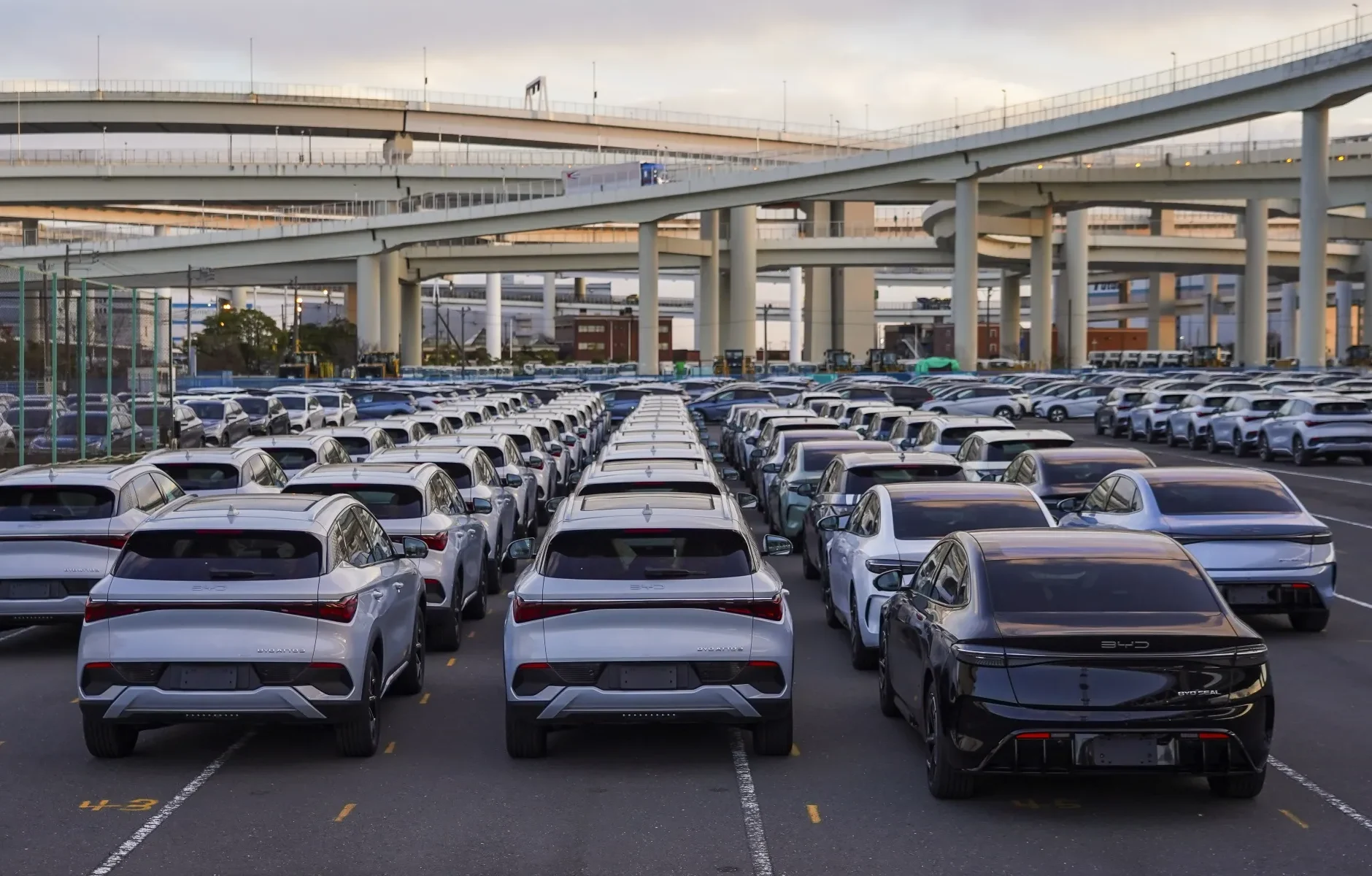
TOKYO — Chinese automaker BYD has said it cannot compete effectively in Japan after recent revisions to electric vehicle subsidies left its models without increased support, widening the gap with rival manufacturers in a price-sensitive market.
The changes, introduced by Japan’s Ministry of Economy, Trade and Industry (METI), raised the ceiling for EV subsidies but did not increase incentives for any of BYD’s four models. As a result, consumers buying BYD vehicles receive significantly less financial support than those opting for competitors such as Toyota and Tesla.
Subsidies for BYD models remain between JPY 350,000 and JPY 450,000, while some rival vehicles now qualify for up to JPY 1.3 million, creating a gap of nearly JPY 1 million in buyer incentives.
Policy shift reshapes EV competition
METI increased the maximum EV subsidy by JPY 400,000 to JPY 1.3 million as part of its updated clean energy vehicle policy, which took effect in January. The framework uses a scoring system based on vehicle performance and company-level factors such as charging infrastructure and after-sales support.
BYD said its evaluation score remained low despite investments in fast-charging facilities across Japan, limiting its ability to benefit from higher subsidy brackets.
Uneven impact across automakers
The revised subsidy structure has produced mixed outcomes across the industry. Tesla saw its subsidy rise to JPY 1.27 million, close to the upper limit, while some Hyundai models also received increases.
Among European brands, most recorded little or no change, though Audi secured higher subsidies for several models following infrastructure investments.
Market implications
Electric vehicles account for roughly 2% of new car sales in Japan, making government incentives a key factor in consumer decisions. Analysts say disparities in subsidy allocation are likely to influence pricing competitiveness and sales momentum.
Also Read: YD shares climb as rising fuel prices lift EV outlook despite broader market fall
A new subsidy framework is expected from fiscal year 2026, beginning in April. BYD has indicated that without adjustments, it may continue to face challenges in competing with manufacturers receiving higher levels of support.



 Today's E-Paper