
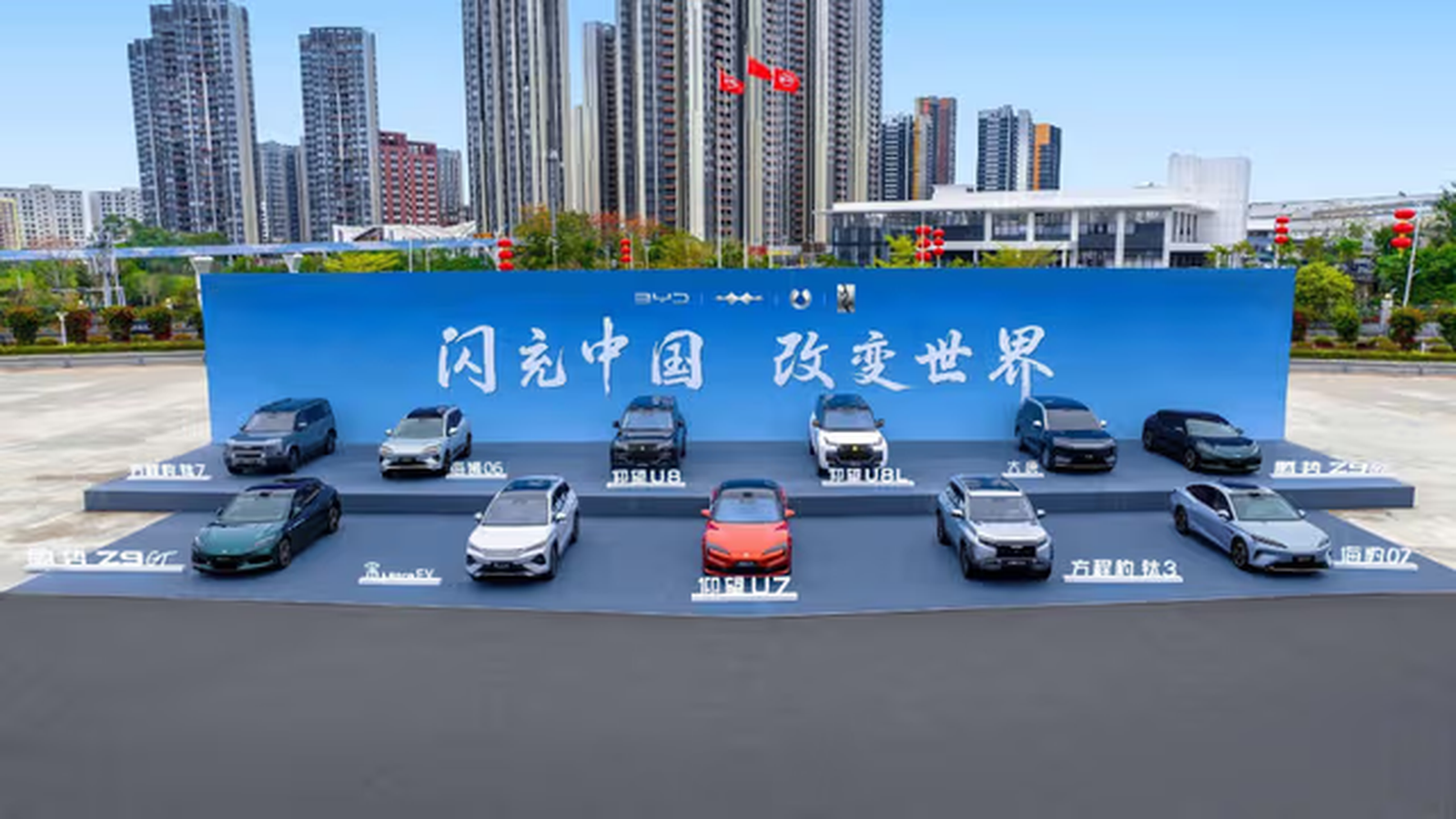
Chinese electric vehicle manufacturer BYD has introduced its second-generation Blade Battery and a 1.5MW flash charging station, aiming to significantly reduce charging times for electric vehicles. The technology was presented during a company technology event on March 5, 2026.
The new battery system is designed to power the next generation of BYD electric vehicles and is intended to deliver charging speeds comparable to a short stop at a petrol station. The launch also includes a new ultra-fast charging infrastructure that supports the battery’s high-power capabilities.
Second-generation Blade Battery
The upgraded Blade Battery continues to use lithium iron phosphate (LFP) chemistry but offers improvements in energy density, durability and safety compared with the first generation.
According to BYD, the new battery provides about 5% higher energy density while maintaining long lifecycle performance and enhanced safety standards. One of the first vehicles equipped with the technology, the Denza Z9GT, has a claimed driving range of 1,036 kilometres under the China Light-Duty Vehicle Test Cycle (CLTC).
Charging performance
Charging speed is the main focus of the new system. BYD says the battery can charge from 10% to 70% in around five minutes and reach 97% capacity in about nine minutes when using compatible flash charging stations.
Under colder conditions, the battery maintains strong charging performance. At temperatures of –20°C, charging from 20% to 97% takes about 12 minutes, while the same process at –30°C takes roughly the same time, only slightly longer than at room temperature.
BYD said several upcoming models will support the new battery technology. Early compatibility includes vehicles such as the Yangwang U7, Denza N9, Fang Cheng Bao 3, Seal 07, Song Ultra and Denza Z9GT, all of which can reach 70% charge in about five minutes using the new system.
1.5MW flash charging stations
To support the new battery, BYD is deploying a new generation of flash charging stations capable of delivering up to 1,500 kilowatts of power at 1,000 volts. The stations feature a T-shaped design with a sliding rail that allows drivers to easily position the charging gun.
Also Read: BYD tests flagship electric SUV with 1,000 kW ultra-fast charging in China
The compact charging gun includes waterproof protection, and vehicles compatible with the system will display a dedicated flash charging badge. Similar to petrol stations, idle fees may apply if vehicles remain connected after charging is complete.
Managing power demand
BYD Chief Executive Wang Chuanfu said the company plans to manage the high power requirements of ultra-fast charging through on-site energy storage systems.
Each station will include storage batteries that draw electricity from the public grid and store it before delivering rapid charging to vehicles. BYD says this approach will help expand the network without placing excessive strain on local power grids.
Global rollout plans
The company plans to build 20,000 flash charging stations during 2026, with around 18,000 installed within existing public charging sites. BYD has already completed more than 4,200 stations during the first two months of the year and plans to add around 2,000 stations along highways.
The company said the highway network will place flash charging points roughly every 100 kilometres and cover about one-third of service areas.
BYD’s charging infrastructure is also being prepared for expansion in overseas markets. In Australia, the company is developing its EV charging network and may deploy some of the new chargers at BYD and Denza dealerships over the next 12 to 18 months.
The new flash charging system is designed to add approximately two kilometres of driving range per second, according to company data.





 Today's E-Paper