

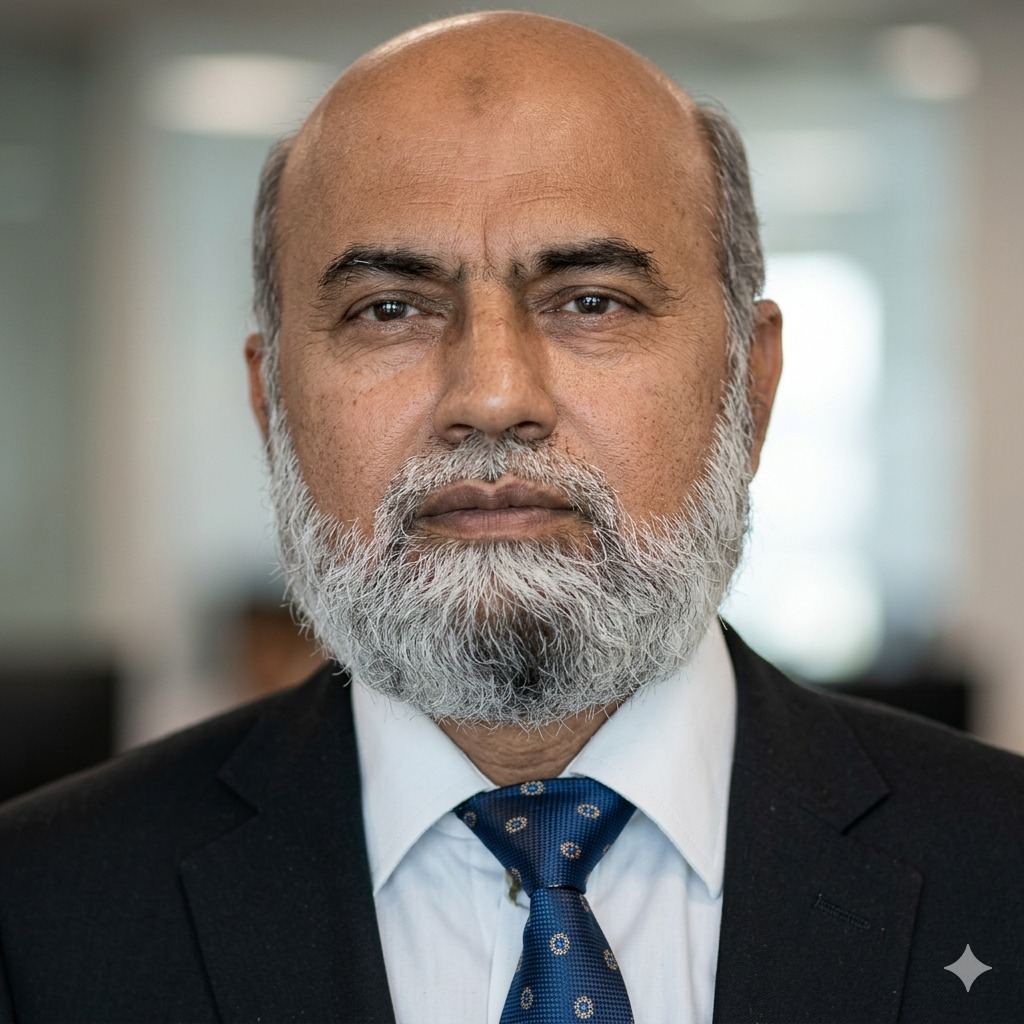
By Sajid Masood Sadiq Nizami
There is a famous Urdu proverb, “a cumin seed in a camel’s mouth,” used when something is extremely small and inadequate compared to the need or demand. The 2026–2027 budget is approaching, and the expected increase in government employees’ salaries and pensions under consideration is only 7–10 percent. In other words, the government is preparing to offer “a cumin seed to a camel.” Surprisingly, even the IMF is reportedly reluctant to approve this. Is this the same IMF that remains completely silent when parliamentarians receive salary and benefit increases amounting to several hundred percent? Perhaps this is because government representatives act as workers of this global economic institution, extracting resources from the public to satisfy it. The Federal Board of Revenue (FBR), responsible for tax collection, forms another part of this system, while certain sections of the media complete the picture by portraying government employees and their salaries and pensions as a major burden on the national treasury.
To describe Pakistan’s condition, another proverb comes to mind: “O camel, which part of you is straight?” It is used to describe situations where everything seems out of order. The Islamic Republic of Pakistan appears to have little connection with the principles of Islam, which are often used merely for personal gain. When one recalls the era of the first Caliph, Abu Bakr, and compares his modest salary and privileges with those enjoyed in today’s so-called “State of Medina,” one sees a striking contrast. The higher the office today, the greater the salary and privileges. Ordinary citizens earning modest incomes pay taxes and utility bills, while the ruling class enjoys servants, drivers, gardeners, cooks, and free utilities at public expense.
For seventy-eight years, Pakistanis have repeatedly heard that “Pakistan is passing through very difficult circumstances.” Politicians in power constantly justify large defense budgets and military expenditures, while the same politicians, when in opposition, criticize the military for consuming a significant share of the budget. Yet these same leaders freely increase their own salaries and benefits, import luxury vehicles, purchase aircraft, seek medical treatment abroad, and spend public money on foreign trips. At such times, they seem to forget Pakistan’s economic difficulties.
Pakistan’s economic challenges become even more complicated when solutions rely on foreign loans rather than self-reliance. Every new loan adds to the burden of debt and interest. Successive governments have failed to make sincere efforts to eliminate this debt. The author argues that corruption, poor governance, weak planning, and misuse of resources keep Pakistan trapped in a global economic system of dependency.
According to the article, no sensible person willingly takes an interest-bearing loan, and if forced to do so, they try to repay it quickly to avoid paying additional interest. Pakistani politicians, however, seem to take loans as if they were grants. The author points to Turkey as an example of a country that improved its economic condition after reducing its dependence on the IMF. He questions whether Pakistan is truly independent when institutions such as the IMF, the World Bank, and international political pressures appear to influence major economic decisions.
The article concludes with another analogy involving donkey owners (kharkars). Historically, kharkars were people who rented out donkeys for labor-intensive work. The author compares the Pakistani public to those donkeys, arguing that they work hard while the benefits of their labor are consumed by both international financial institutions and the local ruling elite. Meanwhile, politicians who publicly oppose one another rarely disagree when it comes to increasing their own salaries and privileges.
The writer ends by asking whether, after understanding this system, it would be wrong to describe Pakistan as a “camp of donkey owners” where ordinary citizens bear the burden while others reap the rewards.