
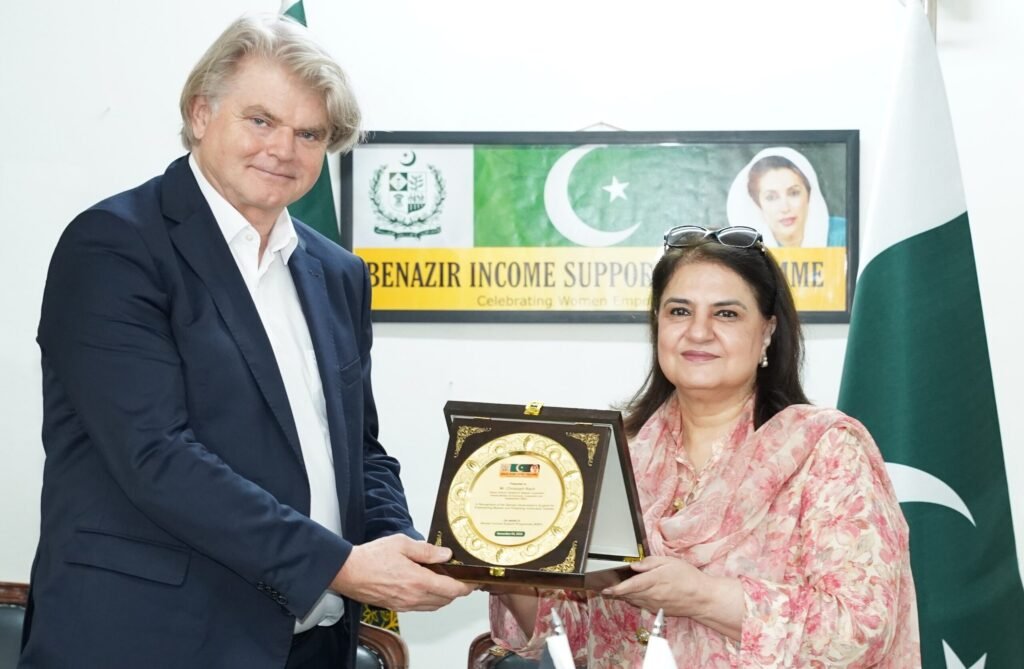
ISLAMABAD, November 3, 2026: The Benazir Income Support Programme (BISP) and German Development Cooperation have reaffirmed their commitment to strengthening Pakistan’s social protection system, with a focus on helping vulnerable communities withstand climate-related disasters and economic shocks.
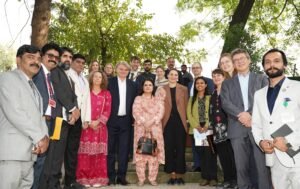
The renewed commitment came during a visit by a high-level German delegation to BISP’s One Window Centre in Islamabad, where officials reviewed progress under Pakistan-Germany development cooperation and discussed measures to expand adaptive social protection.
BISP Chairperson Senator Rubina Khalid welcomed the delegation, which included representatives from Germany’s Federal Ministry for Economic Cooperation and Development (BMZ), the German Embassy, Deutsche Gesellschaft für Internationale Zusammenarbeit (GIZ) and KfW Development Bank.
BISP Director General for the National Socio-Economic Registry (NSER) Dr. Asim Ijaz and Director General (CT) Muhammad Idrees Mian also attended the meeting.
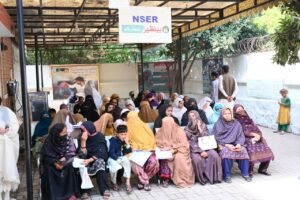
Officials highlighted the role of Pakistan-Germany cooperation in expanding access to social protection through BISP’s 647 Dynamic Registry Centres and 32 Mobile Registration Vehicles.
According to BISP, these facilities have supported the registration and updating of information for 38.7 million people, improving the programme’s outreach and strengthening its capacity to identify households requiring assistance.
The discussions focused on developing adaptive social protection mechanisms capable of responding to floods, extreme weather events, economic disruptions and other emerging vulnerabilities.
BISP officials emphasised that social protection should extend beyond conventional poverty assistance to help vulnerable households prepare for and recover from climate-related and economic shocks.
They also stressed the importance of institutional strengthening, continued development cooperation and better coordination between federal and provincial authorities to improve preparedness for future emergencies.
The German delegation acknowledged progress in expanding access to social protection and strengthening BISP’s institutional capacity through bilateral cooperation.
Delegation members reaffirmed Germany’s commitment to supporting an inclusive and responsive social protection system with stronger links to climate adaptation and disaster risk management.
The meeting also reviewed progress under the SOPRAN Project, including Disbursement and Registration Centres, Mobile Registration Vans, Digital Financial Literacy Training and institutional capacity-building activities.
Officials discussed forthcoming shock-responsive initiatives intended to improve the programme’s ability to provide assistance during emergencies.
BISP representatives briefed the delegation on the programme’s existing initiatives and service delivery mechanisms.
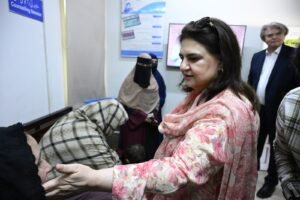
The visit also included an interactive session with beneficiaries, allowing German officials to hear directly about their experiences and the impact of BISP assistance.
The German delegation included BMZ Deputy Director-General for Bilateral Cooperation Christoph Rauh, senior policy officers Anna Friedemann and Manuel Winkenbach, and Head of Cooperation Dr. Mirjam Büdenbender-Buchholz.
GIZ representatives included South Asia Division Director Tilmann Nagel, GIZ Pakistan Country Director Maria Poddey, Adaptive Social Protection Project Head Johanna Knoess, Country Manager Alicia Beck and Social Protection Advisor Dr. Inam Muhammad.
KfW Development Bank was represented by Director Klaus Müller, Senior Desk Officer Charlotte van der Schaaf, Pakistan Country Head Andrea Grajcar and Senior Sector Specialist Masuma Zaidi.
The engagement reinforced Pakistan and Germany’s cooperation in developing a social protection system capable of responding more effectively to poverty, climate risks and economic emergencies.