
As the confrontation between Washington and Tehran escalates, voices in the United States debate whether the operation has achieved its aims—or opened a far more dangerous chapter. Wars often promise quick endings; history rarely grants them.
History often begins its tragedies not with silence but with thunder. Sirens rise, satellites awaken, screens glow across the world’s newsrooms, and somewhere in the darkness above deserts and seas machines begin to move with terrible purpose. Missiles arc across the sky like burning signatures written in the language of power. Radar screens blink. Generals lean over maps. Diplomats measure their words carefully, while ordinary people, far from conference tables and strategy rooms, watch the sky and wonder what tomorrow will bring.
From the earliest days of empire to the modern age of satellites and drones, leaders have stepped forward believing they could shape events with precision. They believed the strike would be swift, the objective limited, the opponent shaken into retreat. Yet the story of war rarely unfolds as the architects of power imagine. The battlefield has its own stubborn logic, and nations possess memories deeper than the calculations of any single administration.
The iron beast of war, once awakened, rarely obeys its masters completely.
Across the strategic corridors of the Middle East, the atmosphere today feels charged with that ancient uncertainty. Military exercises are analyzed like riddles. Intelligence briefings pass from hand to hand. Markets tremble at every rumor from the Gulf. Oil traders watch the narrow throat of the world’s energy lifeline—the Strait of Hormuz—with nervous attention, knowing that a single miscalculation in that narrow waterway could echo through every economy on earth.
Iran, a civilization whose roots stretch back millennia, has endured invasion, revolution, sanction, isolation, and internal upheaval. Yet again and again it has demonstrated a capacity to absorb shock and continue forward with stubborn resilience. Anyone who studies history carefully knows that nations shaped by long hardship rarely respond to pressure with immediate surrender. More often they respond with patience, improvisation, and a willingness to endure pain for the sake of dignity.
This is the difficult reality that confronts any external power attempting to bend such a nation swiftly to its will.
The language of victory sometimes appears quickly in moments of confrontation. Political leaders, addressing domestic audiences, speak confidently of objectives achieved and enemies weakened. But history offers a quiet warning to those who declare triumph too soon. The battlefield is not merely terrain and weaponry; it is also psychology, identity, and memory. When a nation feels cornered, its people may discover reservoirs of endurance that surprise even themselves.
At such moments it becomes useful to step back from the noise of strategy and remember the moral wisdom that civilizations have accumulated across centuries.
The Qur’an offers a reminder that speaks across time to rulers and ordinary people alike:
“And do not walk upon the earth exultantly. Indeed, you will never tear the earth apart, nor reach the mountains in height.”
— Surah Al-Isra (17:37)
The verse is simple, yet its meaning echoes through the corridors of power in every age. Human authority, no matter how vast its weapons or wealth, remains limited before the deeper forces of history and the ultimate authority of the Creator.
Pride has undone many empires before the modern era ever began.
In a Hadith Qudsi, the Messenger of Allah, peace and blessings be upon him, conveyed the Divine words:
“Pride is My cloak and grandeur is My garment. Whoever vies with Me regarding either of them, I shall cast him into Hell.”
The warning is not directed only at individuals. It speaks as much to civilizations, governments, and leaders who begin to believe that power grants them mastery over the destiny of others.
For centuries poets and philosophers have returned to this same theme. In the Persian tradition a line of wisdom often attributed to the spirit of classical poets echoes through discussions of conflict:
“You have seized the tiger’s tail—now letting go is hard;
The flame of war has risen high—now putting it out is hard.”
Whether spoken by a poet, a strategist, or a philosopher, the meaning remains strikingly clear. Certain actions, once taken, create dilemmas from which easy retreat becomes nearly impossible. To release the tiger invites danger; to hold the tiger invites exhaustion.
This metaphor feels strangely appropriate when examining the current tension surrounding Iran.
Military planners may imagine a short operation, a calculated strike, a demonstration of overwhelming force intended to reshape the opponent’s calculations. Yet once the machinery of confrontation begins to move, new actors emerge: regional allies, proxy forces, financial markets, and the unpredictable responses of populations who suddenly feel their national dignity under threat.
Even geography begins to play its silent role. The narrow waters of the Gulf, the shipping lanes of Hormuz, and the network of alliances stretching from Lebanon to Yemen create a strategic puzzle that no single missile strike can fully control.
History reminds us that wars rarely stay confined to the neat boundaries imagined by their planners.
In the quiet corner of spiritual reflection another voice enters the conversation—not the voice of generals or analysts, but the voice of conscience.
Baba Tall, the wandering sage of many whispered stories, might speak in such a moment with the calm of someone who has watched empires rise and fall like tides upon the shore.
“O seeker of power, you sit now holding the tiger’s tail.
Know this—grasp not the tail but the mercy of Allah.
Let go and you may bleed; hold on and you will burn.
The wise release their grip before the fire consumes the hand.”
The whisper contains no political program and no strategic blueprint. Yet within its quiet rhythm lies a truth recognized by sages across centuries: humility often accomplishes what pride cannot.
Meanwhile, in the modern corridors of power, debate continues.
Some voices in Washington argue that firmness is essential—that demonstrating overwhelming capability deters future threats and reassures allies who rely on American security guarantees. Others, however, caution that escalation risks triggering consequences far beyond the initial battlefield calculations.
Technology advisers, strategists, and policy thinkers sometimes suggest a different path: declare limited objectives achieved, reduce the temperature of confrontation, and allow diplomacy to reclaim its place before the crisis deepens.
Such debates are not signs of weakness; they are signs of a mature political system wrestling with the complexities of power.
Yet events on the ground often move faster than debates in conference rooms.
Missiles and drones do not pause to read opinion columns. Naval vessels maneuver in tense waters. Regional actors watch carefully, calculating their own moves. Every hour that passes without a clear path toward de-escalation increases the possibility that miscalculation might widen the conflict in ways no participant truly desires.
And all the while ordinary citizens—in Tehran, Tel Aviv, Washington, Beirut, Baghdad, and beyond—continue their daily lives under the shadow of decisions made far above them.
This is the human dimension of geopolitical strategy that statistics rarely capture.
A nation under pressure does not simply collapse into silence. Often it gathers its identity more tightly, drawing strength from language, religion, poetry, and memory. The Iranian people, heirs to a long civilization of scholars, poets, and philosophers, understand this dynamic well. Their history is filled with moments when external pressure forged a deeper internal resolve.
Such resilience does not necessarily mean victory on the battlefield. But it does mean that the spirit of a nation rarely yields as quickly as strategists predict.
This is why the metaphor of the tiger remains so powerful.
Once the tail is grasped, the options narrow. Holding on risks prolonged struggle. Letting go risks appearing weak. Yet history shows that the wisest leaders are those who recognize the moment when perseverance becomes self-defeating.
The Qur’an’s reminder against arrogance, the Hadith’s warning about pride, the poet’s reflection on the tiger, and the whisper of Baba Tall all converge upon a single lesson: strength is not measured solely by the ability to strike. Sometimes it is measured by the wisdom to step back before the cycle of violence grows beyond control.
The modern world possesses weapons capable of extraordinary destruction, but it also possesses unprecedented opportunities for dialogue, diplomacy, and restraint.
The choice between those paths remains, as always, in human hands.
If the present confrontation evolves into a wider war, historians will one day examine the speeches, decisions, and warnings that preceded it. They will ask whether the leaders of the moment recognized the danger early enough to alter their course.
If, however, the crisis subsides—if diplomacy gradually replaces missiles—then the moment will pass into history as another narrow escape from the edge of disaster.
Until that moment arrives, the world watches.
And somewhere in the quiet chambers of reflection the ancient whisper returns once more:
“The tiger’s tail teaches a hard lesson, O traveler of power.
Grip it too long and the beast turns upon you.
Release it wisely and the path of mercy may yet open.”
As the last echoes of conflict murmur across deserts and seas, remember this: empires rise, weapons roar, and leaders boast, yet the true measure of power is not the dominion you impose but the restraint you exercise. The tiger’s tail is a lesson written in fire and shadow—hold it too long, and the flame consumes you; release it wisely, and mercy may yet find its way. History belongs not to the loudest declaration but to those who, in the quiet of conscience and prayer, recognize the limits of human pride. In that silence, nations endure, spirits remain unbroken, and the wisest among us learn that humility is the final armor against the chaos we summon.
Before Trump Admits: “I’ve Got the Tiger by the Tail” in Iran



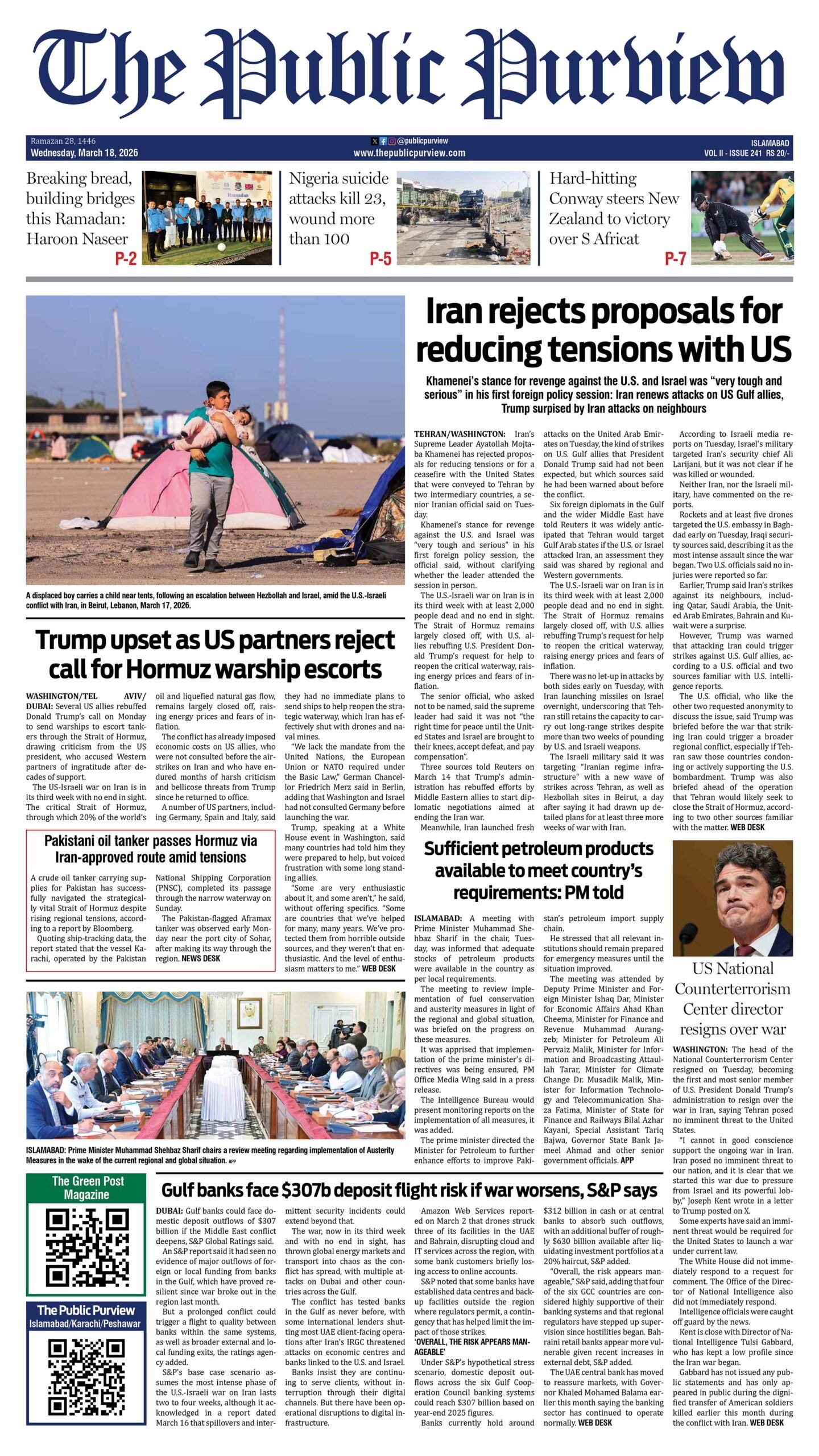 Today's E-Paper