
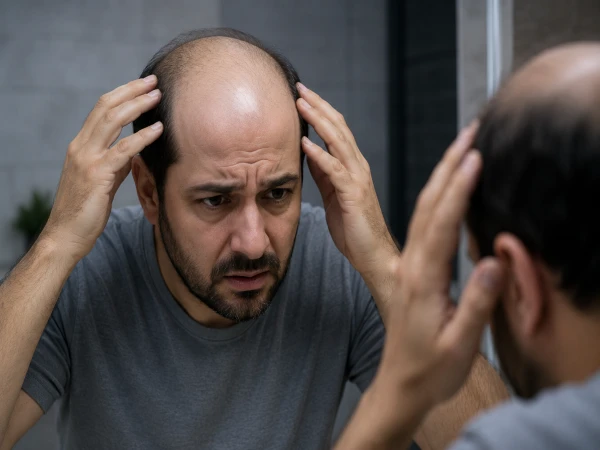
Hair loss is a common concern among men, but the appropriate treatment depends on what is causing the hair to fall out. Experts say identifying the underlying cause should be the first step before starting any hair-restoration treatment.
Hair loss can develop gradually due to hereditary factors or occur more rapidly following illness, stress, medication use or hormonal changes. Doctors may assess a patient’s medical history and scalp and, when necessary, recommend blood tests to help determine the cause.
Medicines for Hair Loss
Minoxidil may help stimulate hair growth in some people, particularly during the early stages of hair loss. Results can take several months to become noticeable, and continued use may be necessary to maintain the benefit.
For men with hereditary hair thinning, doctors may prescribe finasteride. The medicine can have side effects and should only be used under medical guidance.
PRP and Light Therapy
Platelet-rich plasma (PRP) therapy and low-level laser therapy are also used for some forms of hair thinning. PRP involves injecting components derived from a patient’s own blood into the scalp. However, results can vary from person to person.
Low-level laser therapy is another option used to support hair growth, although its effectiveness may differ depending on the individual and the underlying cause of hair loss.
Hair Transplant
For people with significant hair loss, a hair transplant can provide another option. The procedure involves taking healthy hair follicles from areas of the scalp where hair remains and transferring them to areas affected by baldness or thinning.
Follicular unit extraction (FUE) and follicular unit transplantation (FUT) are two commonly used techniques. A transplant does not prevent existing natural hair from thinning in the future, so doctors may recommend a longer-term treatment plan.
Experts advise against choosing a hair-loss treatment simply because it has worked for someone else. Age, the cause and extent of hair loss, existing hair density, potential side effects and the likelihood of further hair loss should all be considered when deciding on an appropriate treatment with a qualified doctor.
Also Read : Mohammad Abbas Completes 900 First-Class Wickets at Lord’s