
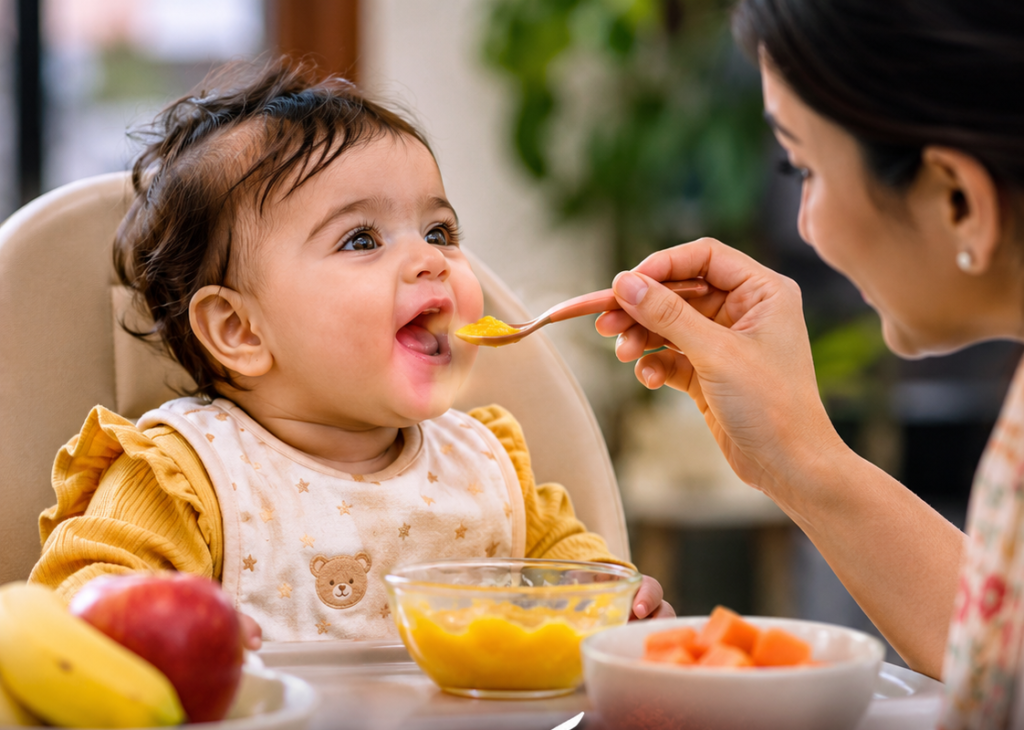
A baby’s diet during the first year of life plays a vital role in physical growth, brain development and a healthy immune system. Experts have advised parents to understand the different types of sugar before introducing solid foods to infants.
According to Indian paediatrician Dr B. Prashant Babu, lactose, sucrose and fructose have different effects on infant health, making it important for parents to distinguish between them.
Lactose: Natural Sugar in Breast Milk
Lactose is naturally present in breast milk and standard infant formula. It provides babies with energy, supports brain development and helps the body absorb calcium, which is essential for healthy bones and teeth.
Human milk oligosaccharides (HMOs) in breast milk also support beneficial gut bacteria and help strengthen the immune system.
Sucrose: Avoid Unnecessary Added Sugar
Sucrose, commonly known as table sugar, is made up of glucose and fructose. It is not naturally present in breast milk, and infants do not need additional sucrose in their diets.
Added sugar in baby biscuits, sweetened cereals and drinks can encourage a preference for sweet foods, potentially making children less interested in vegetables and other nutritious foods. Excessive consumption can also contribute to tooth decay and unnecessary calorie intake.
Fructose: Natural Sugar in Fruits
Fructose is naturally found in fruits and honey. Once babies start eating solid foods at around six months, mashed fruits can be introduced as part of a balanced diet.
Experts recommend offering whole or mashed fruits instead of fruit juice because they provide fibre and vitamins.
However, honey must not be given to children under one year of age due to the risk of infant botulism, a potentially dangerous illness caused by bacteria.
Important Advice for Parents
Experts recommend exclusive breastfeeding for the first six months of life. After introducing solid foods, parents should offer one new food at a time and monitor the baby’s response.
Parents should also check food labels for added sugar, honey and syrups.
Dr B. Prashant Babu further advised parents not to assume that symptoms such as gas or irritability automatically indicate lactose intolerance. They should consult a paediatrician before changing infant formula.
Developing balanced eating habits during infancy can help encourage healthier food preferences as children grow.
Note: This article is intended for educational purposes only. Parents should consult a qualified healthcare professional before making dietary changes for their babies.