
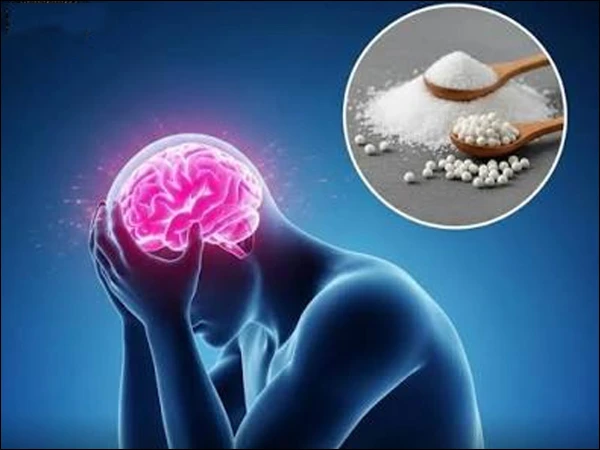
A new study has raised questions about whether the artificial sweetener aspartame could worsen brain damage following an ischemic stroke. Researchers observed greater brain tissue damage and increased cell death in mice exposed to aspartame before a stroke-like event, although the findings have not been confirmed in humans.
Aspartame is a low-calorie artificial sweetener commonly used in diet and zero-sugar soft drinks, sugar-free chewing gum, reduced-calorie sweets and other products marketed as sugar-free.
What the study found
Researchers gave mice water containing aspartame for one week before inducing a condition designed to mimic an ischemic stroke. In mice that did not receive aspartame, dead brain tissue accounted for about 24.3% of the affected area. Among mice exposed to a higher amount of the sweetener, the figure increased to approximately 58.6%.
The aspartame-exposed mice also showed greater brain cell death, particularly in the cerebral cortex and hippocampus. These regions play important roles in functions including learning, memory and thinking.
Laboratory experiments involving brain cells from humans or animals also showed increased cell death in the presence of aspartame. The affected cells had about a 25% reduction in their ability to produce energy.
Possible role of mitochondrial damage
Researchers suggested that damage to mitochondria may help explain the findings. Mitochondria are structures inside cells responsible for producing much of the energy needed for normal cellular activity.
The experiments indicated that aspartame exposure increased levels of reactive oxygen species inside mitochondria, potentially contributing to oxidative stress and cellular damage. The researchers also observed effects on a protective chemical pathway involved in helping cells respond to severe stress.
When compounds were used to activate the protective pathway and reduce harmful oxygen-related compounds in mitochondria, researchers observed some reduction in cell death and swelling.
Other sweeteners showed different results
The researchers also tested two other artificial sweeteners, sucralose and acesulfame potassium. The experiments did not show the same additional toxic effect associated with aspartame under the study conditions.
However, the findings do not establish that normal consumption of aspartame causes brain damage in humans.
The study specifically examined whether exposure to aspartame could worsen brain injury when the brain is already experiencing severe oxygen deprivation during an ischemic stroke. The observed effect was found in mice and laboratory cell experiments, and further research is needed to determine whether the same relationship exists in people.