

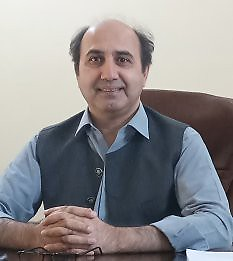
Dr Zafar Khan Safdar
There is a particular kind of institutional exhaustion that sets in when a government stops leading and starts reacting. It is visible not in any single dramatic failure but in the accumulated texture of daily governance: the minister who cannot answer a question without looking sideways, the policy announced on Monday that contradicts the one announced on Thursday, the crisis managed until it quietens and then forgotten until it returns larger than before. Pakistan today has the unmistakable feel of a government that has lost the thread of its own purpose, if it ever clearly held one, and is now navigating entirely by the pressure of the immediate moment rather than the direction of any coherent national plan.
After more than two years in office, the government has produced no public document, no speech, and no sustained communication that answers the questions Pakistani citizens are most entitled to have answered. What is the economic vision beyond satisfying the current IMF programme? When will debt servicing, which consumed 89 percent of net federal revenue in FY2025, begin to decline as a share of the budget rather than continuing to crowd out every other public obligation? What is the security strategy for Balochistan and Khyber Pakhtunkhwa beyond operational responses to individual attacks? What is Pakistan’s foreign policy posture in a regional environment growing more dangerous by the month? These are not opposition talking points. They are the basic questions that any government in any country is expected to be able to answer, and this one cannot, or will not, or has not been permitted to.
The economic stabilisation that officials point to is real but misleading as a governing achievement. Inflation has fallen from its peak of 38 percent. Reserves have recovered. GDP has grown at 3.7 percent. These numbers are accurate and they matter. What they do not reflect is that national poverty has climbed back to 28.9 percent after having fallen to 21.9 percent in 2018-19, that total public debt has reached Rs 83 trillion, and that the middle class has been compressed to the point where two-income households can no longer reliably meet monthly utility bills, school fees, and grocery costs simultaneously. Stabilisation achieved by extracting from the documented and salaried while protecting the undocumented and politically connected is not a development strategy. It is a fiscal arrangement that transfers the cost of every crisis onto those least able to lobby against it. The government knows this. It has thanked the public for bearing it with patience. Gratitude is not a substitute for relief.
The security situation follows the same pattern of reactive management masquerading as policy. Balochistan experienced 254 attacks and over a thousand casualties in 2025, a 26 percent increase from the year before. Each attack produces a press conference, an operation, a body count, and a vow that those responsible will face consequences. What it does not produce is any public articulation of why the province that is Pakistan’s largest, richest in natural resources, and most strategically significant continues to generate insurgency faster than military operations can suppress it. The answer requires an honest political conversation that the government has consistently avoided: that decades of resource extraction without reinvestment, security responses without accompanying political settlement, and the treatment of legitimate dissent as a law enforcement problem rather than a governance failure have created conditions that no operation, however competently executed, can resolve alone. In Khyber Pakhtunkhwa, the TTP conducted over a thousand attacks in 2024 alone, and the policy divergence between the provincial government and the centre on how to address terrorism has never been honestly negotiated in public. It simply exists, unresolved, producing the incoherence that incoherence always eventually produces.
The regional picture adds a layer of complexity that an adrift government is particularly ill-equipped to navigate. Afghanistan’s Taliban government has entered India’s strategic orbit while concluding separate arrangements with Russia, creating a hostile western border environment that requires sustained, sophisticated diplomatic engagement. Kashmir’s political disputes, which the government signed commitments to address in October 2025, have been left unimplemented long enough that thousands took to the streets in Muzaffarabad in July 2026. Senior political figures are making statements clearly intended for audiences other than the public, a reliable sign that the formal channels of political communication have broken down and informal ones are doing their work instead. A government with a clear narrative and genuine authority does not allow its own allies to communicate through subtext.
Public accepted the constraints of Pakistan’s hybrid arrangement on a specific and explicit promise: that political stability would produce economic recovery, that security would improve, and that tomorrow would be measurably better than today. Two years later, no one in Pakistan can say with confidence whether tomorrow will be better or worse, and neither, it appears, can the government. That uncertainty is not a minor political problem. It is defining characteristic of a state governing by reaction rather than direction, managing each day’s crisis well enough to reach the next one, and calling that endurance a record of achievement. Pakistan deserves more than a government that survives. It deserves one that leads.
Also Read: THE INNER SECRETS OF SURAH AL-ANFĀL