
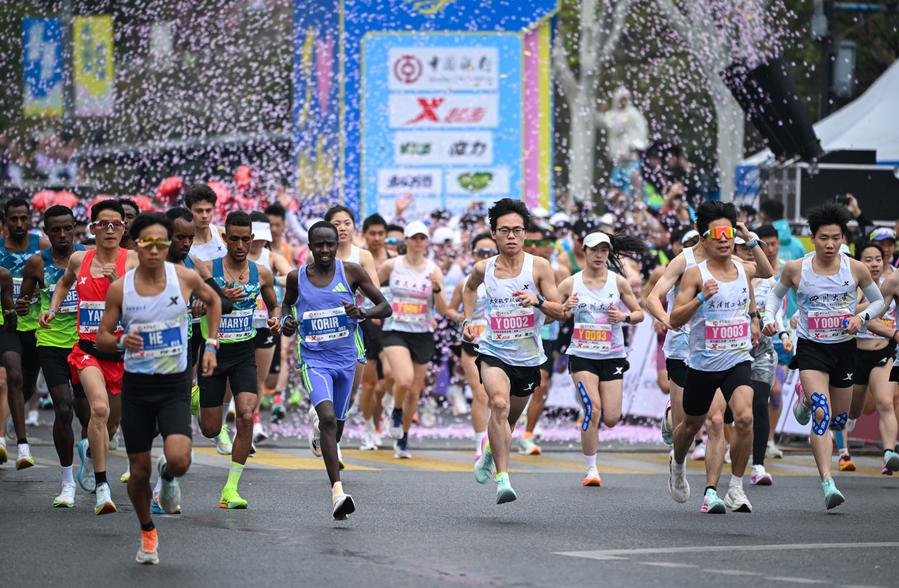
ZHENGZHOU, Oct 18: The 2026 Zhengzhou Marathon brought together 25,000 runners and centuries of Chinese cultural traditions on Sunday, combining long-distance racing with poetry, family heritage, traditional opera and kung fu in central China’s Henan Province.
Held in one of the historic centres of Chinese civilisation, the event offered participants more than a 42.195-kilometre race. Cultural activities throughout the programme introduced runners and visitors to Zhengzhou’s history and traditions, making the marathon both a sporting competition and an opportunity to experience local heritage.
For Tang Tao, a 35-year-old Zhengzhou resident competing in his sixth consecutive edition, the combination of poetry and running was a highlight of this year’s event.
“What surprised me most this year was the encounter between poetry and the marathon,” Tang said, describing how literary themes were incorporated into the atmosphere and activities surrounding the race.
A specially designed poetry corridor at the pre-race carnival attracted visitors who stopped to photograph banners displaying famous Chinese verses.
Among them were familiar lines about perseverance and renewal, including “A journey of a thousand miles begins with a single step” and “Wildfires cannot burn it all away; the spring breeze brings it back to life.”
The verses also prompted spontaneous recitations, connecting traditional Chinese literature with the determination required to complete a marathon.
Jong-May Urbonya, an American cultural influencer with nearly half a million followers who promotes traditional Chinese clothing and customs online, said the messages reflected the endurance and resilience associated with long-distance running.
Poetry, opera and kung fu highlight Zhengzhou’s heritage
Zhengzhou’s cultural identity is closely linked to its long history. The city is home to a 3,600-year-old Shang Dynasty city wall, which remains standing in its modern urban centre.
Zhengzhou Sports Bureau Director Zhao Hengkang said organisers incorporated four major cultural elements into the 2026 marathon: Chinese poetry, surnames, Henan Opera and kung fu.
The activities were designed to introduce participants to local traditions while strengthening the event’s connection with the city.
The marathon has featured a distinctive Surname Marathon concept since its inaugural edition in 2018, drawing on Henan’s importance in Chinese family history.
The province is regarded as the ancestral home of numerous Chinese families and the place of origin of many surnames.
For Chinese runners, the initiative provides a connection to family ancestry and personal identity. International participants are also introduced to the significance of surnames in Chinese cultural traditions.
Runner Ge Xiangyu, who crossed the finish line carrying a flag displaying his surname, said the concept gave the competition additional personal meaning.
Participants could also customise their medals using magnetic stickers bearing their family names, turning the awards into personalised reminders of their heritage.
Ge said the significance of the medal extended beyond its value as a sporting souvenir.
Marathon combines international participation with cultural exchange
With hundreds of marathon events held across China each year, Zhengzhou has sought to distinguish its competition by incorporating the region’s cultural traditions into the race experience.
Organisers said the approach was intended to encourage greater appreciation of Chinese heritage while giving runners from different backgrounds opportunities for cultural exchange.
“We hope to make the Zhengzhou Marathon not only a competitive event for 25,000 runners, but also an immersive journey into the charm of traditional Chinese culture,” Zhao said.
By combining endurance sports with poetry, traditional performing arts and family history, the 2026 event demonstrated how a major sporting competition can also serve as a platform for presenting a city’s cultural identity to domestic and international visitors.