
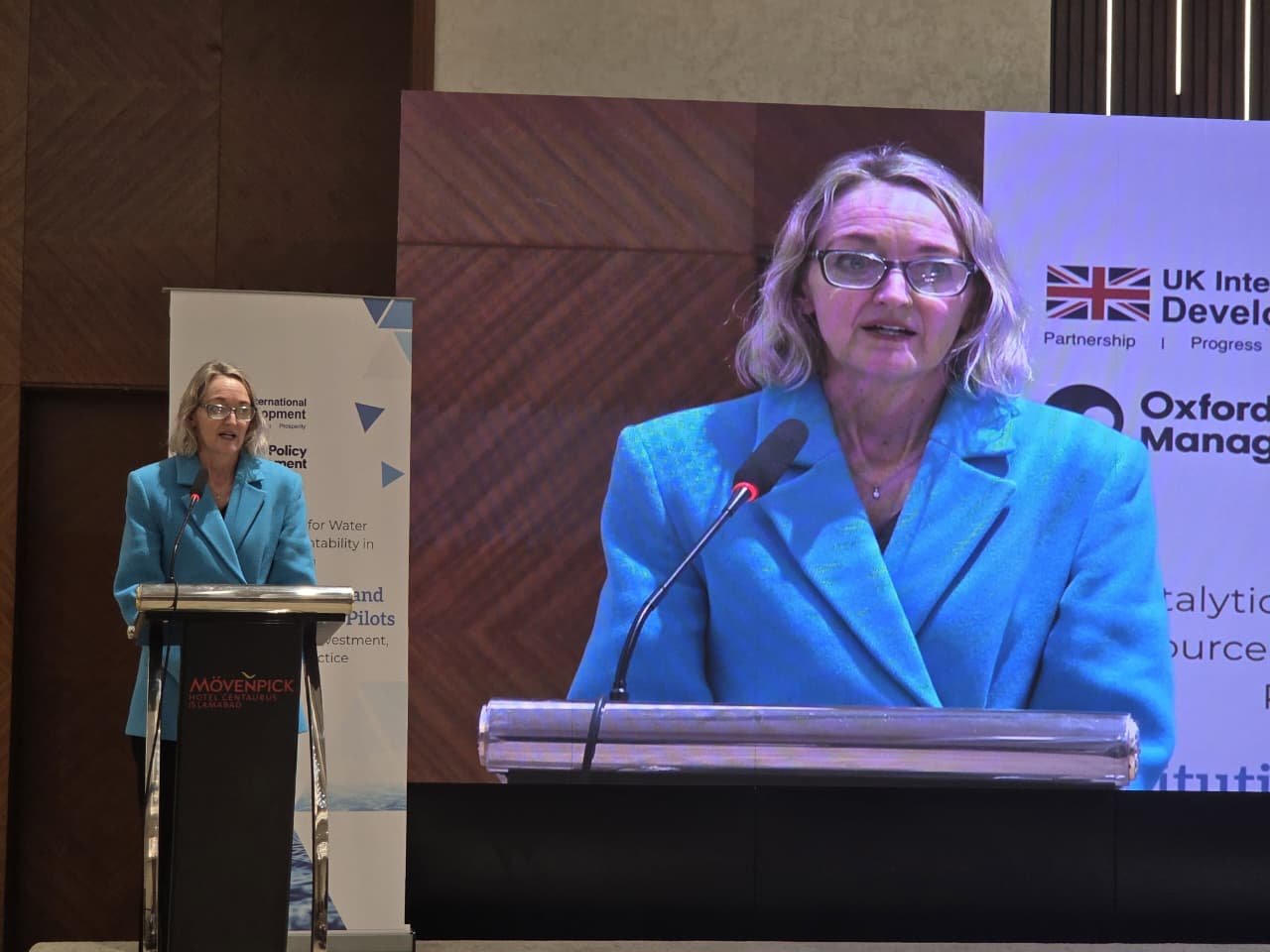
Islamabad — The Water Resource Accountability in Pakistan (WRAP) Programme convened a one-day workshop in Islamabad to advance the institutionalisation and scale-up of reforms emerging from pilot projects supported through its Catalytic Fund (CF-WRAP).
The workshop brought together eight CF-WRAP grantee organisations, representatives from federal and provincial government departments, Planning and Development Departments, and technical experts. The focus was on reviewing progress and identifying practical ways to embed successful pilot initiatives into public sector systems, a step organisers said is critical for long-term impact in water governance.
WRAP is funded by the Foreign, Commonwealth & Development Office (FCDO) and implemented by Oxford Policy Management (OPM). According to a press release, Rizwan Mehboob, Technical Lead OPM CF-WRAP, described the workshop as a platform for exchanging ideas and consolidating work aimed at making pilot interventions scalable and sustainable.
CF-WRAP pilots are currently being implemented across Punjab, Khyber Pakhtunkhwa, Gilgit-Baltistan, and at the federal level. The projects address priority challenges related to water governance, nature-based solutions, and anticipatory action, and have been co-designed with government counterparts to support alignment with public sector planning and regulatory frameworks.
Discussions during the workshop centred on four areas: reviewing progress of individual CF-WRAP pilots, assessing the development of PC-1s supported through targeted technical assistance, exploring alternative pathways beyond PC-1s for scaling reforms, and agreeing on next steps, responsibilities, and timelines.
OPM, through its technical leadership under WRAP, has mobilised specialised planning and institutionalisation experts to support up to eight CF-WRAP projects. The support aims to help develop bankable PC-1s and facilitate their adoption by relevant government entities, enabling proven pilots to transition into government-led programmes through existing budgeting and institutional mechanisms.
The workshop concluded with a shared commitment among participants to move successful pilots from demonstration stages to mainstream adoption within public systems. Usman Kirmani, Team Leader OPM CF-WRAP, thanked government representatives, FCDO officials, grantees, and OPM staff for their participation, noting that the collective engagement would help shape the next phase of institutionalising and scaling CF-WRAP initiatives.



 Today's E-Paper