
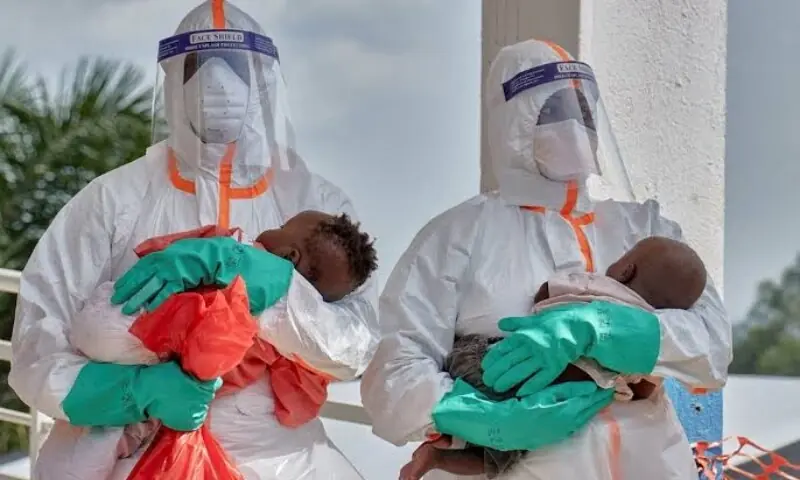
KINSHASA, September 12: The Democratic Republic of Congo’s worst-ever Ebola outbreak has surpassed 7,000 recorded cases, with nearly 3,400 people killed as the deadly virus continues to spread across the country’s conflict-hit and poorly served regions.
According to the latest figures released by Congolese authorities, 7,022 Ebola cases have been recorded since the outbreak began, while 3,398 people have died and 1,671 have recovered.
The outbreak, the country’s 17th Ebola epidemic, was officially detected in mid-May after health authorities believe the virus had already been circulating undetected for several weeks.
It initially emerged in the northeastern Ituri province before spreading into remote eastern and northern areas, where decades of armed conflict, limited state presence and weak healthcare infrastructure have complicated efforts to contain the disease.
The virus has now been confirmed in a seventh province, South-Ubangi, which borders the Central African Republic and the Republic of Congo, raising concerns about further geographical spread.
Ebola Cases in Schools Raise Alarm
Ituri remains the worst-affected province, where cases have also been detected in schools following the return of students after the summer holidays.
The development has caused concern among parents and health workers as authorities introduce measures aimed at reducing the risk of transmission among children.
Schools in Bunia, the provincial capital of Ituri, have introduced mandatory handwashing with soap, restricted classroom sizes and advised students to avoid physical contact.
A local school official said efforts were being made to limit classes to a maximum of 30 pupils while regularly reminding children to wash their hands and avoid unnecessary physical contact.
Parents, however, remain worried about the possibility of children unknowingly bringing the virus into schools from affected households.
Outbreak Spreads Across Seven Provinces
Containing the outbreak has proved particularly challenging because several affected regions are remote and have limited healthcare facilities.
Long-running insecurity caused by armed groups has further complicated access for healthcare workers and emergency response teams.
The spread into South-Ubangi has added another challenge because of the province’s proximity to international borders.
Health authorities are continuing surveillance, infection-control measures and efforts to identify and isolate suspected cases.
Bundibugyo Ebola Strain Behind Epidemic
The current outbreak is caused by the Bundibugyo strain of the Ebola virus.
Unlike some other Ebola strains, there is currently no approved vaccine or specific treatment for the Bundibugyo strain, although several potential vaccines and treatments are undergoing testing.
Ebola spreads primarily through direct contact with the blood or other bodily fluids of an infected person. The disease can cause severe illness, including internal and external bleeding and organ failure.
More than 15,000 people have died from Ebola outbreaks across Africa over the past five decades.
With cases now exceeding 7,000, the latest epidemic has become the most severe Ebola outbreak recorded in DR Congo, placing additional pressure on health authorities attempting to contain transmission in communities already facing insecurity and limited medical resources.