
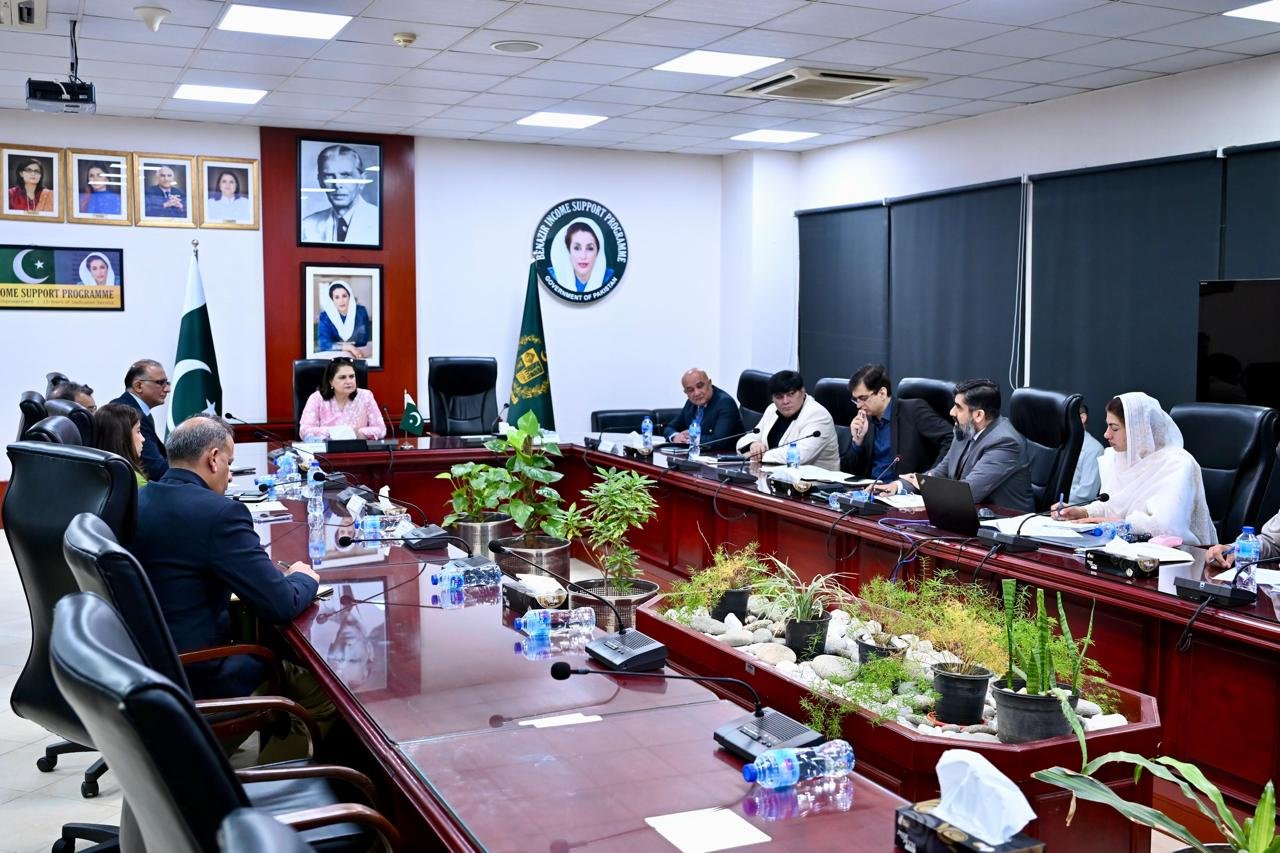
ISLAMABAD — A World Bank mission has reviewed the progress of the Benazir Income Support Programme (BISP) under its Crisis Resilient Social Protection (CRISP) initiative, highlighting advancements in key areas including education, health and nutrition.
The review took place during a wrap-up meeting at BISP headquarters, chaired by BISP Chairperson Senator Rubina Khalid, where officials assessed implementation progress and discussed steps to strengthen transparency and service delivery.
According to a BISP statement, Khalid emphasised the importance of updated survey tools, spot checks, and the Proxy Means Test (PMT) system to improve targeting and operational efficiency. She also stressed the need to maintain continuity in the recertification process and enhance monitoring mechanisms to ensure assistance reaches eligible beneficiaries.
Focus on transparency and delivery
The meeting also reviewed efforts to incorporate beneficiary feedback into programme design and improve payment systems. Discussions included the use of cloud-based data sharing and the development of a beneficiary-centric payment model aimed at increasing efficiency and accessibility.
The World Bank delegation, led by Senior Social Protection Specialist and Task Team Leader Amjad Zafar Khan, presented findings related to Disbursement Linked Indicators (DLIs), noting that several targets under the programme have been successfully achieved.
Continued support from World Bank
The delegation acknowledged progress made by BISP under the CRISP programme and reaffirmed continued technical support to strengthen Pakistan’s social protection system.
Senior BISP officials, including Additional Secretary Dr. Asmat Nawaz, along with directors general and other officers, also attended the meeting.
Also read: BISP expands partnerships with WHO, UNICEF and WFP to improve beneficiary support



 Today's E-Paper